

[W]Working Principle and Features of Caustic Soda Powder Pneumatic Conveying Equipment
Caustic soda, also known as sodium hydroxide, is a widely used chemical in various industrial processes. The efficient and safe transportation of caustic soda powder is crucial for maintaining production efficiency and ensuring workplace safety. Pneumatic conveying equipment has emerged as a preferred solution for handling caustic soda powder due to its ability to transport powders in a closed system, minimizing dust exposure and contamination risks. This article explores the working principle and key features of caustic soda powder pneumatic conveying equipment, highlighting its advantages and practical applications, with a focus on solutions provided by Shandong HeadPowder Engineering Co., Ltd., a leading manufacturer based in Shandong, China.
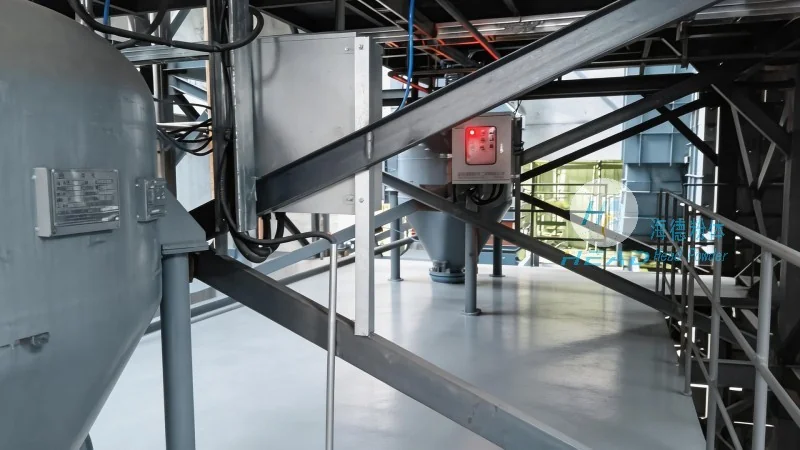
Introduction to Caustic Soda Powder Pneumatic Conveying
Caustic soda powder, with its caustic properties, requires specialized handling equipment to prevent material degradation and ensure operator safety. Pneumatic conveying systems utilize air or gas to transport powders through a network of pipes, offering a flexible and reliable method for moving caustic soda from storage to processing units. The technology has evolved significantly over the years, with modern systems incorporating advanced controls and materials to enhance performance and longevity.
Working Principle of Caustic Soda Powder Pneumatic Conveying Equipment
The core working principle of caustic soda powder pneumatic conveying equipment involves the use of compressed air to create a flow that propels the powder particles through a pipeline. The process typically starts with the powder being fed into a hopper or feeder, where it is then introduced into the conveying line. Compressed air is then supplied to the system, generating a pressure differential that moves the powder along the pipeline. The equipment may employ different conveying modes, such as dilute phase or dense phase, depending on the powder characteristics and distance to be covered.
In dilute phase conveying, the powder is suspended in the air stream, allowing for high-velocity transport over longer distances. This mode is suitable for caustic soda powders with good flowability and low moisture content. Dense phase conveying, on the other hand, involves a slower, more controlled flow where the powder is carried in a slurry-like state, reducing the risk of particle degradation and ensuring more precise dosing. The choice between these modes depends on factors like the powder's reactivity, particle size, and the required delivery accuracy.
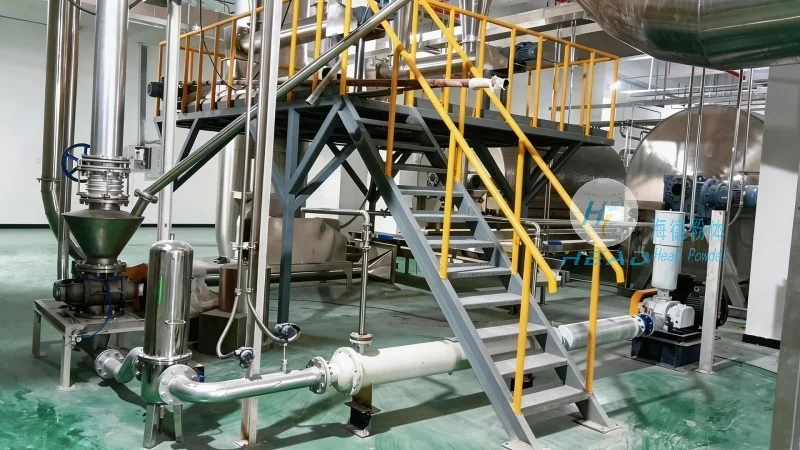
Key Features and Advantages of Caustic Soda Powder Pneumatic Conveying Systems
Caustic soda powder pneumatic conveying systems offer several distinct advantages that make them ideal for industrial applications. One of the primary features is the closed-loop design, which prevents dust emissions and protects the environment from chemical exposure. This design also minimizes the risk of cross-contamination between different powders or materials, ensuring product purity. Additionally, the system provides excellent control over the flow rate and pressure, allowing for precise dosing and consistent material delivery, which is critical in processes where caustic soda is used as a reagent or cleaning agent.
Another significant feature is the ability to handle caustic soda powder in a hygienic and safe manner. The equipment is often constructed from corrosion-resistant materials, such as stainless steel, to withstand the chemical's aggressive nature. This ensures long-term durability and reduces maintenance costs. The system also incorporates safety features, including pressure relief valves and air filtration systems, to prevent accidents and maintain operational safety.
Efficiency is another key aspect of caustic soda powder pneumatic conveying equipment. By eliminating the need for manual handling or mechanical conveyors, the system reduces labor costs and minimizes the risk of material spillage or loss. The closed system also reduces the time required for cleaning and maintenance, as the equipment can be easily disassembled and cleaned without exposing operators to the caustic soda powder. This leads to increased overall productivity and lower operational costs.
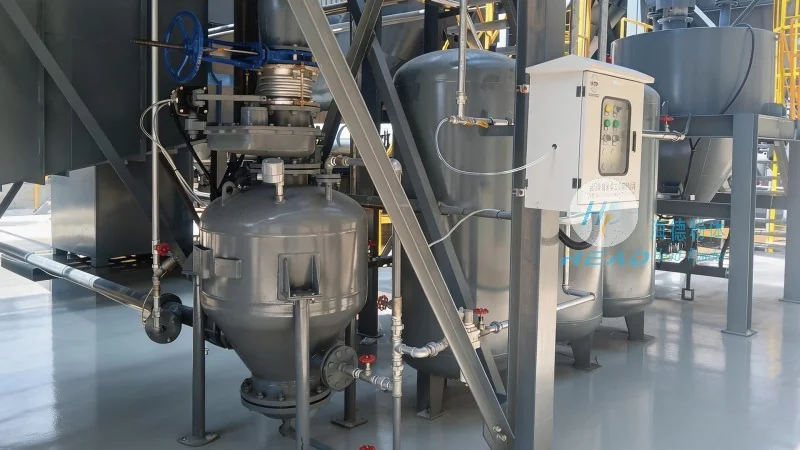
Applications and Considerations for Caustic Soda Powder Pneumatic Conveying
Caustic soda powder pneumatic conveying equipment is widely used in various industries, including chemical manufacturing, pulp and paper production, and water treatment. In chemical plants, the equipment is used to transport caustic soda from storage tanks to reactors or neutralization units, ensuring a steady supply of the chemical for production processes. In the pulp and paper industry, caustic soda is used for pulping and bleaching, and the conveying system helps maintain consistent quality and efficiency in these operations.
When selecting a caustic soda powder pneumatic conveying system, several factors must be considered. The first is the powder's physical properties, such as particle size, moisture content, and flowability. These characteristics will determine the appropriate conveying mode and equipment design. The second factor is the distance and height the powder needs to be transported, as this will influence the system's pressure requirements and energy consumption. Additionally, the system's capacity and reliability are critical, as downtime can result in significant production losses.
Conclusion
Caustic soda powder pneumatic conveying equipment is a vital component in modern industrial operations, offering a safe, efficient, and reliable method for transporting caustic soda powder. The working principle, based on compressed air and specialized conveying modes, ensures that the powder is moved with minimal risk of degradation or exposure. The key features, including closed-loop design, corrosion-resistant materials, and precise control, make these systems suitable for a wide range of applications. By understanding the working principle and advantages of such equipment, industries can enhance their production processes and maintain high standards of safety and efficiency.