
The transportation of aluminum oxide crystal, also known as corundum or alpha-alumina, is a critical process in industries ranging from advanced ceramics to refractory materials and semiconductor manufacturing. Aluminum oxide crystals are characterized by their high hardness, abrasive nature, and tendency to fracture under mechanical stress. Traditional mechanical conveyors often face issues such as excessive wear, particle degradation, and dust generation. Pneumatic conveying systems have emerged as a reliable, enclosed alternative that preserves crystal integrity while ensuring high throughput and low contamination risks. As the global demand for high-purity aluminum oxide continues to rise—with projections indicating a compound annual growth rate of approximately 5.8% through 2026—the need for robust, energy-efficient, and precisely engineered pneumatic solutions becomes increasingly urgent. This article provides a comprehensive technical introduction to pneumatic conveying systems designed specifically for aluminum oxide crystals, covering system architecture, component selection, operational parameters, and practical implementation considerations.

Headpowder, a specialist in powder handling technologies, has engineered aluminum oxide crystal pneumatic conveying systems that balance abrasion resistance with gentle material handling. The inherent challenge lies in the Mohs hardness of 9 for aluminum oxide crystals, which can rapidly erode standard conveying pipes and bends. A well-designed system must incorporate wear-resistant linings, optimized air velocity profiles, and intelligent control algorithms to minimize particle breakage while maintaining consistent material flow. This article explores the technical nuances of such systems, providing actionable insights for engineers and plant managers evaluating pneumatic conveying deployments.

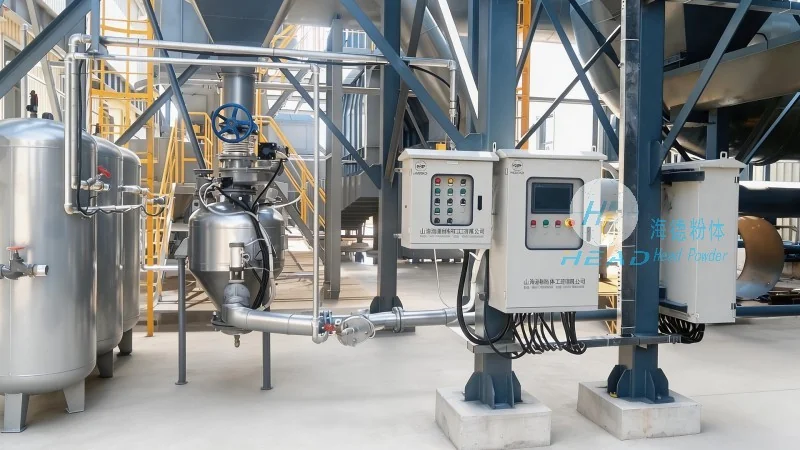
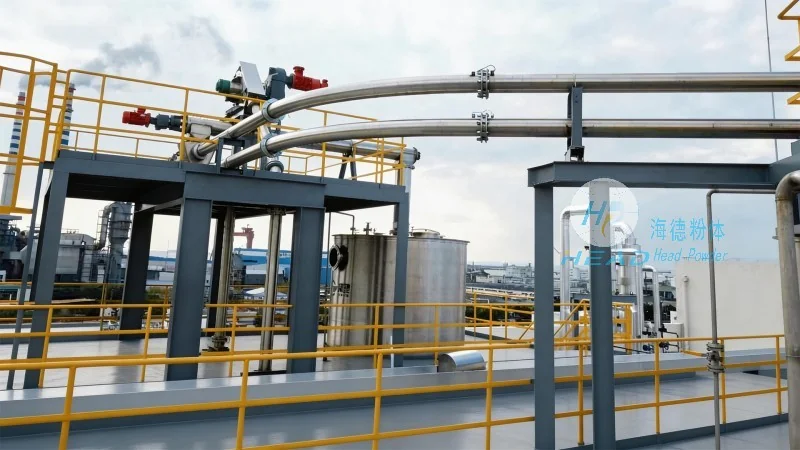
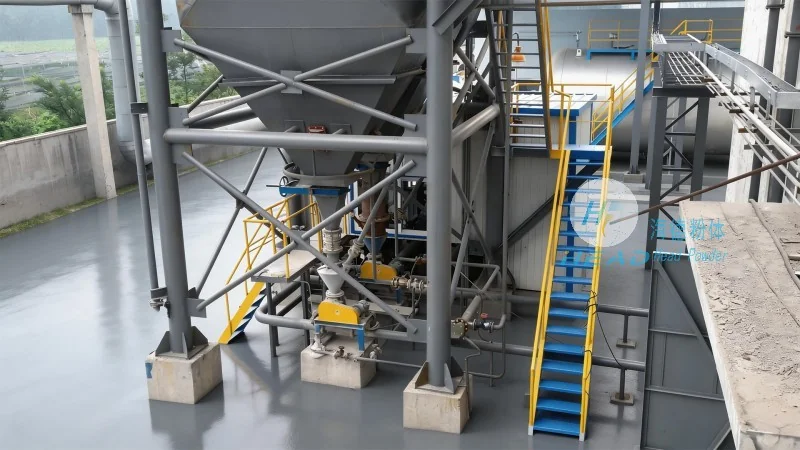
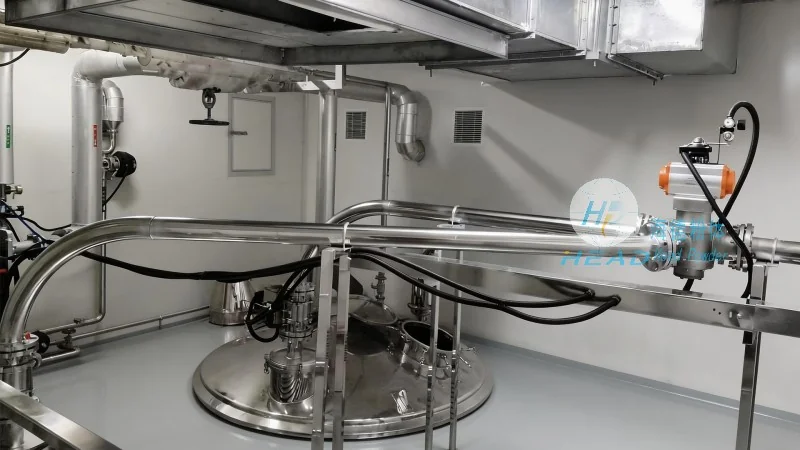
An aluminum oxide crystal pneumatic conveying system typically operates in dilute phase or dense phase mode, depending on the particle size distribution and required throughput. For crystals ranging from 0.5 mm to 10 mm in diameter, dense phase conveying at low velocities (2–8 m/s) is often preferred to reduce wear and limit degradation. The fundamental architecture includes a material feeding device, a conveying pipeline with wear-resistant bends, a gas-solid separation unit, and a control system.
Feeding Mechanisms: Rotary airlocks or venturi eductors are commonly used to introduce crystals into the pipeline. For abrasive materials like aluminum oxide, rotary airlocks with hardened rotor tips and replaceable wear sleeves are recommended. Headpowder's design incorporates a proprietary sealing system that minimizes air leakage and maintains consistent feed rates even when handling irregularly shaped crystal fragments.
Pipeline Design: Straight pipe sections are typically constructed from ceramic-lined steel or high-chrome alloy to withstand abrasion. Bend radii should be at least 10 times the pipe diameter, and pipe wall thickness should be increased by 30–50% compared to standard pneumatic conveying systems. For 90-degree bends, a blind tee or removable wear-back design allows periodic inspection and replacement without cutting the pipeline.
Air Source and Filtration: Compressed air or blower air must be dry and oil-free to prevent contamination of the high-purity crystals. A two-stage filtration system (pre-filter and HEPA) downstream of the receiving hopper ensures that any fine dust generated during conveying is captured. The exhaust air is typically routed through a pulse-jet baghouse with PTFE-coated filter bags to handle the abrasive fine fraction.

Optimizing an aluminum oxide crystal pneumatic conveying system requires careful balancing of several variables. The most critical parameters include conveying velocity, solids-to-air ratio, and pipeline pressure drop. For dense phase conveying, a starting velocity of 3–5 m/s is typical, with adjustments based on particle size. Fine crystals (below 100 mesh) may require slightly higher velocities to prevent saltation, while coarse crystals benefit from lower velocities to minimize impact breakage.
Pressure drop calculations must account for the high density of aluminum oxide (3.95 g/cm³) and the abrasive nature of the material. A rule of thumb is to expect a pressure drop of 0.5–1.0 bar per 100 meters of horizontal conveying distance for dilute phase, and 0.3–0.6 bar per 100 meters for dense phase. However, these figures should be validated through computational fluid dynamics (CFD) modeling or pilot-scale testing. Headpowder has documented a case where a 150-meter conveying line for aluminum oxide crystals was optimized to operate at 0.45 bar pressure drop with a throughput of 12 tons per hour, achieving a specific energy consumption of 0.18 kWh per ton.
Another key factor is the particle degradation rate. Laboratory tests using a standard drop test method (ASTM D441-86) can predict the breakage index for aluminum oxide crystals under pneumatic transport. Typically, a well-designed system achieves less than 2% by weight of fines generation (particles below 200 mesh) during a single pass. If higher degradation is observed, adjustments to the conveying velocity, bend geometry, or air distribution may be necessary.
Aluminum oxide crystals present unique handling challenges that must be addressed during system design. The crystals exhibit high electrostatic charging, which can lead to material buildup on pipeline walls and filter bags. Grounding all metallic components with low-impedance connections and using conductive hoses in flexible sections is essential. Additionally, the hygroscopic nature of certain grades of aluminum oxide—especially those with high surface area—requires that the conveying air be dried to a dew point of -30°C or lower to prevent caking.
Another challenge is the potential for pipeline blockage due to material wedging at bends or vertical risers. Implementing a robust purge sequence using compressed air pulses can clear incipient blockages. Some advanced systems incorporate acoustic sensors or capacitance probes at critical points to detect blockages in real-time. For instance, Headpowder's control system includes a machine learning algorithm that analyzes pressure fluctuations to predict and prevent plugging events, reducing unplanned downtime by up to 40% in field installations.
Wear management is an ongoing concern. The typical service life of a standard carbon steel bend used for aluminum oxide crystal conveying is measured in weeks, not months. Using ceramic or sintered tungsten carbide inserts at high-wear zones extends bend life to 12–18 months under continuous operation. A cost-benefit analysis should consider the replacement cost of wear parts versus the capital investment in more durable materials. In many cases, the total cost of ownership over a five-year period favors high-quality ceramic-lined components despite their higher upfront price.
The aluminum oxide crystal pneumatic conveying market is evolving in response to several macro trends. By 2026, the shift toward automation and Industry 4.0 is expected to drive demand for smart conveying systems that integrate with plant-wide SCADA platforms. Real-time monitoring of material flow, particle size distribution, and pipeline condition will become standard. Additionally, environmental regulations in North America and Europe are pushing for lower dust emissions and reduced energy consumption. Systems that can recirculate conveying air or use energy recovery devices will gain competitive advantage.
Data from industry analysts indicates that the market for pneumatic conveying equipment in the ceramics and refractories sector will exceed USD 1.4 billion globally by 2026, with a considerable share attributable to abrasive materials handling. The increasing use of aluminum oxide crystals in electric vehicle battery components (as an insulating filler) and in advanced LED substrate manufacturing is further fueling demand. These end-use industries impose stringent purity standards—often requiring iron contamination below 50 ppm—which necessitates entirely ferrous-free conveying systems. Headpowder has responded by offering systems with stainless steel internals and ceramic sleeves that eliminate metal-to-product contact.
Another notable trend is the development of hybrid conveying systems that combine pneumatic transport with gravity or vibratory feeders for specific segments. For example, in a fused alumina production line, a short pneumatic transfer to a blending silo followed by a gravity-fed batch weigh system can optimize both speed and accuracy. These hybrid designs require careful engineering of transition points to avoid material segregation or dust generation.
When specifying an aluminum oxide crystal pneumatic conveying system, plant engineers should follow a structured selection process. First, conduct a full material characterization including bulk density, particle size distribution (PSD), angle of repose, moisture content, and abrasivity index. Second, define the conveying route and required throughput. Third, choose between dilute and dense phase based on the PSD and fragility. Fourth, perform a pressure drop and air consumption calculation using established equations (e.g., the Darcy-Weisbach approach modified for two-phase flow).
Headpowder has delivered systems for multiple clients in the abrasives industry. One notable project involved a customer producing white fused alumina for grinding wheels. The existing mechanical conveyor system experienced frequent breakdowns due to bearing contamination from abrasive dust and required manual cleaning every shift. After installing a Headpowder pneumatic conveying system operating at 4 m/s in dense phase, the customer reported a 70% reduction in maintenance hours and a 15% increase in overall line efficiency. The system included 4-inch ceramic-lined pipe, a rotary valve with tool-steel pockets, and an automatic filter-cleaning cycle that recycled compressed air. The total installed cost was recovered within 14 months through reduced downtime and lower spare parts consumption.
Safety is paramount when handling aluminum oxide crystals pneumatically. The conveying system must include proper grounding to mitigate electrostatic discharge risks, especially when the crystals are dry and fine. Explosion venting or suppression may be required if the aluminum oxide powder has a significant fraction below 75 microns (200 mesh) that could form a combustible dust cloud. Although aluminum oxide itself is non-combustible, impurities or coating materials on the crystal surface can alter the hazard classification. It is advisable to conduct a dust explosivity test (e.g., Kst value determination) as part of the system design.
Routine maintenance should focus on wear part inspections. Every 300–500 operating hours, inspect bend inserts, rotary valve rotors, and filter bag condition. Replace wear parts before they fail catastrophically. A predictive maintenance program using vibration analysis on the fan or blower motor can prevent unexpected shutdowns. Air filter elements should be replaced according to the manufacturer's recommendations, typically every 6–12 months depending on dust loading.
Selecting and installing a pneumatic conveying system for aluminum oxide crystals requires a deep understanding of material properties, fluid dynamics, and wear management. The right system can deliver decades of reliable service with minimal product degradation and low operating costs. By focusing on dense phase operation, high-quality wear-resistant materials, and smart control features, plant operators can overcome the inherent challenges of handling this super-hard crystalline material.
Headpowder offers engineering consultation, system design, and on-site commissioning for aluminum oxide crystal pneumatic conveying projects. With a track record of successful installations across multiple continents, the company brings practical experience that translates into robust, efficient systems. For further technical discussion or project assessment, contact the Headpowder engineering team directly (咨询热线:156-6277-7102).
Shandong headpowder Engineering Co., Ltd.
156-6277-7102(Manager Zhang)
0531-83386006
Jinan City, Shandong Province, China 
服务热线
微信咨询
回到顶部