

Design and Equipment Selection for Heavy Calcium Powder Pneumatic Conveying
Heavy calcium powder, a vital raw material across multiple industrial sectors, demands efficient and reliable handling to sustain smooth production workflows. Pneumatic conveying systems have become the preferred method for transporting heavy calcium powder due to their ability to manage abrasive materials while preserving product integrity. This article provides a thorough overview of the design calculations and equipment selection process for heavy calcium powder pneumatic conveying systems, with insights from Shandong HeadPowder Engineering Co., Ltd. (HeadPowder), a leading expert in the field.
Understanding Heavy Calcium Powder Pneumatic Conveying
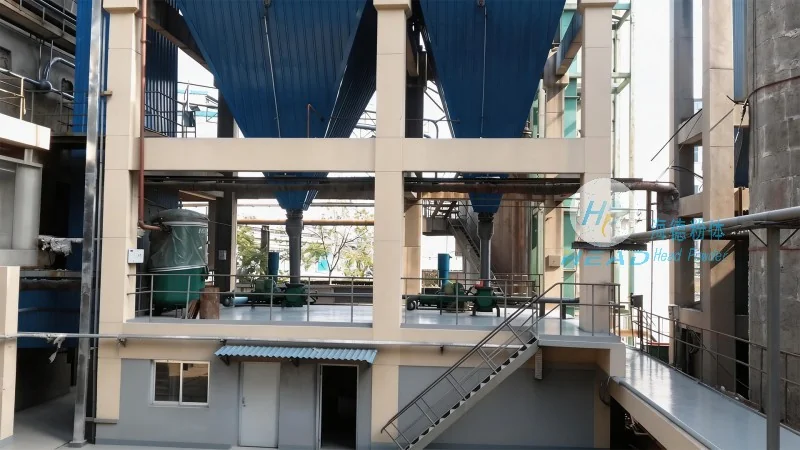
Heavy calcium powder typically features particle sizes ranging from 0.1 to 100 microns and a bulk density of 1.1 to 1.3 g/cm³. These characteristics make traditional handling methods like belt conveyors or bucket elevators unsuitable, as they risk material degradation and blockages. Pneumatic conveying, which utilizes air or gas to transport material through a pipeline, offers a solution by suspending powder particles in an air stream, minimizing wear and maintaining consistent flow rates. The system generally comprises a material feed hopper, a conveyor pipeline, a dust collector, and a discharge unit, all integrated to achieve efficient material transport.
Key Design Calculations for Pneumatic Conveying Systems
The success of a heavy calcium powder pneumatic conveying system relies on precise calculations addressing critical factors. The first step is determining the required air velocity, which must be sufficient to lift particles and maintain stable flow. This calculation considers the powder's bulk density, particle size distribution, and system operating pressure. For heavy calcium powder, typical air velocities range from 20 to 30 m/s for dilute phase conveying (particles suspended in air) and up to 50 m/s for dense phase conveying (slurry-like flow).
Next, the system's pressure drop must be calculated to ensure the pipeline can handle the necessary pressure. This involves evaluating friction losses along the pipeline, losses at bends and fittings, and losses from material acceleration/deceleration. The pressure drop directly impacts energy consumption and overall efficiency. Engineers use empirical formulas and software tools to model these losses accurately, ensuring the system operates within optimal pressure ranges.
Another critical calculation is the required air volume, which dictates the blower or compressor size. This is derived by multiplying air velocity by the pipeline cross-sectional area and conveying distance. The air volume must balance sufficient conveying rate with energy efficiency. HeadPowder employs advanced computational fluid dynamics (CFD) simulations to refine these calculations, providing precise performance predictions under various conditions.
Equipment Selection for Heavy Calcium Powder Pneumatic Conveying
Selecting appropriate equipment for a heavy calcium powder pneumatic conveying system is essential for long-term reliability and operational efficiency. The selection process evaluates components tailored to the powder's characteristics.
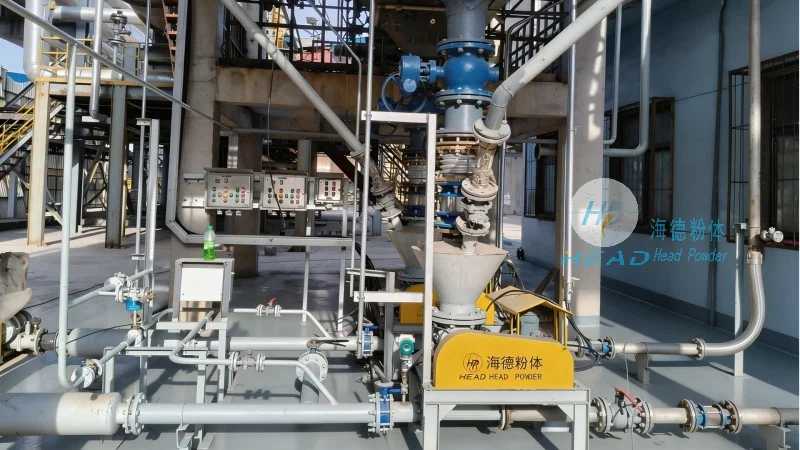
First, the material feed hopper is critical for handling abrasive powder. It is typically conical or hopper-shaped to prevent bridging and ensure uniform flow. A rotary valve or star feeder controls discharge rate, avoiding overloading. HeadPowder recommends high-quality stainless steel or wear-resistant materials for the hopper to extend service life and reduce maintenance.
The conveyor line, either straight or with bends/fittings, is another key component. Pipeline material is chosen based on abrasiveness and pressure—stainless steel or high-density polyethylene (HDPE) is common. Diameter is determined by air velocity and flow rate, with larger diameters used for higher rates to minimize pressure drop.
The blower or compressor generates necessary air pressure/volume. For heavy calcium powder, positive displacement blowers or centrifugal compressors are used. Positive displacement blowers suit low to medium pressure, offering consistent flow and abrasive material handling. They include a motor and control system for pressure/flow regulation.
The dust collector removes airborne particles from exhaust air, preventing emissions and maintaining a clean environment. For heavy calcium powder, baghouse or cartridge filters are used, capturing fine particles with high efficiency. The collector includes a hopper to store collected powder, which can be returned or disposed of. HeadPowder recommends high-efficiency filters for compliance and sustained performance.
Role of Shandong HeadPowder Engineering Co., Ltd. in Pneumatic Conveying Systems
Shandong HeadPowder Engineering Co., Ltd., operating as HeadPowder, is a leading provider of customized pneumatic conveying solutions for heavy calcium powder and other industrial powders. With extensive industry experience, HeadPowder has deep expertise in handling heavy calcium powder's unique challenges and has refined its design and equipment selection processes.
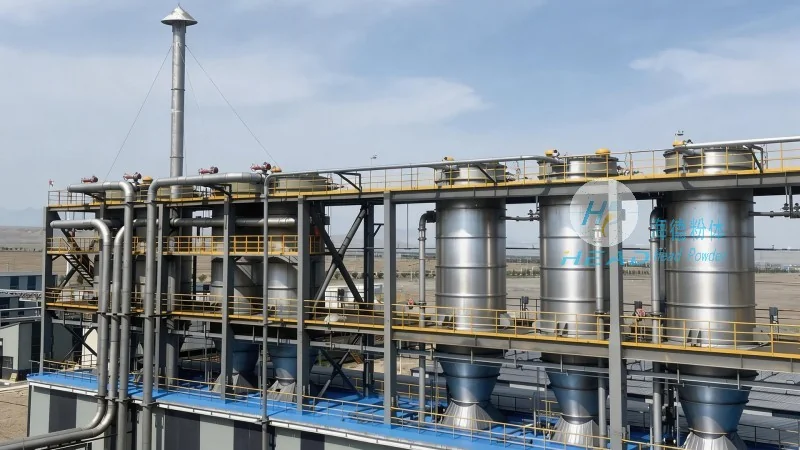
HeadPowder's team collaborates closely with clients to understand material characteristics, conveying distance, and production capacity. They conduct detailed design calculations and CFD simulations to develop tailored solutions. The company uses advanced software to model system performance, ensuring optimized efficiency and reliability.
HeadPowder's equipment selection involves rigorous testing and evaluation. The company partners with leading manufacturers to source high-quality components, including wear-resistant hopper/pipelines, high-efficiency dust collectors, and reliable blowers/compressors. Comprehensive after-sales support—including maintenance and spare parts—is provided to ensure peak performance throughout the system's lifecycle.
Benefits of Heavy Calcium Powder Pneumatic Conveying Systems
Implementing a properly designed pneumatic conveying system for heavy calcium powder offers several advantages that enhance operational efficiency and product quality. First, the system minimizes material degradation by reducing particle breakage and contamination, preserving powder quality for downstream processes. Second, it improves safety by eliminating manual handling, reducing dust explosion risks and occupational hazards.
Third, the system boosts productivity with continuous, reliable material flow, eliminating bottlenecks and reducing downtime. Consistent flow rates and low maintenance contribute to higher Overall Equipment Effectiveness (OEE). Fourth, it reduces energy consumption by optimizing air velocity and pressure, lowering long-term operating costs. HeadPowder's expertise ensures these benefits are maximized, delivering a cost-effective solution for clients.
Conclusion
Designing and selecting the right equipment for a heavy calcium powder pneumatic conveying system is complex, requiring careful consideration of material properties, system requirements, and operational conditions. Shandong HeadPowder Engineering Co., Ltd. (HeadPowder) offers comprehensive solutions, combining advanced design calculations with high-quality equipment selection to deliver reliable and efficient systems. By leveraging their expertise and experience, clients achieve optimal performance, reduced costs, and improved product quality in heavy calcium powder handling. HeadPowder's commitment to quality and customer satisfaction makes them a trusted partner for businesses seeking to enhance material handling capabilities.