

Heilongjiang Qiqihar Grain Enterprise Soybean Negative Pressure Pneumatic Conveying Project Case
In the northeastern region of China, Heilongjiang Province stands as a cornerstone of the nation's agricultural output, particularly in soybean cultivation. A prominent grain enterprise based in Qiqihar, Heilongjiang, recently undertook a significant modernization project to upgrade its soybean handling and storage infrastructure. The core solution implemented was a comprehensive soybean negative pressure pneumatic conveying system, designed and supplied by Shandong Headpowder Engineering Co., Ltd. (Headpowder). This case study delves into the specifics of the project, highlighting the technical advantages of negative pressure pneumatic conveying for grain storage and transport, and demonstrating how tailored engineering solutions can overcome logistical challenges in large-scale food processing facilities.
Project Background and Client Requirements
The client, a large-scale grain enterprise in Qiqihar, Heilongjiang, handles substantial volumes of soybeans annually. Their existing mechanical conveying systems, including bucket elevators and belt conveyors, faced aging issues, high maintenance costs, and significant dust emission problems. The facility also required a more flexible and hygienic method to transfer soybeans from receiving pits to storage silos and processing lines. The primary goal was to achieve dust-free, energy-efficient, and low-breakage transportation of soybeans, which is critical for preserving the oil content and protein quality of the beans. After evaluating multiple technologies, the company selected a negative pressure pneumatic conveying solution to replace part of their outdated mechanical handling network.
Technical Overview of the Soybean Negative Pressure Pneumatic Conveying System
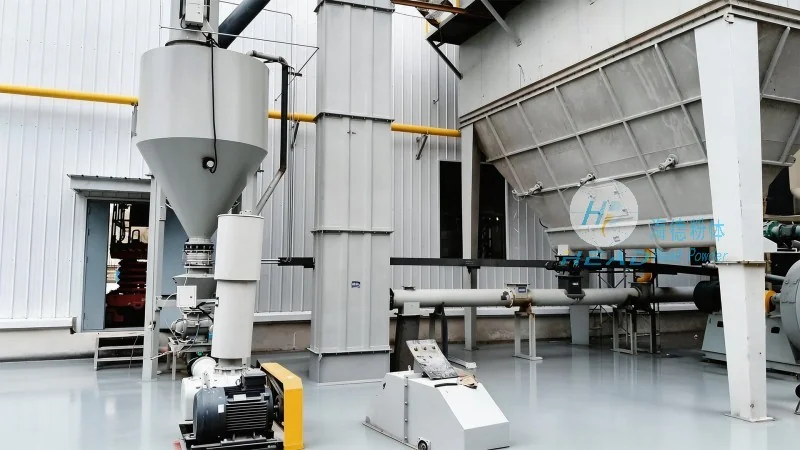
Negative pressure pneumatic conveying, also known as vacuum conveying, uses a pressure differential created by a vacuum pump or blower to move granular materials through a sealed pipeline. In this soybean negative pressure conveying case, the system draws air and soybeans into the intake nozzle, where the mixture is accelerated through the pipeline. At the destination, a cyclone separator and dust collector separate the soybeans from the air stream, while the filtered air is discharged. Headpowder's engineering team designed a complete system with multiple pickup points, a main conveying line over 150 meters in length, and automated control features. The system operates at a conveying capacity of 30 tons per hour, handling soybeans with a moisture content typical for the region. Key components include a roots-type vacuum pump, rotary airlock feeders, abrasion-resistant elbows, and a PLC-based control panel that monitors pressure, flow rate, and material level.
Advantages of Negative Pressure Pneumatic Conveying for Grain Storage and Transport
Compared to mechanical conveyors, negative pressure pneumatic conveying offers distinct advantages in grain storage and transport applications. First, the enclosed pipeline eliminates dust emissions, creating a safer working environment and reducing product loss. Second, the system is highly flexible—pipes can be routed around obstacles, between floors, and over long distances without requiring extensive structural modifications. Third, the gentle conveying action minimizes soybean breakage, which is crucial for maintaining market value and processing yield. The Qiqihar project also benefited from reduced maintenance because the system has fewer moving parts in contact with the material. Headpowder's design incorporated wear-resistant materials in high-impact areas, extending service life significantly. Additionally, the negative pressure system allows for multiple material intake points, enabling the client to receive soybeans from different truck unloading stations simultaneously.
Case Study: Implementation at the Qiqihar Soybean Facility
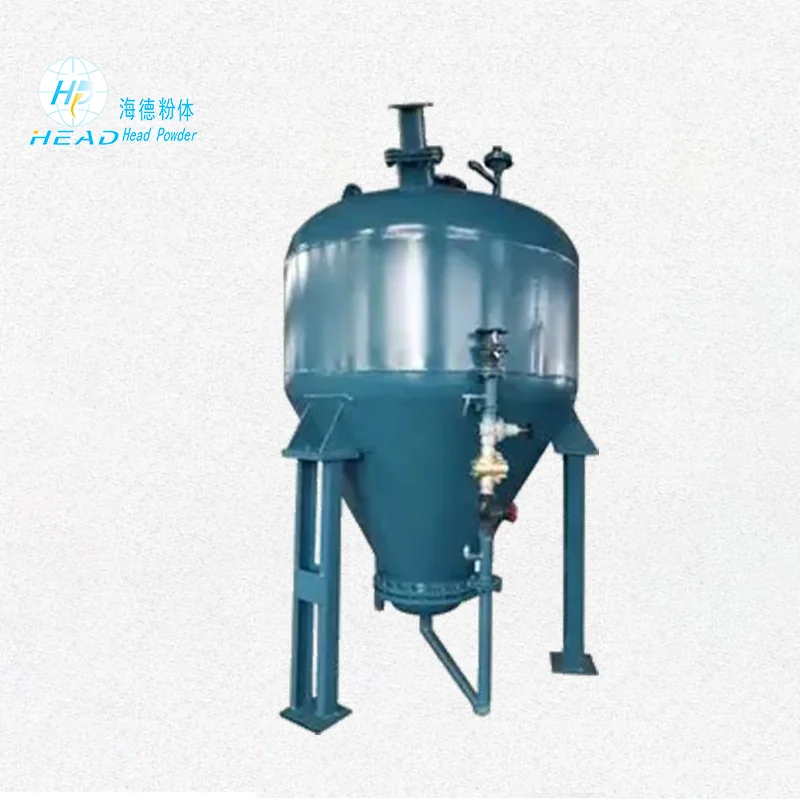
The Heilongjiang Qiqihar soybean enterprise project involved a phased installation over four months. Headpowder's engineers conducted a site survey to map existing infrastructure and identify optimal pipeline routes. The system was integrated with the existing grain storage silos, which included flat-bottom and hopper-bottom silos with capacities ranging from 500 to 2000 tons. The negative pressure system now handles the transfer of soybeans from the receiving pit to the cleaning section, then to the storage silos, and finally to the processing line. One of the key challenges was the high moisture content of soybeans during the rainy season, which could cause bridging in the pipeline. Headpowder solved this by incorporating a moisture-resistant inner lining and adjusting the conveying air velocity. The system also includes a reverse air pulse cleaning mechanism for the filters, ensuring consistent performance. Since commissioning, the client has reported a 40% reduction in dust levels, a 15% decrease in energy consumption compared to the old mechanical system, and virtually zero soybean breakage.
Why Choose Headpowder for Negative Pressure Pneumatic Conveying Systems?
Shandong Headpowder Engineering Co., Ltd., headquartered in Shandong, China, has been a leading provider of pneumatic conveying solutions for the grain and food processing industry for over a decade. The company specializes in custom-engineered systems for handling bulk solids, including soybeans, wheat, corn, rice, and other granular materials. Headpowder's team combines deep expertise in fluid dynamics, material science, and automation to deliver reliable, scalable, and cost-effective solutions. The Qiqihar soybean negative pressure conveying case is one of many successful implementations across China, demonstrating the company's ability to adapt to local conditions and client requirements. For any inquiries about grain storage and transport solutions, including soybean negative pressure pneumatic conveying systems, contact Manager Zhang at Shandong Headpowder Engineering Co., Ltd. via WeChat: 15662777102. Manager Zhang is available to discuss feasibility studies, system design, and after-sales support.
Key Components of a Grain Negative Pressure Pneumatic Conveying System
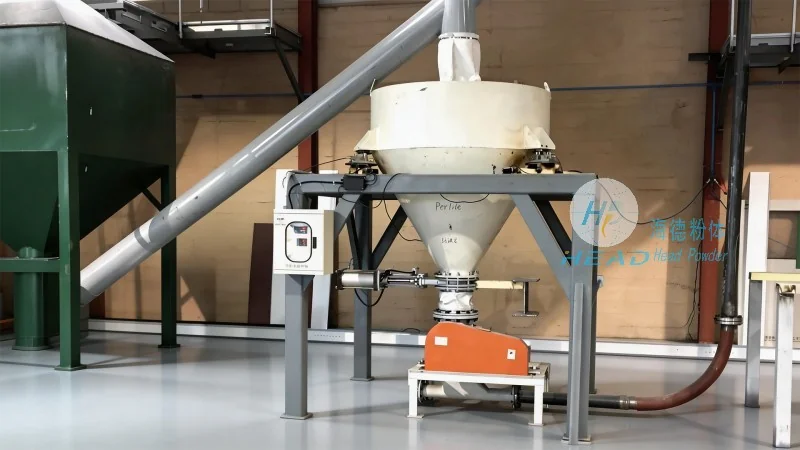
A typical negative pressure pneumatic conveying system for grain storage and transport comprises several essential components. The intake device, often a suction nozzle or a rotary valve, introduces the material into the air stream. The conveying pipeline, made of carbon steel or stainless steel, is designed with smooth interior surfaces to reduce friction. The vacuum source, usually a roots blower or a liquid ring vacuum pump, generates the required negative pressure. A cyclone separator is used for primary material-air separation, followed by a baghouse filter or cartridge filter for fine dust collection. The system also includes a rotary airlock at the discharge point to maintain pressure integrity. Headpowder's design for the Qiqihar project incorporated a variable frequency drive on the vacuum pump, allowing the operator to adjust the conveying speed based on the material's characteristics. This flexibility proved valuable when handling different soybean varieties with varying moisture and density.
Economic and Environmental Benefits of the Soybean Negative Pressure Conveying Project
Investing in a negative pressure pneumatic conveying system yields both economic and environmental returns. For the Qiqihar grain enterprise, the elimination of dust emissions contributed to compliance with stricter environmental regulations in Heilongjiang Province. The reduced product loss—previously estimated at 0.5% due to spillage and dust—now saves the company tens of thousands of dollars annually. Lower energy consumption, combined with reduced maintenance labor, led to a payback period of less than two years. Moreover, the system's automation reduced the need for manual intervention, freeing up workers for higher-value tasks. The case of soybean negative pressure conveying in Qiqihar serves as a model for other grain storage facilities seeking to modernize their operations. Shandong Headpowder Engineering Co., Ltd. continues to refine its technology, incorporating IoT sensors for real-time monitoring and predictive maintenance.
Future Expansion and Scalability
One of the inherent advantages of the negative pressure pneumatic conveying system is its scalability. The client in Qiqihar has already planned to extend the system to connect additional storage silos and a new crushing plant. Headpowder's modular design allows for easy expansion by adding branch lines and increasing the capacity of the vacuum source. The company also offers remote monitoring capabilities, enabling the client to track system performance from a central control room. For grain storage and transport facilities considering similar upgrades, the Qiqihar project demonstrates that a well-designed negative pressure system can handle high throughputs while maintaining product quality. Contact Manager Zhang at Shandong Headpowder Engineering Co., Ltd. for more information on how such a system can be tailored to your specific needs. Reach out via WeChat: 15662777102 to discuss your project requirements.
Conclusion: A Proven Solution for Modern Grain Handling
The Heilongjiang Qiqihar soybean negative pressure conveying project exemplifies the successful application of advanced pneumatic technology in the grain industry. By replacing outdated mechanical conveyors with a dust-free, energy-efficient, and gentle conveying system, the client achieved significant operational improvements. Shandong Headpowder Engineering Co., Ltd. provided end-to-end support, from initial design to commissioning and training. The case reaffirms that negative pressure pneumatic conveying is an ideal choice for grain storage and transport, especially for fragile materials like soybeans. For any further questions or to begin planning your own soybean negative pressure pneumatic conveying system, please contact Manager Zhang directly via WeChat: 15662777102. Headpowder looks forward to helping you optimize your material handling processes with reliable, custom-engineered solutions.