

Operating Process and Working Principle of Weighing Feeding Material Pneumatic Conveying
For industrial applications involving the transport of bulk materials, pneumatic conveying systems are widely utilized due to their efficiency and adaptability. These systems are particularly critical in processes that require precise weighing and controlled feeding of materials, such as in powder handling, chemical processing, and food production. The core of such systems lies in the integration of weighing mechanisms with pneumatic transport technology, enabling accurate material flow management. This article delves into the operational process and working principles of weighing feeding material pneumatic conveying, highlighting the key components, control strategies, and practical applications, with a focus on solutions provided by Shandong HeadPowder Engineering Co., Ltd. (headpowder), a leading manufacturer of advanced material handling systems based in China.
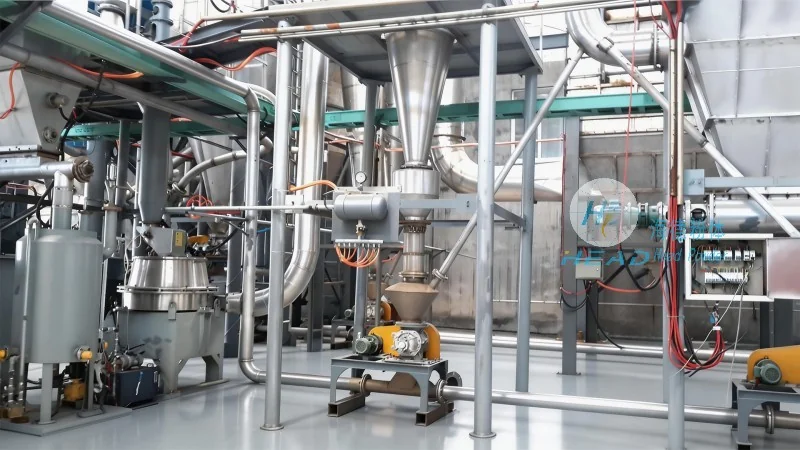

Key Components of the Weighing Feeding Pneumatic Conveying System
The effectiveness of a weighing feeding pneumatic conveying system is determined by its well-designed components, each playing a crucial role in the overall operation. The primary components include the material hopper, which stores the bulk material; a feeder, typically a gravimetric or volumetric type, responsible for controlling the material flow rate; a pneumatic conveying line, which transports the material from the hopper to the destination; and a receiver or discharge point where the material is deposited. Additionally, the system incorporates sensors and control units that monitor and adjust the conveying process in real-time. The weighing feeder, often integrated with the hopper, provides precise measurement of the material being fed, ensuring that the conveying rate matches the required output. The pneumatic system may utilize positive or negative pressure, depending on the material characteristics and application requirements. For example, in positive pressure systems, air is forced through the conveying line, while negative pressure systems create a vacuum to draw material. The choice of pressure type impacts the system's efficiency, energy consumption, and suitability for different material types. The design of the conveying line, including the diameter, length, and bends, is optimized to minimize pressure drop and energy consumption, which is a key consideration for long-distance or high-volume conveying applications.
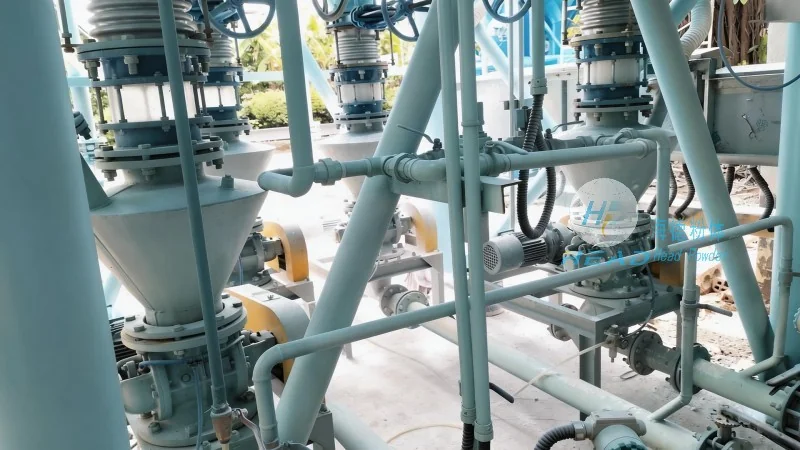
Operating Process of the Weighing Feeding Pneumatic Conveying System
The operational process of a weighing feeding pneumatic conveying system involves several sequential steps, each coordinated to achieve accurate and controlled material transport. The process begins with the material being loaded into the hopper. The feeder then starts, and the weighing mechanism within the feeder measures the mass of material being discharged per unit time. This measurement is crucial for maintaining the desired flow rate, as any deviation can affect downstream processes. The control unit receives data from the weighing sensor and adjusts the feeder's speed or the air flow rate accordingly. In positive pressure systems, the air compressor supplies compressed air to the conveying line, while the feeder regulates the material feed. The material is then entrained by the air stream and transported through the pipeline to the receiver. At the receiver, the material is discharged, and the air is either filtered and recirculated or vented, depending on the system design. The entire process is monitored by a central control system that ensures consistency and efficiency. For instance, in a chemical plant, the system might transport a fine powder from a storage silo to a reactor, with the weighing feeder ensuring that the exact amount of material is added as per the process recipe. The real-time data from the weighing sensors allows operators to make immediate adjustments, preventing overfeeding or underfeeding, which could lead to process inefficiencies or product quality issues. The system's ability to handle varying material conditions, such as moisture content or particle size, is enhanced by the adjustable air flow and feeder settings, making it versatile for different industrial needs.
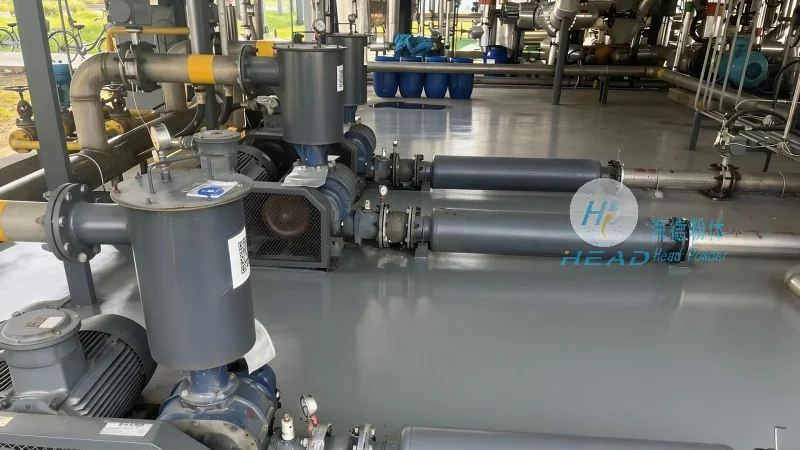
Working Principle of the Weighing and Pneumatic Conveying Mechanism
The working principle of a weighing feeding pneumatic conveying system combines principles of fluid dynamics, material handling, and precision measurement. The pneumatic conveying part relies on the interaction between the material particles and the air stream. When air is introduced into the conveying line, it creates a flow that lifts and transports the material. The velocity of the air must be sufficient to overcome the gravitational force acting on the material particles and any friction within the pipeline. The design of the conveying line, including the diameter, length, and bends, is optimized to minimize pressure drop and energy consumption. The weighing mechanism operates on the principle of mass measurement, typically using load cells or strain gauges to detect the weight of material passing through the feeder. This data is processed to calculate the flow rate, which is then used to adjust the feeder's operation. The integration of these two systems—pneumatic transport and weighing control—ensures that the material is not only transported efficiently but also in precise quantities. For example, in a food processing facility, the system might convey a dry powder ingredient to a mixing tank, with the weighing feeder ensuring that the exact weight of the ingredient is added to achieve the desired product composition. The working principle also involves the use of appropriate air filtration and cleaning systems to maintain material purity and prevent system blockages. The control system may employ feedback loops to continuously adjust the air flow and material feed, maintaining a stable operation even under varying conditions. The precision of the weighing mechanism is critical, as it directly impacts the accuracy of the material flow, which is essential for maintaining product quality and process consistency.