

The Operation Process and Working Principle of Quicklime Pneumatic Conveying Lines
Quicklime, also known as calcium oxide, is a vital industrial material utilized across sectors like construction, chemical manufacturing, and environmental treatment. The efficient and safe transportation of quicklime from production sites to processing facilities is essential for maintaining operational efficiency and product quality. Pneumatic conveying systems, particularly those designed for quicklime, provide a reliable solution by utilizing air to transport the material through a pipeline network. This article explores the operation process and working principle of quicklime pneumatic conveying lines, detailing key components, operational steps, and technical aspects that ensure optimal performance.
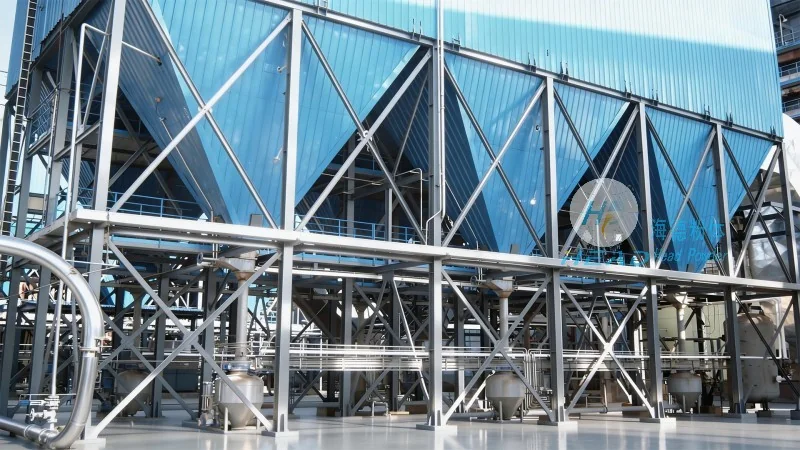
Introduction to Quicklime Pneumatic Conveying Systems
Before examining the operation process, it is important to understand the fundamental components and purpose of a quicklime pneumatic conveying line. These systems are engineered to handle the unique properties of quicklime, which includes its high reactivity, abrasive nature, and tendency to generate dust. The primary goal is to transport quicklime from its source, such as a storage silo or production unit, to the point of use, like a reactor or processing plant, without compromising material integrity or safety.
Key Components of a Quicklime Pneumatic Conveying Line
The effective operation of a quicklime pneumatic conveying line relies on several critical components that work in tandem to ensure smooth material transport. These components include:
- Source Hopper or Silo: This is where the quicklime is stored before being fed into the system. It is typically equipped with a feeder mechanism, such as a rotary valve or screw feeder, to control the flow rate of the material.
- Feeder and Metering Device: The feeder regulates the quantity of quicklime entering the conveying line, ensuring a consistent and controlled flow. This is crucial for maintaining system efficiency and preventing overloading or underloading.
- Pneumatic Conveying Pipeline: The pipeline, usually made of stainless steel or other corrosion-resistant materials, forms the main transport path for the quicklime. The design of the pipeline, including bends, elbows, and straight sections, is optimized to minimize pressure drop and material degradation.
- Air Supply System: This component generates the necessary air pressure to move the quicklime through the pipeline. It typically includes a blower or compressor, air filters, and pressure regulators to ensure a stable and clean air supply.
- Control Valves and Manifolds: These devices regulate the flow of air and material within the system, allowing for precise control over the conveying process. They can be automated to respond to changes in demand or system conditions.
- Receiving Hopper or Storage Tank: The end point of the conveying line where the quicklime is deposited. This component may also include a dust collection system to capture any airborne particles and prevent environmental contamination.
The Working Principle of Quicklime Pneumatic Conveying
The core principle behind quicklime pneumatic conveying is the use of compressed air to create a flow of material within the pipeline. The process can be categorized into two main types: dilute phase and dense phase conveying, each with distinct characteristics and applications.
Dilute Phase Conveying
In dilute phase conveying, the quicklime is suspended in a high-velocity stream of air, typically at velocities ranging from 20 to 30 meters per second. The air and material mixture travels through the pipeline, with the air providing the necessary kinetic energy to move the material. This method is suitable for short to medium distance transport and is commonly used for fine powders like quicklime. The key advantage is its ability to handle large volumes of material with relatively low air consumption, making it cost-effective for many applications.
Dense Phase Conveying
Dense phase conveying operates at lower air velocities, typically around 5 to 10 meters per second, and higher air pressures. The material is conveyed in a more concentrated form, often as a slurry or a dense stream of particles. This method is ideal for longer distances or when the material is more abrasive or sensitive to high velocities. Dense phase conveying reduces the risk of material degradation and equipment wear, making it suitable for high-value or high-quality quicklime.
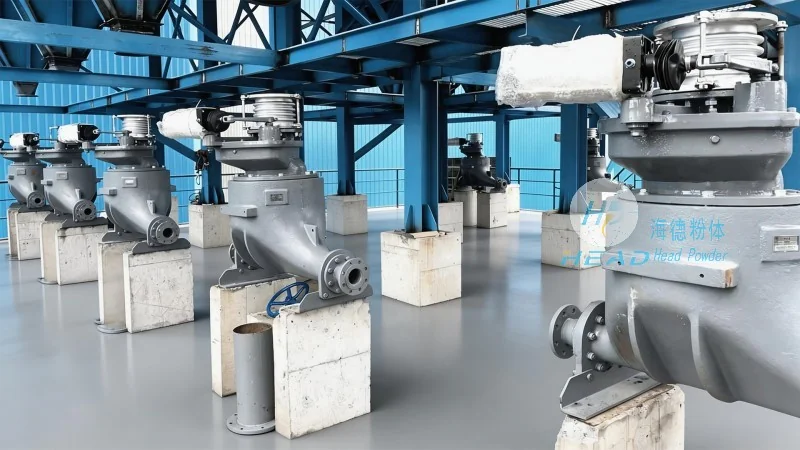
Operation Process of Quicklime Pneumatic Conveying Lines
The operation process of a quicklime pneumatic conveying line involves several sequential steps that ensure the efficient and safe transport of the material. The following is a detailed breakdown of the typical operational sequence:
Step 1: Material Preparation and Feeding
The process begins with the quicklime being stored in the source hopper or silo. The feeder mechanism, such as a rotary valve or screw feeder, regulates the flow of quicklime into the system. The feeder is designed to handle the bulk density and flow characteristics of quicklime, ensuring a consistent feed rate. This step is critical as it sets the foundation for the entire conveying process.
Step 2: Air Supply and Compression
Simultaneously, the air supply system generates the necessary compressed air. The blower or compressor draws in ambient air and compresses it to the required pressure, typically ranging from 0.5 to 1.5 bar above atmospheric pressure. The air is then filtered to remove any contaminants that could damage the system or affect the quality of the quicklime. The pressure regulator ensures that the air pressure remains stable throughout the operation.
Step 3: Material and Air Mixing
In this step, the quicklime from the feeder is introduced into the pipeline, where it mixes with the compressed air. The feeder may use a venturi or other mixing device to ensure thorough and uniform mixing of the material and air. The mixture then travels through the pipeline, with the air providing the necessary force to move the quicklime. The design of the pipeline, including the placement of bends and elbows, is optimized to minimize pressure losses and maintain the integrity of the material.
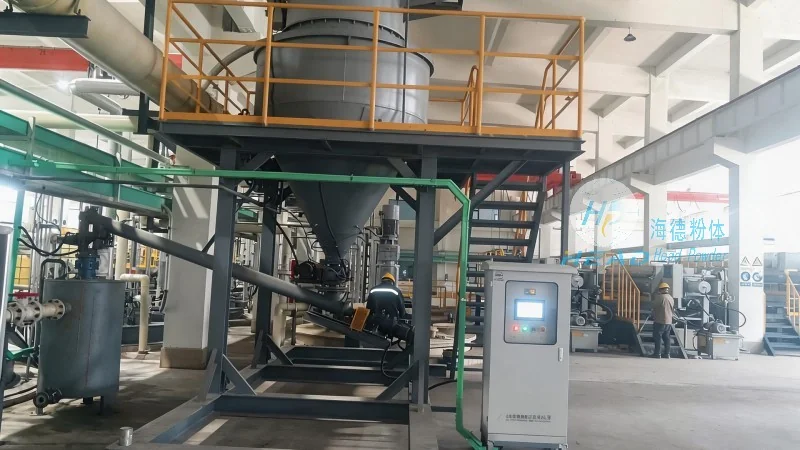
Step 4: Conveying Through the Pipeline
The mixed air and quicklime stream moves through the pipeline to the receiving hopper or storage tank. The velocity and pressure of the air ensure that the material is transported efficiently without settling or clogging. The pipeline may include additional components such as filters or separators to remove any excess air or fine particles before the material is deposited.
Step 5: Material Deposition and Dust Control
At the receiving end, the quicklime is deposited into the hopper or storage tank. The system may include a dust collection system to capture any airborne particles and prevent environmental contamination. This step is essential for maintaining safety and compliance with environmental regulations. The deposited quicklime is then ready for further processing or use.
Advantages and Considerations of Quicklime Pneumatic Conveying
Quicklime pneumatic conveying lines offer several advantages over traditional methods such as belt conveyors or bucket elevators. These include:
- Reduced Risk of Material Contamination: The enclosed pipeline system prevents exposure to external contaminants, ensuring the purity of the quicklime.
- Improved Safety: The system minimizes the risk of dust explosions and inhalation hazards by containing the material within the pipeline.
- Space Efficiency: Pneumatic conveying systems require less floor space compared to other bulk material handling methods, making them suitable for facilities with limited space.
- Flexibility in Layout: The pipeline can be configured in various shapes and directions, allowing for flexible plant layouts.
- Lower Maintenance: With fewer moving parts compared to mechanical conveyors, pneumatic systems often require less maintenance and have longer service lives.
However, there are also considerations to keep in mind when implementing quicklime pneumatic conveying lines. These include the need for proper material handling equipment to prevent clogging or blockages, the importance of maintaining air pressure and quality, and the requirement for regular maintenance to ensure optimal performance. Additionally, the system's design must account for the abrasive nature of quicklime to prevent wear and tear on components.
Conclusion
Quicklime pneumatic conveying lines are a sophisticated and efficient method for transporting quicklime in industrial applications. By understanding the key components, working principles, and operational steps, manufacturers can optimize their systems to achieve high performance, safety, and reliability. The technology offers significant advantages over traditional bulk material handling methods, making it a preferred choice for many industries. As the demand for quicklime continues to grow, the importance of efficient and reliable conveying systems will only increase, highlighting the critical role of pneumatic conveying in the industrial supply chain.