

Principles and Working Scene Characteristics of Pneumatic Conveying Equipment for Petrochemical Mate
HeadPowder, a leading manufacturer based in Shandong, China, specializes in the design and production of pneumatic conveying equipment tailored for the petrochemical industry. This equipment is engineered to efficiently transport various bulk materials, such as powders, granules, and fine particles, within industrial settings. The core principle behind pneumatic conveying involves using a gas stream, typically air or other gases, to move material through a pipeline system. This method offers several advantages over traditional mechanical conveying, including reduced maintenance, improved safety, and the ability to handle materials that are difficult to transport via conventional means.
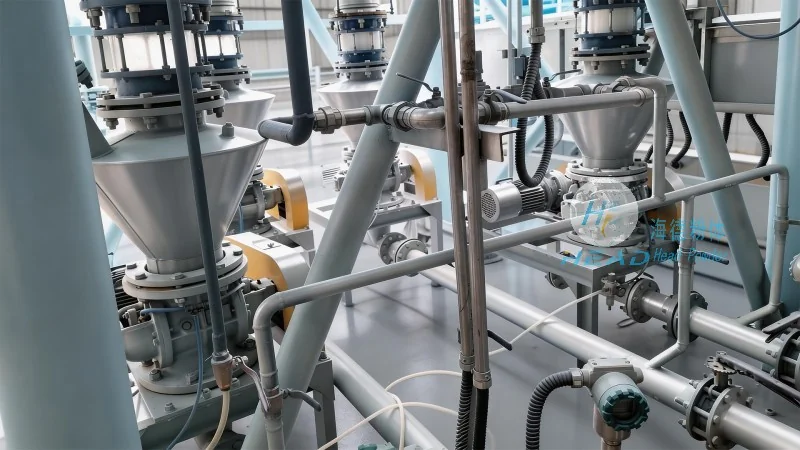
Principles of Pneumatic Conveying
The fundamental principle of pneumatic conveying is the utilization of a pressurized or vacuum system to create a flow of air or gas that propels the material through a pipeline. In a typical system, the material is introduced into the conveying line, often with the aid of a feeder or hopper, and then entrained by the moving gas. The gas velocity is carefully controlled to ensure that the material is fully suspended and transported without clogging or degradation. There are two main types of pneumatic conveying systems: dilute-phase and dense-phase. Dilute-phase systems operate at higher gas velocities, allowing for longer conveying distances and lower material concentration in the gas stream. Dense-phase systems, on the other hand, use lower gas velocities and higher material concentrations, which is suitable for materials that are sensitive to high-velocity transport or require gentle handling.
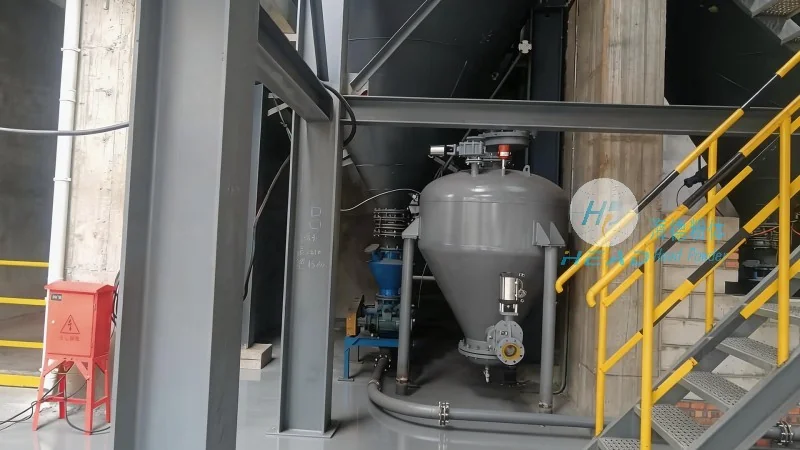
Working Scene Characteristics
The application of pneumatic conveying equipment in petrochemical work scenes is characterized by several key features that enhance operational efficiency and safety. One of the primary advantages is the ability to handle hazardous or toxic materials in a sealed system, minimizing the risk of exposure to personnel. This is particularly important in the petrochemical industry, where materials like chemicals, solvents, and powders may pose health or environmental risks. Additionally, pneumatic conveying systems can be integrated into existing production lines, allowing for seamless material transfer between processes without the need for intermediate storage or manual handling.
Key Features and Benefits
HeadPowder's pneumatic conveying equipment is designed with several features that address the specific needs of the petrochemical industry. These include robust construction to withstand corrosive environments, advanced control systems for precise material flow regulation, and flexible configurations to accommodate various material types and conveying distances. The equipment is also engineered for low maintenance, with components that are easy to replace and inspect, reducing downtime and operational costs. Furthermore, the systems are equipped with safety features such as pressure relief valves and emergency shut-off mechanisms to ensure safe operation under all conditions.
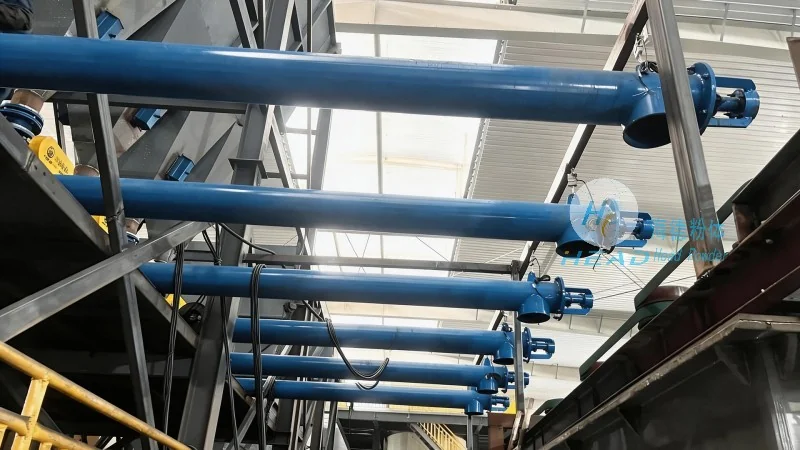
Application Examples
In practice, pneumatic conveying equipment from HeadPowder is used in a wide range of petrochemical applications. For instance, in the production of polymers, the equipment is used to transport raw materials like resins and additives from storage to processing units. In chemical manufacturing, it is employed to move reactive powders and liquids between reactors and storage tanks. The equipment is also utilized in the handling of catalysts and other fine powders, where gentle handling is crucial to maintain material quality. These applications demonstrate the versatility and reliability of HeadPowder's pneumatic conveying solutions in demanding industrial environments.