

Principle and Working Scene Characteristics of Fully Automatic Material Feeding Pneumatic Conveying
HeadPowder, a leading provider of industrial material handling solutions, specializes in the design and manufacturing of fully automatic material feeding pneumatic conveying systems. These advanced systems are engineered to efficiently transport bulk materials from storage silos or hoppers to processing equipment, ensuring seamless and reliable material flow in various industrial applications.
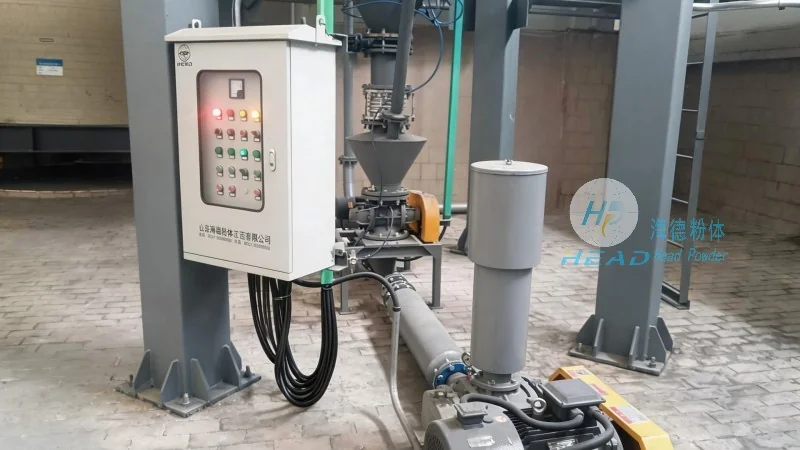
Understanding the Core Principle of Pneumatic Conveying Systems
The fundamental principle behind pneumatic conveying systems is the use of air or gas as the conveying medium to transport bulk materials. In a fully automatic material feeding system, this process is integrated with automated feeding mechanisms, such as rotary valves or screw feeders, to ensure consistent and controlled material discharge. The system operates by creating a pressure differential—either positive (pressure) or negative (vacuum)—to move the material through a pipeline network. This method eliminates the need for mechanical components like conveyor belts or buckets, reducing maintenance requirements and enhancing safety in material handling operations.
Key Components and Their Roles in the System
A fully automatic material feeding pneumatic conveying system typically consists of several critical components, each playing a vital role in the overall operation. The main components include a material hopper or silo for storage, an automated feeding device (e.g., a rotary airlock valve or screw feeder) to control the flow rate, a conveying pipeline system, a blower or vacuum pump to generate the necessary air pressure, and a receiver or discharge hopper at the destination. The automated feeding device ensures that material is discharged at a precise rate, preventing overfilling or underfilling, while the blower provides the energy to move the material through the pipeline. The pipeline network is designed with appropriate bends and fittings to maintain the flow of material without causing blockages or degradation.
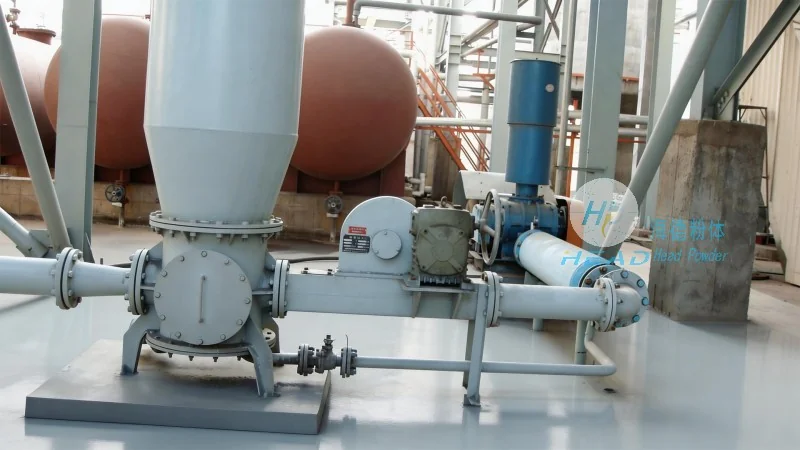
Working Scene Characteristics: Applications Across Industries
The versatility of fully automatic material feeding pneumatic conveying systems makes them suitable for a wide range of industrial applications. In the chemical industry, these systems are used to transport powders and granules for mixing, blending, and packaging processes. The automated feeding feature ensures that the correct amount of material is added to reactors or mixers, maintaining consistent product quality. In the food and pharmaceutical industries, where hygiene and contamination control are paramount, the systems are equipped with stainless steel components and sealed pipelines to prevent cross-contamination. The negative pressure (vacuum) mode is often preferred in these sectors to avoid exposing materials to the atmosphere, preserving their quality and safety.
Advantages of Automated Material Feeding Systems
Compared to traditional mechanical conveying methods, fully automatic material feeding pneumatic conveying systems offer several advantages. The most significant benefit is the reduction in labor costs, as the system operates with minimal human intervention. The automated feeding mechanism ensures consistent material flow, which improves the efficiency of downstream processes and reduces downtime. Additionally, the system is more flexible, as it can be easily reconfigured to handle different materials or process requirements. The compact design of the system also saves space in industrial facilities, making it ideal for applications with limited floor space. Furthermore, the system is more reliable and durable, with fewer moving parts that can wear out or break down, resulting in lower maintenance costs over time.
Operational Workflow: From Material Storage to Processing
The operational workflow of a fully automatic material feeding pneumatic conveying system begins with the material being stored in a hopper or silo. The automated feeding device then measures and discharges the material at a controlled rate into the conveying pipeline. The blower generates the necessary air pressure, which propels the material through the pipeline to the receiver or processing equipment. The system continuously monitors the material flow and adjusts the feeding rate as needed to maintain a steady supply. This closed-loop operation ensures that the material is transported efficiently and without interruption, from the storage area to the processing line.
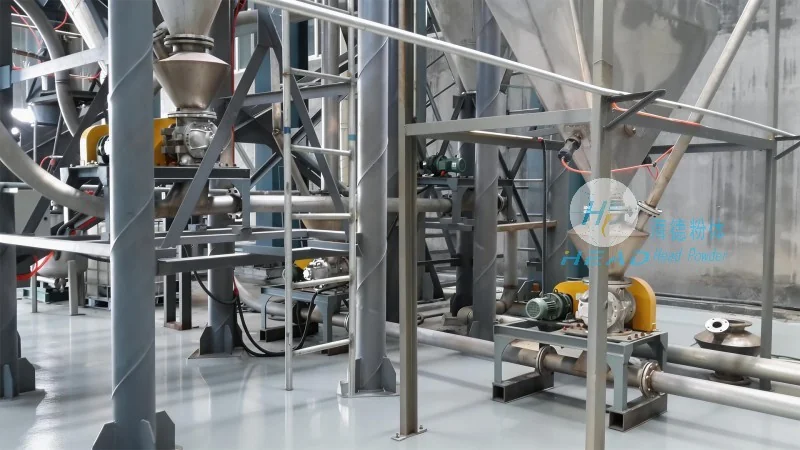
Customization and Scalability for Diverse Needs
HeadPowder understands that each industrial application has unique requirements. Therefore, the fully automatic material feeding pneumatic conveying systems are highly customizable to meet specific needs. The system can be scaled up or down to handle varying material volumes, from small-scale laboratory applications to large-scale industrial production lines. The components, such as the blower size, pipeline diameter, and feeding device capacity, can be adjusted to suit the material characteristics and process demands. For example, for abrasive materials, the system may include special wear-resistant liners to protect the components from damage. For high-value materials, the system may be equipped with additional filtration and cleaning mechanisms to prevent contamination. This flexibility ensures that the system can be tailored to fit the exact requirements of the user, providing optimal performance and reliability.
Conclusion: Enhancing Efficiency and Reliability in Material Handling
In conclusion, fully automatic material feeding pneumatic conveying systems are advanced solutions that combine the efficiency of pneumatic transport with the precision of automated material handling. These systems are designed to improve the reliability and efficiency of material flow in industrial processes, reducing downtime and maintenance costs. With their ability to handle a wide range of materials and adapt to different process requirements, these systems are essential for modern industrial operations. HeadPowder, with its expertise in engineering and manufacturing, provides high-quality systems that meet the needs of various industries, ensuring that material handling operations are smooth, safe, and efficient.