

What is a Molybdenum Trioxide Powder Conveying Line? And What Are Its Design Principles?
Molybdenum trioxide (MoO₃) is a critical industrial chemical with applications spanning electronics, ceramics, and chemical manufacturing. The efficient handling of this fine powder is essential for maintaining product quality and operational safety. A molybdenum trioxide powder conveying line is a specialized system engineered to transport MoO₃ from storage or processing stages to subsequent production steps, such as mixing, packaging, or further processing. This article examines the concept of such a conveying line and explores the core design principles that govern its operation.
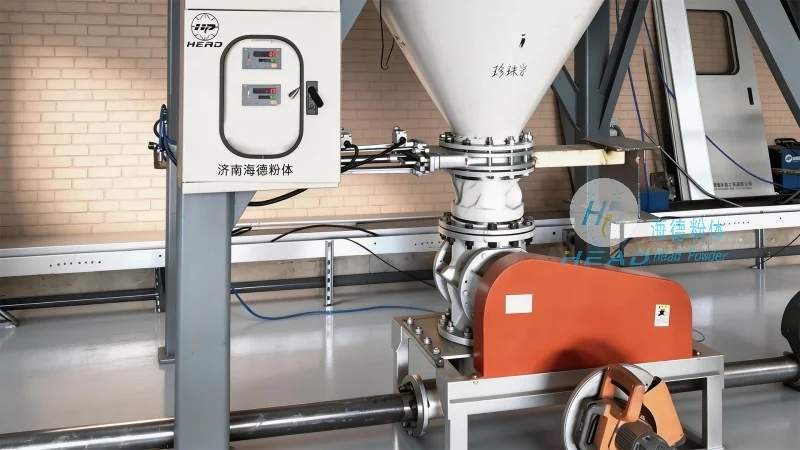
Overview of the Molybdenum Trioxide Powder Conveying Line
The molybdenum trioxide powder conveying line is a dedicated infrastructure designed to handle the unique properties of MoO₃ powder. This fine, often brittle material requires a system that minimizes particle attrition, prevents contamination, and ensures reliable transport. The system is typically integrated into larger industrial processes, working in tandem with storage silos, processing equipment, and packaging lines to form a seamless material flow.
Key Components and Their Functions
The design of a molybdenum trioxide powder conveying line involves several interdependent components, each playing a vital role in the overall operation:
1. Feeding Equipment: This component is responsible for accurately delivering MoO₃ powder into the conveying system. Common feeding devices include rotary valves, screw feeders, or vibratory feeders. These devices are selected based on the powder's flowability, moisture content, and particle size. For molybdenum trioxide, which can be cohesive or dusty, a rotary valve with a precise adjustment mechanism is often preferred to maintain a consistent feed rate and prevent material buildup.
2. Pneumatic Conveying System: Pneumatic conveying is the most common method for transporting fine powders like MoO₃ due to its ability to handle dust and minimize product contamination. The system typically includes a blower, ductwork, and a receiver. The blower generates airflow that propels the powder particles through the ducts, while the receiver collects the material at the destination point. The ductwork is designed with smooth, non-abrasive surfaces to avoid particle damage and is often equipped with cleaning mechanisms to prevent blockages.
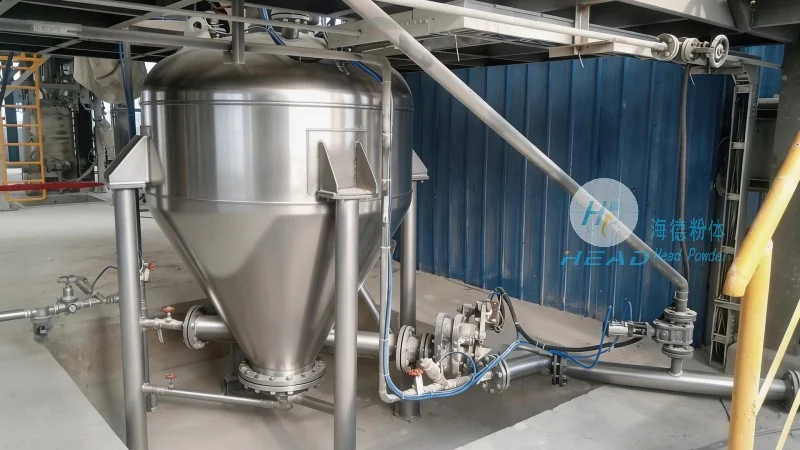
3. Control and Monitoring System: A sophisticated control system is integrated into the conveying line to regulate operation and monitor performance. This includes sensors for detecting powder levels, pressure, and flow rates, as well as control panels that allow operators to adjust parameters such as airflow velocity and feeding rates. The control system ensures that the conveying process is optimized for efficiency, energy consumption, and safety, providing real-time feedback and alarm capabilities.
Design Principles for Optimal Performance
The design of a molybdenum trioxide powder conveying line is guided by several key principles aimed at maximizing efficiency and minimizing risks:
1. Minimizing Particle Attrition: Molybdenum trioxide particles are often brittle and can be easily damaged during handling. The system design prioritizes smooth, low-impact components and avoids high-velocity airflow in critical areas. This is crucial for maintaining the powder's physical properties, as particle size and shape directly affect its performance in downstream applications.
2. Preventing Corrosion and Contamination: MoO₃ is a reactive compound that can be sensitive to moisture and other contaminants. The conveying system is constructed with materials resistant to corrosion and easy to clean, such as stainless steel or specialized coatings. Sealing mechanisms are used throughout the system to prevent cross-contamination and maintain product purity.
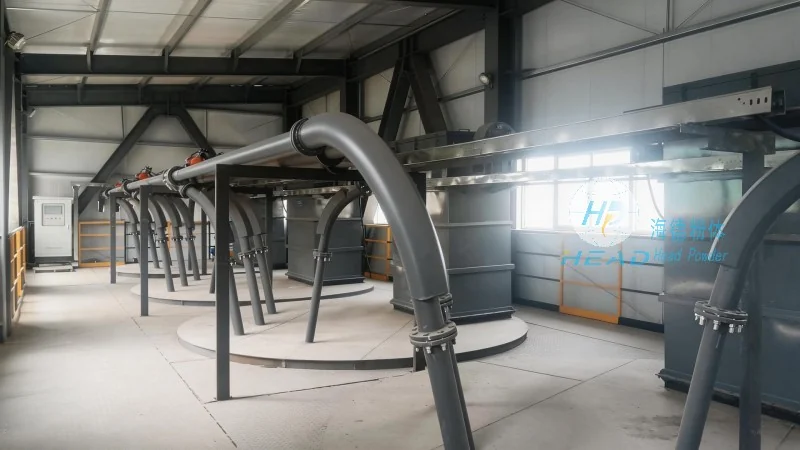
3. Airtight Sealing and Dust Control: To comply with environmental regulations and maintain workplace safety, the conveying line must be airtight. Sealing components, gaskets, and clamped connections are used to prevent air leakage and material spillage. The system may also include dust collection and filtration equipment to capture any airborne particles and ensure a clean working environment.
4. Optimizing Airflow and Pressure: The airflow velocity and pressure within the conveying system are carefully calculated based on the powder's density, particle size, and duct length. Proper airflow management ensures efficient transport while minimizing energy consumption. The design considers factors such as the powder's reactivity and the need to avoid static buildup, which can affect material flow and safety.
Application in Industrial Processes
Molybdenum trioxide powder conveying lines are widely utilized in industrial settings where consistent and safe handling of fine powders is critical. These systems are commonly found in the production of molybdenum-based chemicals, as well as in downstream processes like the manufacturing of molybdenum alloys and catalysts. The efficiency of the conveying line directly impacts the overall productivity and cost-effectiveness of the production process, making it a key component in industrial operations.
Conclusion
In summary, a molybdenum trioxide powder conveying line is a specialized system engineered to handle this valuable chemical compound with precision and care. The design principles, including minimizing particle damage, preventing contamination, and ensuring airtight operation, are essential for maintaining product quality and operational safety. Companies like Shandong HeadPowder Engineering Co., Ltd., based in China, specialize in the design and manufacturing of such conveying systems, providing tailored solutions for industrial applications. By adhering to these design principles, industries can achieve efficient and reliable transport of molybdenum trioxide powder, supporting their production processes and meeting regulatory requirements. The integration of advanced control systems and material-specific design ensures that these conveying lines deliver consistent performance and contribute to the overall success of industrial operations.