

Role of Pneumatic Conveying in Cement and Fly Ash Transportation
For industrial applications involving the transportation of bulk materials like cement and fly ash, efficient and reliable material handling systems are crucial. Pneumatic conveying technology has emerged as a preferred solution, offering advantages such as reduced maintenance, improved safety, and enhanced operational flexibility. This article explores the critical role of pneumatic conveying in the transportation of cement and fly ash, highlighting its benefits and practical applications.
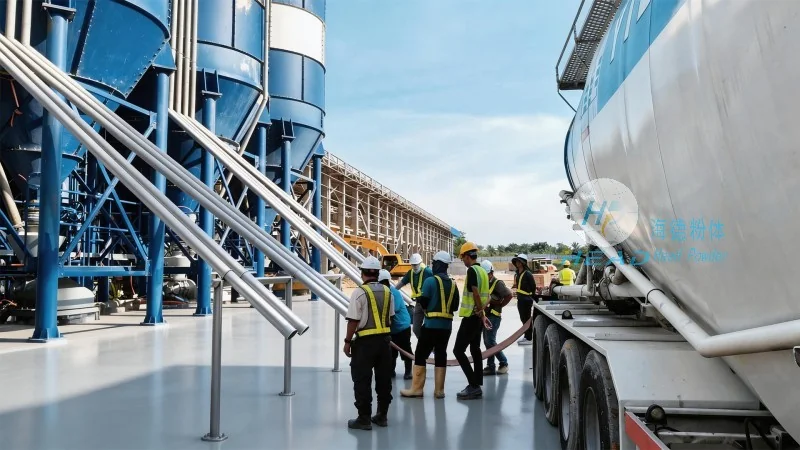
Introduction to Pneumatic Conveying Systems
Pneumatic conveying systems utilize air or gas to transport solid materials through a pipeline network. These systems can be categorized into two main types: dilute-phase and dense-phase. Dilute-phase systems, which are commonly used for transporting materials like cement and fly ash over short to medium distances, rely on high-velocity air to suspend the material particles. Dense-phase systems, on the other hand, use lower air velocities and higher material concentrations, making them suitable for longer distances or more sensitive materials. The choice between these systems depends on factors such as material characteristics, distance, and desired flow rates.
Benefits of Pneumatic Conveying for Cement and Fly Ash
Implementing pneumatic conveying for cement and fly ash transportation offers several key advantages. First, it significantly reduces the need for mechanical components like belts or buckets, minimizing maintenance requirements and downtime. This leads to lower operational costs and increased productivity. Second, pneumatic systems provide a closed environment, preventing dust emissions and ensuring compliance with environmental regulations. This is particularly important for fly ash, which can be a source of air pollution if not handled properly. Third, the technology allows for precise control over material flow rates and pressure, enabling better process integration and quality control. Additionally, pneumatic conveying systems are adaptable to various industrial settings, from small-scale plants to large-scale production facilities.
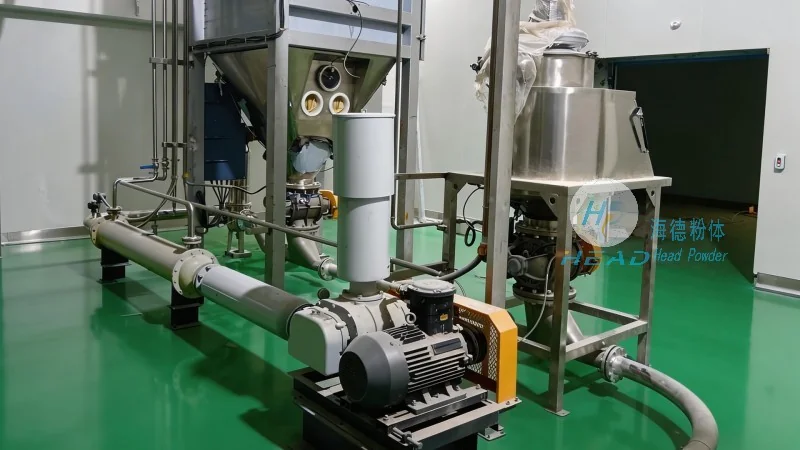
Applications in Cement and Fly Ash Handling
In the cement industry, pneumatic conveying is widely used for transporting raw materials, clinker, and finished cement products. For example, raw materials such as limestone, clay, and iron ore are often conveyed pneumatically from storage silos to the grinding mills. Similarly, fly ash, a byproduct of coal combustion, is transported from power plants to cement plants for use as a supplementary cementitious material. The ability to handle both fine and coarse particles makes pneumatic systems ideal for these applications. In fly ash handling, the technology ensures that the material is transported without degradation, maintaining its quality for use in concrete production. The closed system also prevents contamination from external sources, ensuring the purity of the fly ash.

Technical Considerations for Pneumatic Conveying
When designing a pneumatic conveying system for cement and fly ash, several technical factors must be considered. Material properties, such as particle size, density, and moisture content, play a critical role in determining the system's performance. For instance, fly ash particles are typically fine and can cause blockages if not properly handled. Therefore, the system design must include features like air filters and cyclones to prevent clogging. The pipeline layout and diameter are also important considerations, as they affect the air velocity and pressure required for efficient transport. Additionally, the system must be equipped with appropriate control mechanisms to regulate flow rates and prevent overpressure or underpressure conditions. Proper maintenance, including regular cleaning and inspection of components, is essential to ensure long-term reliability and performance.
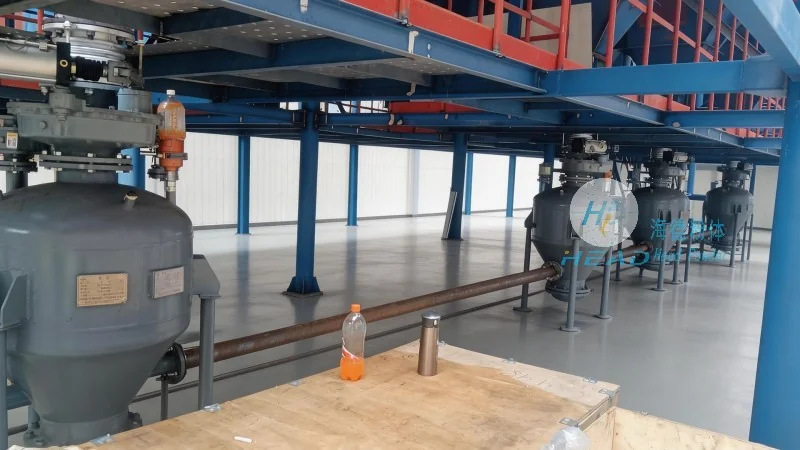
Case Study: Implementation by Shandong HeadPowder Engineering Co., Ltd.
Shandong HeadPowder Engineering Co., Ltd., a leading provider of material handling solutions, has successfully implemented pneumatic conveying systems for several cement and fly ash projects. One notable project involved the installation of a dilute-phase system in a large cement plant in China. The system was designed to transport raw materials from storage silos to the grinding mill, covering a distance of approximately 500 meters. The system was equipped with high-efficiency air filters and cyclones to handle the fine fly ash particles, ensuring smooth operation and minimal downtime. The client reported significant improvements in production efficiency and reduced maintenance costs after the system was installed. Another project involved the transportation of fly ash from a power plant to a nearby cement plant, over a distance of 20 kilometers. The dense-phase system implemented by HeadPowder Engineering was able to handle the long-distance transport efficiently, maintaining the quality of the fly ash and meeting the client's operational requirements.
Conclusion
Pneumatic conveying technology plays a vital role in the efficient and safe transportation of cement and fly ash in industrial applications. By leveraging the advantages of pneumatic systems, such as reduced maintenance, environmental compliance, and precise control, industries can enhance their operational performance and product quality. Companies like Shandong HeadPowder Engineering Co., Ltd. continue to innovate and provide tailored solutions to meet the diverse needs of the cement and fly ash handling industry. As the demand for sustainable and efficient material handling solutions grows, pneumatic conveying is expected to remain a key technology in the sector.