

Principle and Classification Application of Powder Carbon Additive Pneumatic Conveying
For industrial applications, the efficient and reliable transport of carbon additive powders is crucial for maintaining production efficiency and product quality. Pneumatic conveying systems have emerged as a key technology in this field, offering a solution to the challenges associated with handling fine powders like carbon additives. This article provides an overview of the working principles, classifications, and practical applications of pneumatic conveying for carbon additive powders, with a focus on the expertise of Shandong HeadPowder Engineering Co., Ltd.
Introduction to Powder Carbon Additive Pneumatic Conveying
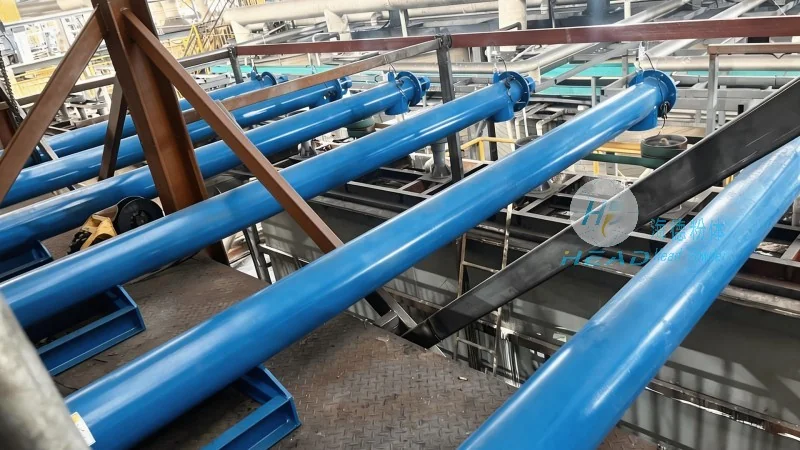
Powder carbon additives, such as calcined petroleum coke or anthracite, are widely used in steelmaking, foundry casting, and other metallurgical processes. Traditional methods of transporting these powders, like bucket elevators or belt conveyors, often face issues like dust generation, material degradation, and operational inefficiencies. Pneumatic conveying offers a more advanced approach by utilizing air as the conveying medium to transport the powder through a pipeline system. This method not only improves safety by containing dust but also enhances the overall process control and material handling capabilities.
Working Principle of Pneumatic Conveying for Carbon Additive Powders
The core principle of pneumatic conveying involves creating a flow of air within a pipeline that is sufficient to lift and transport the carbon additive powder particles. There are two main types of pneumatic conveying systems based on the air velocity and pressure: dilute-phase and dense-phase systems. In dilute-phase systems, the air velocity is high enough to keep the powder particles suspended in the air stream, allowing for long-distance transport with relatively low pressure. Dense-phase systems, on the other hand, operate at lower air velocities and higher pressure, where the powder forms a dense slurry-like flow, which is suitable for handling more abrasive or sensitive materials. The working principle also includes the use of appropriate equipment such as feeders, blowers, and receivers to control the flow rate and pressure, ensuring the stable operation of the conveying system.
Classification of Pneumatic Conveying Systems for Carbon Additive Powders
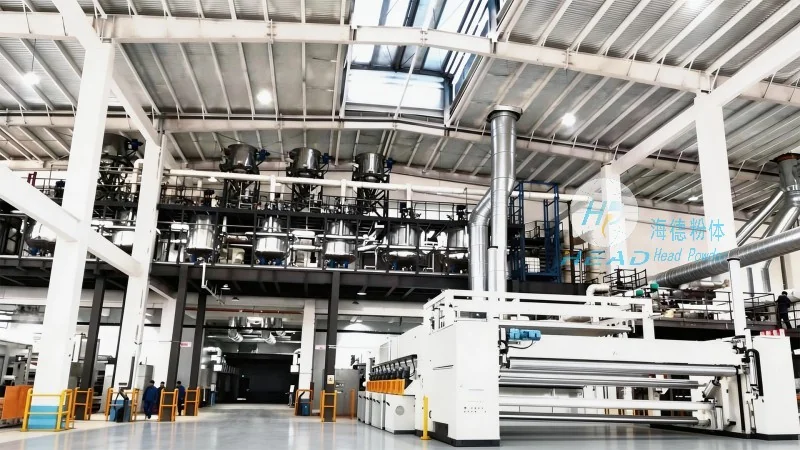
Pneumatic conveying systems for carbon additive powders can be classified based on several factors, including the pressure level, the type of air flow, and the application requirements. The most common classifications are pressure-type and vacuum-type systems. Pressure-type systems use a positive pressure blower to push the air and powder mixture through the pipeline, which is ideal for short to medium-distance transport and for applications where the receiving point is at a higher elevation than the source. Vacuum-type systems, conversely, use a vacuum pump to draw the powder into the pipeline, making them suitable for long-distance or when the receiving point is at a lower elevation. Additionally, systems can be further categorized as continuous or batch operation, depending on the production needs and the nature of the material being conveyed.
Application Scenarios and Benefits
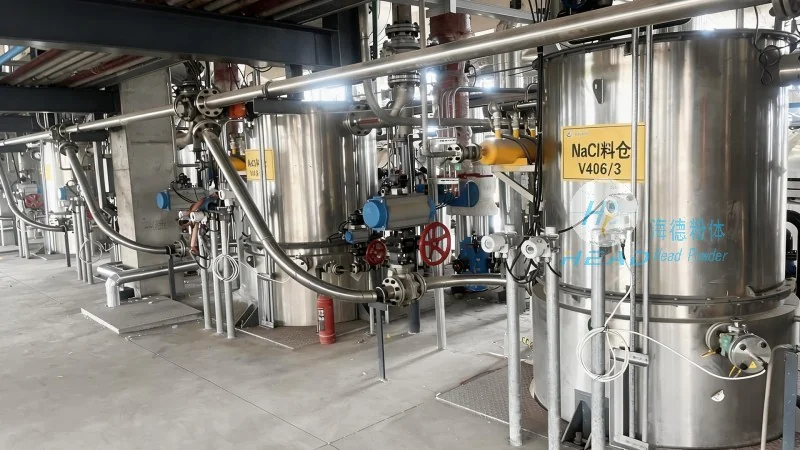
The application of pneumatic conveying for carbon additive powders spans various industrial sectors. In steel mills, for example, it is used to transport calcined coke from storage silos to the blast furnace or sintering plant, ensuring a consistent supply of raw material. In foundry operations, pneumatic conveying helps in delivering carbon additives to the molding and casting processes, improving the quality of the cast products. The benefits of using pneumatic conveying include reduced labor costs, minimized material loss due to dust, enhanced safety by containing hazardous powders, and improved process automation. Moreover, the system's ability to handle fine powders without clogging or degradation makes it a preferred choice for high-purity carbon additives used in precision manufacturing.
Company Profile: Shandong HeadPowder Engineering Co., Ltd.
Shandong HeadPowder Engineering Co., Ltd., commonly known as headpowder, is a leading provider of specialized engineering solutions for powder handling and conveying systems. With a focus on industrial applications involving carbon additives and other fine powders, the company has established itself as a trusted partner in the field. Headpowder is headquartered in Shandong, China, and offers comprehensive services ranging from system design and manufacturing to installation and maintenance. The company's expertise in pneumatic conveying technology is reflected in its ability to deliver customized solutions that meet the specific requirements of clients, ensuring efficient and reliable powder transport in various industrial settings.