Case
crystal particles mainly include their hardness, density, melting point, solubility, specific surface area, particle size distribution, surface morphology and chemical stability. Hardness determines the wear resistance of crystal particles during processing and transportation; Density and melting point affect its stability and handling at different temperatures. Solubility is related to the solubility of crystal particles in liquid medium. The specific surface area and particle size distribution affect the contact area between the particles and the reaction medium, which in turn affects the reaction rate. Surface morphology and chemical stability affect the stability and application range of crystal particles in the environment. The common transportation methods of crystal particles mainly include pneumatic conveying, mechanical conveying, gravity conveying and pipeline conveying. When choosing the crystal particle transportation method, the material characteristics, transportation needs, and whether there are other transportation needs should be taken into account. At present, the common crystal particle transportation methods in the industry mainly include the following types: pneumatic conveying transports particles to the destination through air flow, which is suitable for occasions with long transportation distances and large conveying volumes; Mechanical conveying includes belt conveying, spiral conveying, etc., which is suitable for occasions with short conveying distance and small conveying volume; Gravity conveying uses gravity to make particles naturally slide down along the slope or pipeline, which is suitable for occasions with short conveying distance and small conveying volume. Pipeline conveying transports particles to the destination through pipelines, which is suitable for occasions with long conveying distances and large conveying volumes.


crystal particles are mainly divided into two categories: mechanical conveying and pneumatic conveying. Mechanical conveying is a traditional basic method, which mainly relies on the movement of mechanical components to complete the transportation of materials. This method is suitable for short-distance, low-height, and small-flow scenarios, including screw conveyors, bucket elevators, belt conveyors, and scraper conveyors. Each type of mechanical conveying equipment has its own unique principles and characteristics to adapt to different materials and conveying needs. Relatively speaking, pneumatic conveying uses airflow energy to transport materials in closed pipelines, which is the core technology of material processing, warehousing and packaging. It adapts to the characteristics of the material and can efficiently and safely complete the task of conveying materials.

crystalline particles are very suitable for pneumatic conveying because of their fine particles, low density, good fluidity and no obvious adhesion, which uses compressed air or vacuum as the power source to form airflow belt material in a closed pipe, and realizes gas-solid separation through separators. Pneumatic conveying can be divided into negative pressure suction type, positive pressure pressure conveying type and mixed type according to the conveying pressure and power form, and dilute phase conveying is mostly used according to the gas-solid mixing concentration to ensure the conveying quality.

pneumatic conveying of crystalline particles is an efficient, safe and environmentally friendly material conveying method, which uses airflow to transport particulate matter, generates airflow through fans, and carries particles to the destination. This technology has the advantages of fast conveying speed, low energy consumption, long transportation distance, and strong adaptability, and is widely used in chemical, pharmaceutical, food, feed and other industries. During the conveying process, the particulate matter remains suspended under the action of the airflow, avoiding direct contact with the conveying pipeline, reducing wear and dust pollution, and improving conveying efficiency and equipment life. In addition, the pneumatic conveying system can be modularly designed according to the needs to achieve automatic control, reduce labor costs, and improve production efficiency.

crystalline particles are that they realize material transportation efficiently, continuously and safely, with strong adaptability, can transport a variety of materials, low energy consumption, reduce environmental pollution, easy operation, improve production efficiency, reduce labor intensity, save floor space, achieve automatic control, and improve the degree of production automation.
When selecting a crystalline particle pneumatic conveying system, it is necessary to comprehensively consider the physical and chemical properties of the conveying medium, the conveying distance, the conveying capacity, the diameter of the pipeline, the wind speed, the equipment structure, the energy consumption, the safety and the maintenance cost and other factors to ensure the efficient, stable and safe operation of the system. At the same time, factors such as material separation, wear, temperature changes, and humidity during the conveying process should be considered to select appropriate conveying equipment, pipeline materials, and control systems.
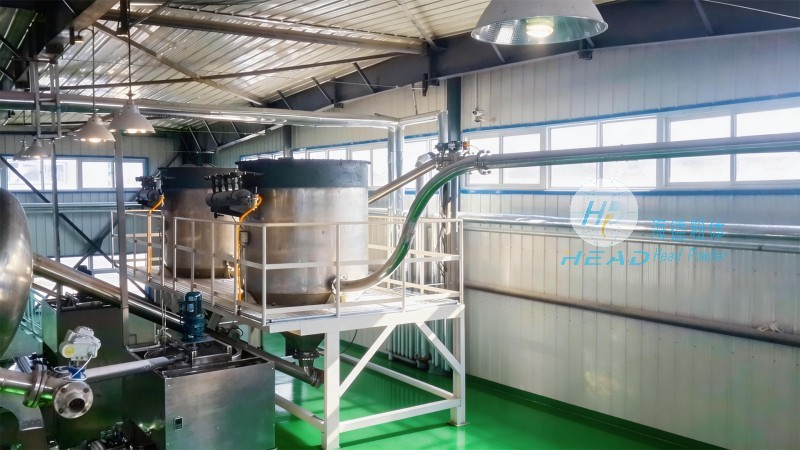
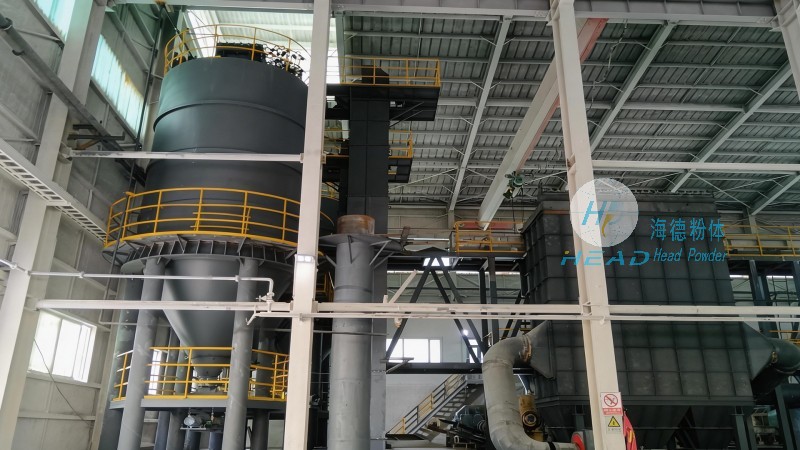
Hyde crystal particle pneumatic conveying system is widely used in various industries due to its efficient, stable and safe characteristics. The system adopts the advanced principle of air flow dynamics to effectively reduce energy consumption and achieve efficient transportation of particulate matter. At the same time, the unique sealing design ensures safety during the conveying process and avoids environmental pollution; In addition, the system has a simple structure and is easy to maintain, providing users with an efficient and reliable particle conveying solution.
pneumatic conveying method of crystalline particles has the advantages of high system conveying efficiency, good conveying quality and fast conveying speed, but it also has the disadvantages of large wear and tear on the conveying pipeline, high energy consumption, and may cause material separation and dust pollution. With years of industry experience, Hyde Powder tailors conveying solutions for thousands of materials, which not only optimizes the convenience of material transportation, but also takes into account efficiency and environmental protection. The company's innovative technologies and services have garnered industry recognition, reflecting a deep understanding of the material handling sector and expertise in solutions. What do you think about this delivery method and the service of Hyde powder, welcome to exchange and discuss in the comment area. Hyde Powder is committed to simplifying the material handling process and improving industry efficiency.

 Shandong Haide Powder Engineering Co., Ltd
 156-6277-7102(Manager Zhang)
  0531-83386006
  No. 1 Shanggao Industrial Park, Zhangqiu District, Jinan City, Shandong Province
 telephone
top