Case
resin has the following basic physical and chemical properties: its molecular structure is complex, usually composed of repeating units, and has a high molecular weight; It has good thermal stability and usually has a high melting point; It has high mechanical strength and good tensile, compression and bending properties. Excellent electrical insulation performance, widely used in electronics and electrical fields; Good chemical stability, not easy to react with other substances; It has good plasticity and can be molded and processed by heating and melting. The common transportation methods of resin mainly include the following types: pipeline transportation, pump transportation, belt transportation, pneumatic conveying, etc. When choosing a resin conveying method, it should take into account the characteristics of the material, the conveying needs, and whether there are other conveying needs.


resin are divided into mechanical conveying and pneumatic conveying. Mechanical conveying relies on the movement of mechanical components and is a traditional basic method, suitable for short-distance, low-height, and small-flow scenarios, including screw conveyors, bucket elevators, belt conveyors, and scraper conveyors, each with its own unique principles and characteristics. Pneumatic conveying uses airflow energy to transport materials in closed pipelines, which is the core technology of material processing, warehousing, and packaging, and can be adapted according to the characteristics of materials.

resin is fully suitable for pneumatic conveying, because of its fine particles, small density, good fluidity and no obvious adhesion, it meets the requirements of pneumatic conveying for powdery materials, and the quality of closed conveying is good. Pneumatic conveying uses compressed air or vacuum as the power source to form an airflow belt material in a closed pipeline and achieve gas-solid separation through a separator. According to the conveying pressure and power form, pneumatic conveying can be divided into negative pressure suction type, positive pressure pressure conveying type and mixed type, while gas-solid mixed concentration mostly adopts dilute phase conveying mode.

pneumatic conveying of resin pneumatic conveying is a process of transporting resin particles to the destination through compressed air, which uses airflow to carry and transport the particles to the designated location, which has the advantages of high conveying efficiency, low energy consumption, simple equipment structure, and easy operation. This technology is widely used in resin, plastics, chemical, pharmaceutical and other industries, and can achieve long-distance, large-flow, and high-efficiency transportation, effectively improving production efficiency and reducing production costs.

resin pneumatic conveying are to improve conveying efficiency, reduce energy consumption, reduce dust pollution, and achieve cleaner production; At the same time, the conveying process is stable and reliable, and it can convey resins with different physical properties, which is easy to operate and maintain, and is suitable for a variety of industrial fields.
The precautions for pneumatic conveying include: first, determine the conveying medium and conveying pipeline material according to the physical and chemical properties of the conveying resin; Secondly, reasonably design the diameter, length and inclination angle of the conveying pipeline to ensure transportation efficiency and stability; Furthermore, choose appropriate conveying equipment, such as pneumatic conveying pumps, cyclones, etc., and ensure that their performance meets the conveying needs; Finally, pay attention to energy consumption and environmental protection issues in the conveying process, and choose energy-saving and environmentally friendly transportation solutions.
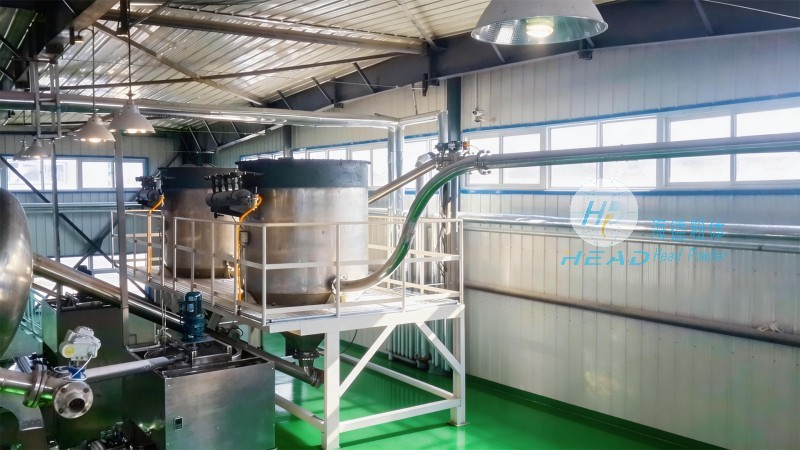
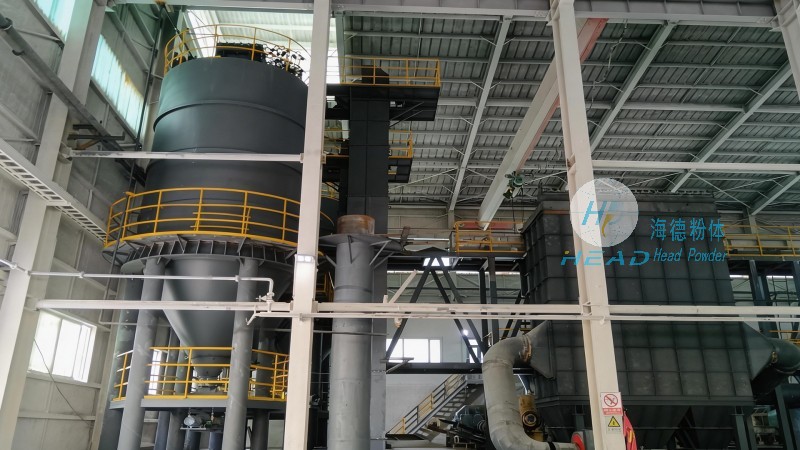
Hyde Resin Pneumatic Conveying System shows obvious advantages in conveying resin particles with its unique design and advanced technology. The system adopts the principle of high-efficiency pneumatic conveying to achieve a low-energy and low-wear conveying process, effectively reducing production costs. At the same time, the system is compact, easy to operate, and easy to maintain, bringing users a convenient production experience. In addition, the Hyde resin pneumatic conveying system also has the characteristics of long conveying distance, large conveying capacity, and strong adaptability, making it suitable for a variety of industries and occasions, making it a good choice for resin particle transportation.
resin pneumatic conveying method is popular in the field of material handling due to its efficient and reliable conveying characteristics. Its advantages include high conveying efficiency, suitable for a variety of materials, smooth conveying process, reducing material crushing and dust; The disadvantages are that the system investment is large, the maintenance cost is high, there is a particle size limit on the conveyed materials, and the system structure is more complex and the operation management requirements are strict. With rich industry experience, Haide Powder can customize conveying solutions for thousands of materials to ensure high conveying efficiency, good quality and fast speed. This technology is widely recognized both inside and outside the industry, effectively improving the convenience and safety of material transportation. Everyone is welcome to share your views and opinions in the comment area and discuss more possibilities for this delivery method. Hyde Powder is committed to making material handling easier and more efficient!

 Shandong Haide Powder Engineering Co., Ltd
 156-6277-7102(Manager Zhang)
  0531-83386006
  No. 1 Shanggao Industrial Park, Zhangqiu District, Jinan City, Shandong Province
 telephone
top