Plan
为客户提供完善的物料处理系统解决方案watery sodium nitrate is a colorless and transparent crystal that is easily soluble in water, with a melting point of about 308 °C and a boiling point of about 400 °C, and has strong hygroscopicity. It is a strong oxidizing agent that reacts violently with organic matter and is corrosive. Aqueous sodium nitrate is stable at room temperature, but decomposes at high temperatures to produce oxygen, which is explosive. Its chemical formula is NaNO3·xH2O, where x represents the crystalline water content. Common transportation methods for watery sodium nitrate include pipeline transportation, bulk truck transportation, container transportation and bag transportation. When choosing a water-containing sodium nitrate delivery method, factors such as material characteristics, conveying distance, conveying efficiency, cost, and whether special protection is required. Pipeline transportation is suitable for long-distance and large-scale transportation, bulk truck transportation is suitable for short- and medium-distance and large-volume transportation, container transportation is suitable for long-distance, large-volume transportation that requires safety protection, and bagged transportation is suitable for small-batch and short-distance transportation.


water-containing sodium nitrate common transportation methods are divided into mechanical conveying and pneumatic conveying. Mechanical conveying relies on the movement of mechanical components, which is a traditional basic method, suitable for short distances, low height, and small flow scenarios, including screw conveyors, bucket elevators, belt conveyors, and scraper conveyors, each with its own unique principles and characteristics. The screw conveyor pushes the material forward through the spiral blades; Bucket elevators use bucket chains to lift materials to high places; The belt conveyor continuously transports materials through the conveyor belt; The scraper conveyor pushes the material through the scraper. Pneumatic conveying uses airflow energy to transport materials in closed pipelines, which is the core technology of material processing, warehousing, and packaging, and can adapt to the characteristics of different materials.

watery sodium nitrate is fully suitable for pneumatic conveying, the material has fine particles, small density, good fluidity and no obvious adhesion, which meets the requirements of pneumatic conveying for powdered materials, and the quality of closed conveying is good. The pneumatic conveying system uses compressed air or vacuum as a power source to form an airflow in a closed pipeline to convey the material and achieve gas-solid separation through a separator. According to the conveying pressure and power form, pneumatic conveying is divided into three types: negative pressure suction type, positive pressure pressure conveying type and mixed type. In terms of gas-solid mixing concentration, dilute phase conveying is usually used.

pneumatic conveying of watery sodium nitrate is an efficient and environmentally friendly material transportation method, which has the advantages of fast conveying speed, low energy consumption, long transportation distance, easy operation and high safety by using airflow to transport sodium nitrate containing water. This technology uses special pneumatic conveying equipment to ensure that the water-containing sodium nitrate maintains a stable and uniform state during the transportation process through reasonable pipeline arrangement and wind speed control, reducing material loss and environmental pollution, and is widely used in chemical, food, pharmaceutical and other industries.

pneumatic conveying of watery sodium nitrate has the advantages of fast conveying speed, low energy consumption, long transportation distance, safe conveying process, environmental protection, no dust pollution, simple equipment, and easy operation, while reducing material loss and transportation costs, and improving production efficiency.
In the process of pneumatic transportation of water-containing sodium nitrate, it is necessary to pay attention to the chemical compatibility of the material of the conveying pipeline and sodium nitrate to ensure that the pipeline is corrosion-resistant and the conveying medium is stable. Reasonably select the conveying gas to avoid chemical reaction or physical adsorption between the gas and sodium nitrate; Strictly control the pressure and flow rate of the conveyed gas to ensure the efficiency and safety of the conveying gas; At the same time, the conveyor system is regularly maintained and inspected to prevent leaks and blockages.
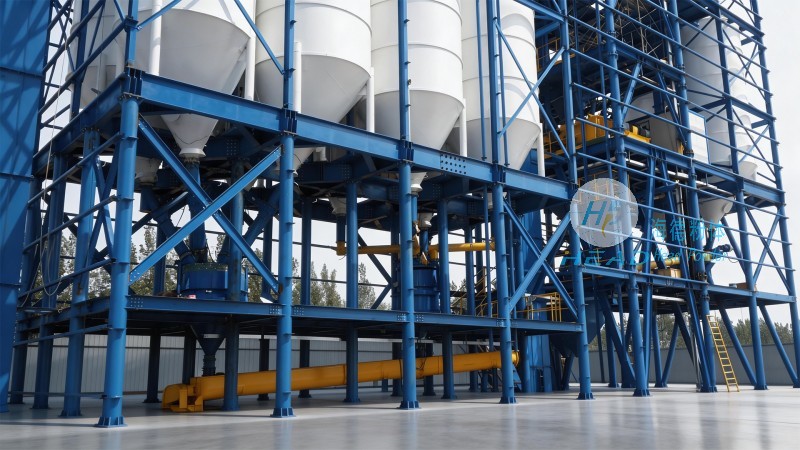
Hyde hydrous sodium nitrate pneumatic conveying system is widely used in chemical, pharmaceutical and other fields with its high efficiency, safety and environmental protection. The system adopts advanced pneumatic conveying technology, which can realize the continuous and stable transportation of water-containing sodium nitrate, reduce energy consumption, reduce dust pollution, and improve production efficiency.
pneumatic conveying method of hydrous sodium nitrate has the advantages of high system conveying efficiency, good conveying quality, and fast conveying speed, but it also has high equipment requirements, large energy consumption, and may cause material oxidation. With years of industry experience, Haide Powder has designed conveying solutions for thousands of materials, which not only ensures the conveying effect, but also simplifies the material conveying process. This method has been recognized by the industry, and you are welcome to share your views and discussions in the comment area. Hyde Powder is committed to making material transportation more efficient and convenient!

 Shandong Haide Powder Engineering Co., Ltd
 156-6277-7102(Manager Zhang)
  0531-83386006
  No. 1 Shanggao Industrial Park, Zhangqiu District, Jinan City, Shandong Province
 telephone
top