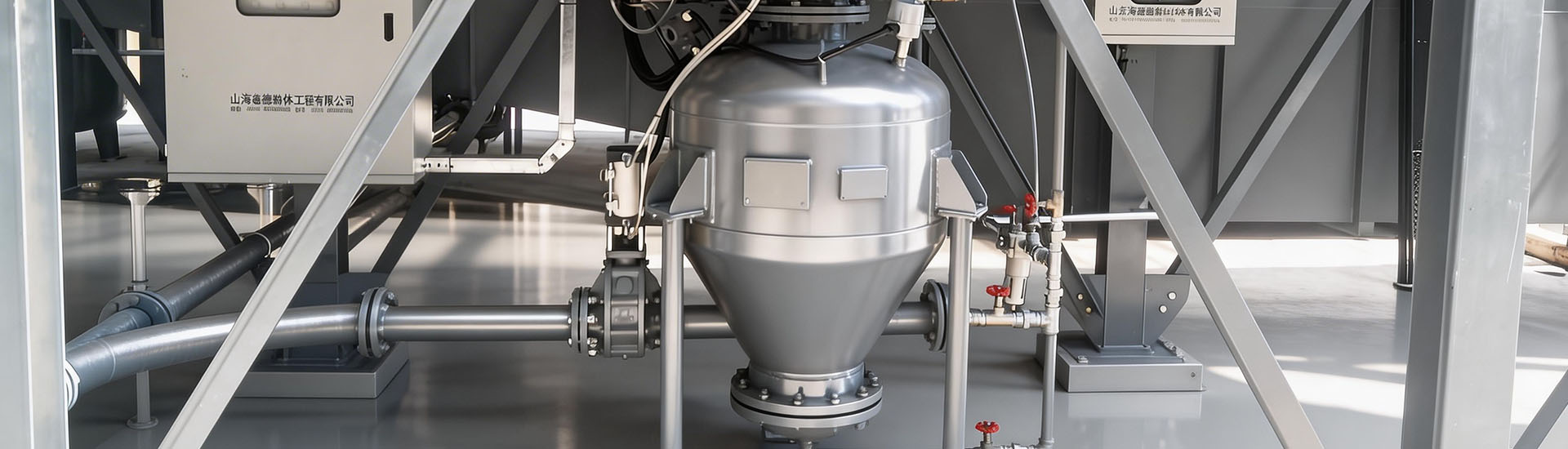
In industrial processing, handling fine powder materials efficiently and safely is a critical challenge. The pneumatic conveying system equipment, specifically designed for micronized materials, has emerged as a sophisticated solution to address these challenges. This system leverages air pressure to transport powders through a network of pipes, offering a non-contact, low-damage method that preserves material integrity while ensuring high throughput and minimal contamination. By understanding the fundamentals of this technology, businesses can optimize their material handling processes and enhance operational efficiency.
At the heart of the pneumatic conveying system are several key components that work in tandem to facilitate material transport. The system typically includes a material feeder, which introduces the fine powder into the conveying line, often using a rotary valve or a screw feeder to maintain a consistent flow. The air source, usually a high-pressure blower or a vacuum pump, generates the necessary air pressure to move the material. The conveying line itself, made from materials like stainless steel or plastic, ensures durability and resistance to corrosion from the powders. The system may also feature a filter or cyclone separator at the receiving end to capture any fine particles and return them to the process, maintaining material purity. The working principle revolves around creating a pressure differential: either by blowing air (positive pressure) or sucking air (negative pressure) to propel the powder particles through the system.

When dealing with micronized materials—such as pharmaceutical powders, food additives, or chemical compounds—the pneumatic conveying system offers distinct advantages over traditional methods like bulk handling or manual transport. First, it minimizes material degradation by avoiding physical contact with equipment, which can cause agglomeration or particle size reduction. The system's low shear forces preserve the powder's physical properties, ensuring consistent quality in downstream applications. Second, it provides excellent containment, preventing dust emissions and cross-contamination, which is crucial in industries like pharmaceuticals and food processing where regulatory compliance is paramount. Third, the system enables high-speed, continuous operation, reducing downtime and increasing production capacity. Additionally, the flexibility of the system allows for easy integration with existing production lines, adapting to varying material volumes and processing requirements.
The versatility of the pneumatic conveying system makes it applicable across a wide range of industries. In the pharmaceutical sector, it is used to transport active pharmaceutical ingredients (APIs) and excipients, ensuring sterile and contamination-free handling. In the food industry, it handles fine powders like sugar, cocoa, or vitamins, maintaining product quality and safety standards. The chemical industry utilizes it for transporting catalysts, pigments, and other reactive powders, where precise control over material flow is essential. Even in the agricultural sector, it can be used to convey fine fertilizers or pesticides, optimizing distribution in farming operations. Each application benefits from the system's ability to handle materials with varying properties, from hygroscopic to abrasive, while maintaining efficiency and reliability.

Head powder, as a leading manufacturer of pneumatic conveying system equipment, offers tailored solutions to meet specific customer needs. The system can be customized in terms of capacity, pressure, and material compatibility, ensuring it aligns with the client's production scale and material characteristics. For instance, clients can choose between positive pressure and negative pressure systems based on their operational requirements and material density. The equipment can also be integrated with automation controls, such as PLC systems, to monitor and adjust the conveying process in real-time, enhancing process control and reducing human error. Furthermore, the system can be designed to fit existing facility layouts, minimizing installation time and costs. This level of customization ensures that the pneumatic conveying system not only meets but exceeds the operational demands of modern industrial processes.

For businesses seeking to enhance their material handling capabilities with advanced pneumatic conveying solutions, Head powder provides expert consultation and tailored equipment. Our team of engineers works closely with clients to understand their specific challenges and design a system that optimizes efficiency, safety, and cost-effectiveness. Whether you need a standard system or a customized solution for micronized materials, we are committed to delivering high-quality equipment that meets industry standards and supports long-term operational success. Contact us today to learn more about how our pneumatic conveying system equipment can transform your material handling processes.

 Shandong Haide Powder Engineering Co., Ltd
 156-6277-7102(Manager Zhang)
  0531-83386006
  No. 1 Shanggao Industrial Park, Zhangqiu District, Jinan City, Shandong Province
 telephone
top