

Introduction to Perlite Powder Conveying System: Structure and Working Principle Explanation
Perlite powder conveying systems are essential in industrial applications where the efficient and safe transport of lightweight, abrasive materials like perlite is required. This article provides an overview of the key components, structural design, and operational principles of such systems, tailored for industries dealing with perlite, a naturally occurring volcanic glass material used in insulation, horticulture, and other applications.
HeadPowder Engineering, a leading manufacturer based in Shandong, China, specializes in designing and supplying advanced powder handling solutions. The company’s expertise lies in creating customized conveying systems that meet the specific demands of perlite processing, ensuring optimal performance and reliability in various industrial settings.
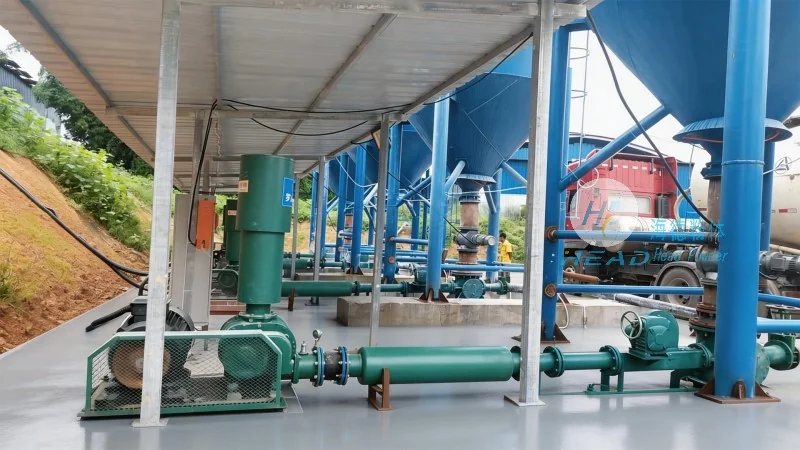
The core components of a typical perlite powder conveying system include a hopper for material storage, a feeder to control the flow rate, a conveyor (such as a screw or pneumatic system), and a control panel for monitoring and operation. The hopper is designed to accommodate the bulk storage of perlite, with features like a discharge gate to regulate the material release. The feeder, often a rotary valve or a vibratory feeder, ensures a consistent and controlled feed rate, preventing overloading or underfeeding that could affect the system’s efficiency.
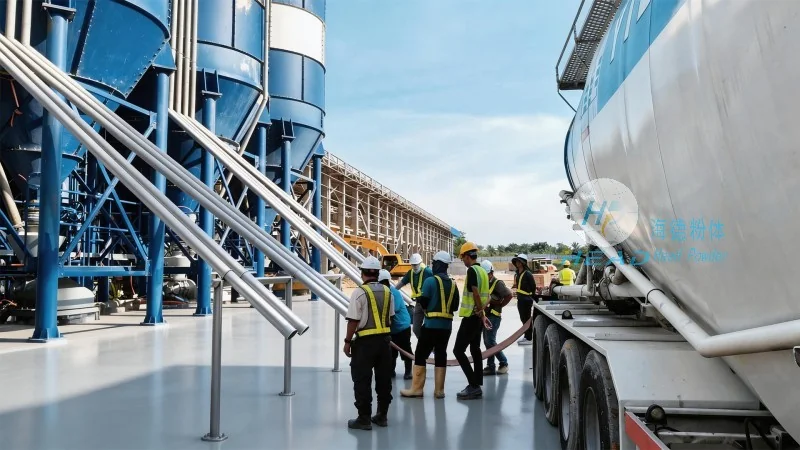
The conveyor system is a critical element, responsible for transporting the perlite from the hopper to the processing or packaging area. For perlite, which is lightweight and can be prone to dusting, a screw conveyor is commonly used due to its ability to handle fine powders without excessive friction or material degradation. The screw design, with its helical flights, moves the material forward by rotating, maintaining a steady flow. In some applications, pneumatic conveying systems may be employed, especially for longer distances or when the material needs to be transported through vertical or horizontal paths. These systems use air pressure to transport the powder, offering flexibility in layout but requiring careful consideration of air flow rates and system pressure.
The control panel integrates sensors and controls to monitor the system’s performance. Level sensors in the hopper detect the material level, triggering the feeder to adjust the flow rate as needed. Pressure sensors in the pneumatic system ensure consistent air pressure, while flow meters track the material throughput. The control panel also includes safety features, such as emergency stop buttons and overload protection, to prevent accidents and equipment damage.
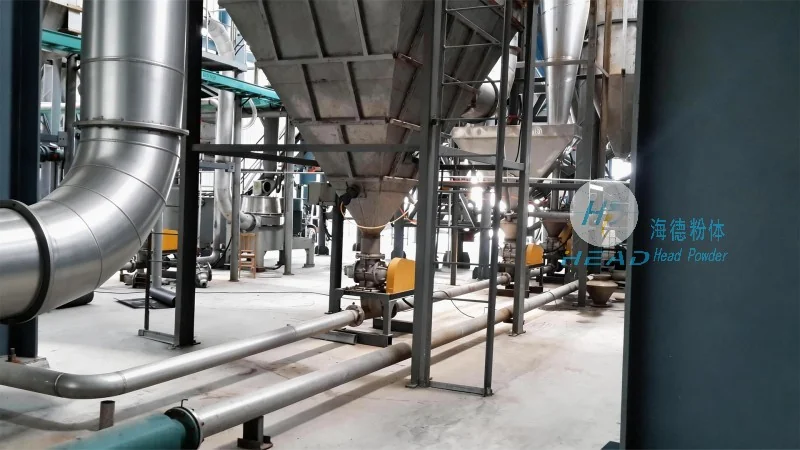
The structural design of the system emphasizes durability and efficiency. Materials used in the construction, such as stainless steel or corrosion-resistant alloys, are chosen to withstand the abrasive nature of perlite and potential moisture exposure. The hopper and conveyor components are engineered to minimize material buildup and blockages, with smooth surfaces and proper inclinations to facilitate flow. For large-scale operations, the system may include multiple hoppers or conveyors connected in series, allowing for continuous material handling and increased throughput.
Operational principles of the perlite powder conveying system revolve around maintaining a stable material flow and preventing dust generation. The feeder controls the initial flow rate, while the conveyor adjusts the transport speed. In pneumatic systems, the air velocity is carefully managed to ensure the powder is fully entrained without causing excessive pressure drops or material loss. Regular maintenance, including cleaning of the hopper and conveyor, is essential to maintain system efficiency and prevent clogging. HeadPowder Engineering provides comprehensive maintenance services and spare parts to support long-term system performance.
Applications of perlite powder conveying systems span various industries. In the construction sector, perlite is used as an insulating material, and the conveying system ensures it is delivered to mixing plants or storage facilities. In horticulture, perlite is a key component in soil mixes, and the system transports it to nurseries or greenhouse operations. The system’s adaptability allows it to handle different perlite grades, from fine powders to larger granules, making it suitable for diverse industrial needs.
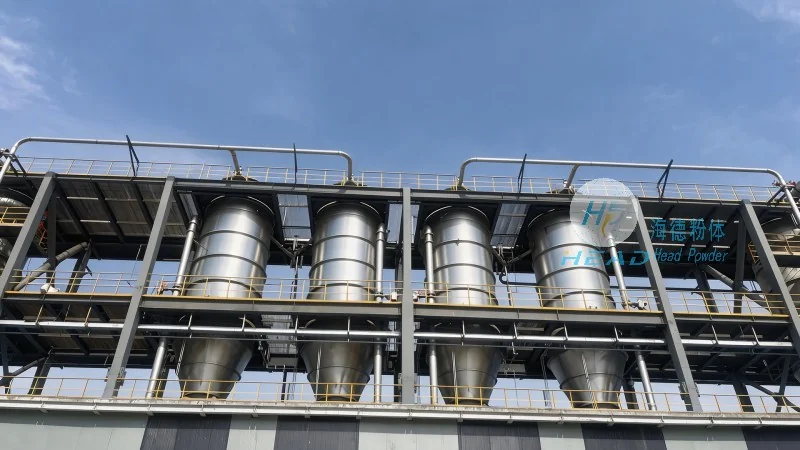
HeadPowder Engineering’s commitment to quality and innovation is reflected in the design of their perlite powder conveying systems. By integrating advanced materials and control technologies, the company ensures that their systems deliver high efficiency, low maintenance costs, and reliable performance. The company’s team of engineers works closely with clients to understand their specific requirements, providing customized solutions that optimize material handling processes and enhance overall productivity.
For industries dealing with perlite, investing in a well-designed powder conveying system is crucial for operational efficiency and safety. The system’s ability to handle the unique properties of perlite, such as its light weight and dust potential, makes it an indispensable part of the production line. HeadPowder Engineering’s expertise in this field ensures that clients receive systems that are tailored to their needs, supporting their business growth and operational success.