

What are the conveying methods of soda ash? Introduction to Haide soda ash pneumatic conveying method.
Soda ash, also known as sodium carbonate, is a bulk commodity widely used in glass manufacturing, detergents, chemicals, and water treatment. Efficient and reliable conveying of soda ash is critical to maintaining production continuity, reducing material loss, and ensuring workplace safety. Different conveying methods exist, each with distinct advantages and limitations. This article provides a comprehensive overview of mainstream soda ash conveying techniques, with a special focus on the pneumatic conveying solution developed by Shandong Headpowder Engineering Co., Ltd. (headpowder). Whether you are a plant manager, engineer, or procurement specialist, understanding these options will help you select the most suitable system for your operation.
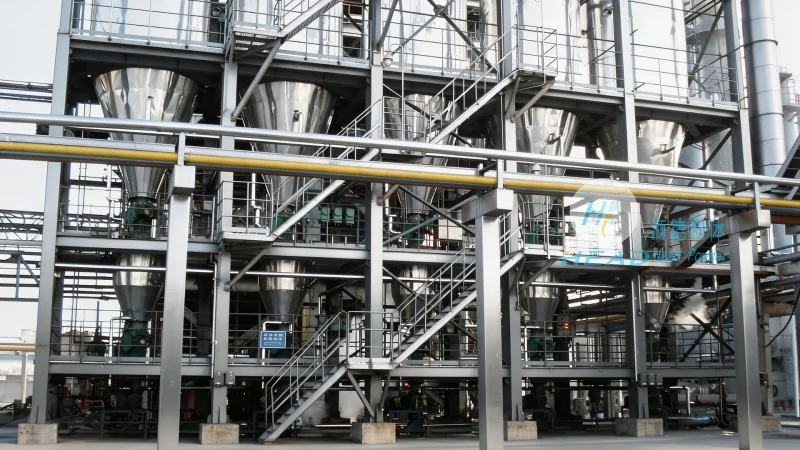
Mechanical Conveying for Soda Ash
Mechanical conveying remains a traditional approach for moving soda ash within a facility. Common mechanical systems include belt conveyors, screw conveyors, bucket elevators, and drag chain conveyors. Belt conveyors are suitable for long-distance horizontal transport but require careful sealing to prevent dust emission and moisture absorption. Screw conveyors offer compact design and can handle both horizontal and inclined paths, though they are prone to wear when handling abrasive soda ash. Bucket elevators are ideal for vertical lifts but generate significant dust and noise. Drag chain conveyors provide gentle handling but have higher maintenance costs due to chain wear. All mechanical systems share inherent drawbacks: they create dust hazards, require frequent cleaning, and occupy substantial floor space. Moreover, mechanical conveyors are difficult to adapt to complex routing or multiple discharge points, which limits flexibility in modern plant layouts.
Pneumatic Conveying for Soda Ash – An Overview
Pneumatic conveying uses air or inert gas to transport soda ash through enclosed pipelines. This method has gained popularity for its dust-free operation, low maintenance, and high flexibility. Pneumatic systems can be classified into two main categories: dilute phase and dense phase. In dilute phase conveying, soda ash particles are suspended in a high-velocity air stream, allowing transport over long distances with relatively simple equipment. However, high velocity can cause particle degradation and pipe erosion. Dense phase pneumatic conveying, on the other hand, moves soda ash at lower air velocities, creating a slug or plug flow that minimizes attrition and wear. The choice between dilute and dense phase depends on material characteristics, required capacity, and pipeline layout. For soda ash, which is moderately abrasive and hygroscopic, dense phase conveying is often preferred to preserve product quality and reduce energy consumption.
Headpowder Pneumatic Conveying System for Soda Ash
Shandong Headpowder Engineering Co., Ltd. (headpowder) specializes in designing and manufacturing advanced pneumatic conveying systems tailored for bulk materials like soda ash. With years of engineering experience and a focus on innovation, headpowder offers a complete pneumatic conveying solution that addresses the specific challenges of soda ash handling. The company's system is built around a proprietary dense phase technology that ensures gentle, low-velocity transport. This approach significantly reduces particle breakage, dust generation, and pipeline wear, making it ideal for soda ash conveying applications where product integrity is paramount.
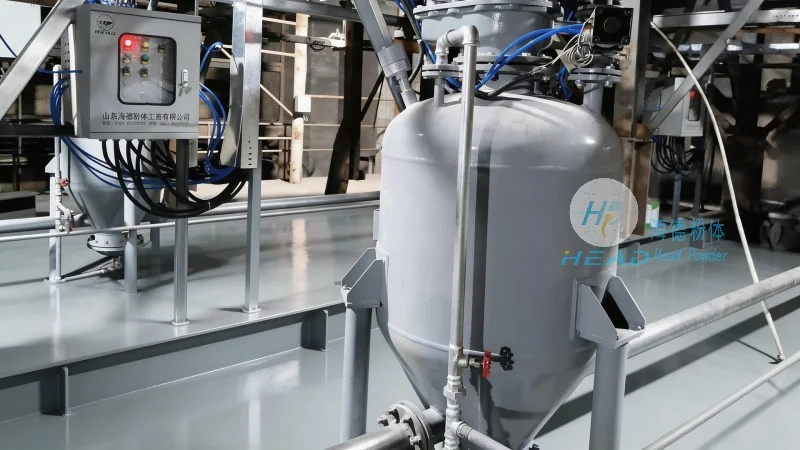
The headpowder pneumatic conveying system consists of several key components: a pressure vessel feeder, a compressed air source, a conveying pipeline, a receiving hopper with a dust collector, and a control system. The soda ash is fed into the pressure vessel, which then pressurizes and pushes the material through the pipeline in a controlled, dense phase flow. The air velocity is carefully optimized to maintain stable slug formation without exceeding the material's saltation velocity. At the destination, the air and product are separated in a cyclone or filter receiver, with the cleaned air vented or recirculated. The entire process is sealed, preventing moisture ingress and dust leakage, which is crucial for soda ash that tends to absorb moisture and form lumps.
One of the standout features of the headpowder system is its intelligent control logic. The PLC-based controller monitors pressure, flow rate, and material level in real time, adjusting air supply and feeding cycles to maintain consistent performance. This adaptive control not only improves energy efficiency but also reduces the risk of blockages, a common issue in pneumatic conveying of cohesive powders. Additionally, the system can be designed for multiple pickup and discharge points, enabling complex routing through existing plant structures without major modifications. For facilities handling large volumes of soda ash, headpowder offers custom-engineered solutions with capacities ranging from a few tons per hour to over 100 tons per hour.
Advantages of Headpowder Pneumatic Conveying for Soda Ash
Compared to mechanical conveying, headpowder's pneumatic conveying system delivers several measurable benefits. First, it eliminates dust emissions at transfer points, improving workplace air quality and complying with stringent environmental regulations. Second, the enclosed pipeline prevents moisture contamination, preserving the free-flowing properties of soda ash and reducing caking. Third, the system requires less floor space and can be installed overhead or along walls, freeing up valuable ground area for other equipment. Fourth, maintenance is minimal because there are no moving parts in contact with the material – only the pipeline and valves need periodic inspection. Fifth, the energy consumption of dense phase conveying is typically 30–50% lower than that of dilute phase systems, thanks to reduced air volume and pressure requirements.
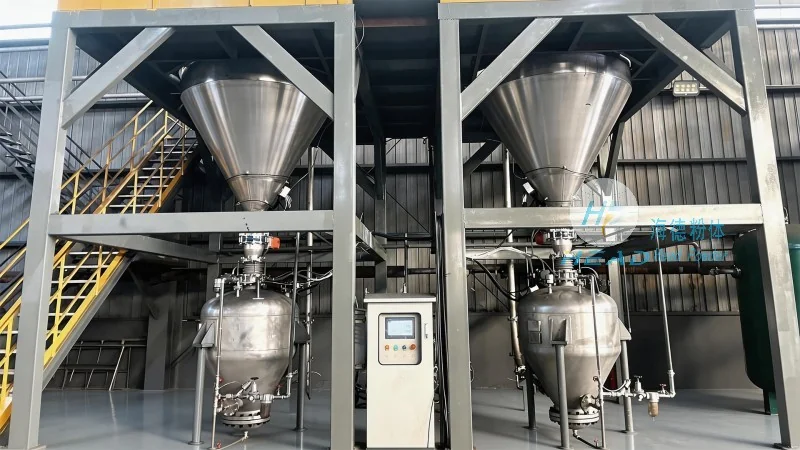
Furthermore, the headpowder pneumatic conveying system is designed for easy integration with existing plant controls. It can be synchronized with upstream and downstream equipment, such as silos, mixers, or packaging lines, ensuring smooth material flow. The system also supports remote monitoring and diagnostics, enabling proactive maintenance and reducing unplanned downtime. For companies seeking to retrofit older mechanical conveyors, headpowder provides a cost-effective conversion plan that minimizes production interruption.
Material Conveying Expertise from Shandong Headpowder Engineering Co., Ltd.
Headpowder, formally known as Shandong Headpowder Engineering Co., Ltd., is headquartered in Shandong, China, and has built a solid reputation in the bulk material handling industry. The company focuses exclusively on pneumatic conveying and related dust control solutions, serving clients in the chemical, food, mineral, and construction sectors. Their team of engineers possesses deep knowledge of material properties, flow dynamics, and system optimization. For soda ash conveying projects, headpowder conducts thorough material testing in their lab to determine the ideal conveying parameters, ensuring reliable operation from day one.
Customer support is a cornerstone of headpowder's service. Each project is assigned a dedicated project manager who coordinates design, fabrication, installation, and commissioning. After-sales service includes remote troubleshooting, spare parts supply, and on-site training. For inquiries, you can contact Manager Zhang directly by WeChat (15662777102) or through the company's official channels. Manager Zhang is well-versed in soda ash conveying applications and can provide tailored recommendations based on your specific requirements.
Key Considerations When Choosing a Soda Ash Conveying Method
When evaluating soda ash conveying options, several factors must be weighed. The physical properties of soda ash – including particle size, bulk density, angle of repose, moisture sensitivity, and abrasiveness – directly influence the choice of system. Mechanical conveyors may be acceptable for short, straight runs with low throughput, but they struggle with long distances, multiple bends, or high hygiene standards. Pneumatic conveying, particularly dense phase, offers superior flexibility and cleanliness. However, initial capital cost for pneumatic systems can be higher than simple mechanical conveyors. Yet the total cost of ownership over the equipment's lifespan often favors pneumatic due to lower maintenance, reduced product loss, and higher uptime.
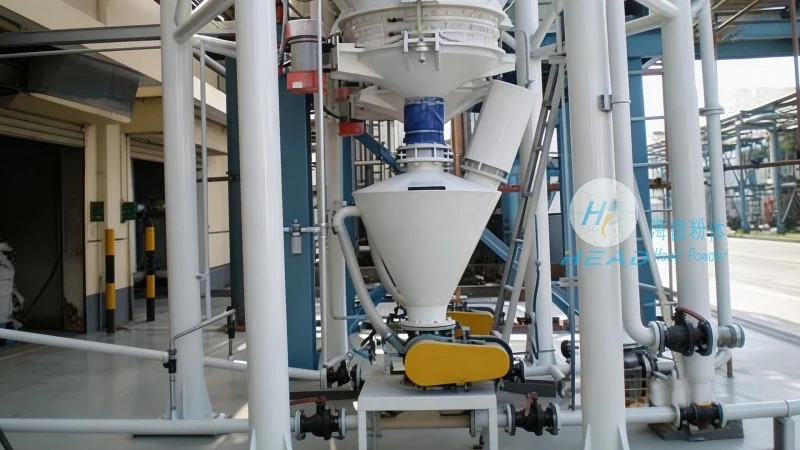
Another critical factor is the plant layout. If the conveying path involves changes in elevation, sharp turns, or limited space, pneumatic conveying is usually the only viable solution. Additionally, the need for multiple discharge points or simultaneous feeding to several machines can be easily accommodated with a properly designed pneumatic network. Environmental regulations are also tightening worldwide, making dust suppression a priority. Pneumatic systems inherently contain dust, while mechanical systems require expensive enclosures and dust collectors.
Finally, consider the operational expertise available. Pneumatic systems require a certain level of control and monitoring, but modern PLC-based systems like those from headpowder are user-friendly and can be operated with minimal training. Headpowder provides comprehensive documentation and training as part of their delivery, ensuring that plant personnel can manage the system effectively.
Conclusion
In summary, soda ash conveying can be accomplished through mechanical or pneumatic methods, but pneumatic conveying – especially the dense phase approach developed by Shandong Headpowder Engineering Co., Ltd. – offers clear advantages in terms of product quality, cleanliness, flexibility, and long-term cost efficiency. Whether you are building a new plant or upgrading an existing one, a well-designed pneumatic conveying system from headpowder can significantly enhance your material handling operations. For more information or to discuss your specific application, please contact Manager Zhang via WeChat (15662777102) or reach out to the headpowder team. Their expertise in soda ash conveying and material conveying solutions will help you find the most reliable and efficient system for your needs.