

Case Study of Rice Bran Dilute Phase Pneumatic Conveying Project for a Grain Enterprise in Jiamusi, Heilongjiang
This case study presents a successful implementation of a dilute phase pneumatic conveying system for rice bran and other grain and oil by-products at a major grain processing facility located in Jiamusi, Heilongjiang Province. The project was fully engineered and delivered by Shandong Headpowder Engineering Co., Ltd., a leading provider of pneumatic conveying solutions headquartered in Shandong, China. The system was designed to handle the specific challenges of conveying rice bran, a fine, light, and abrasive material, while maintaining product integrity and operational efficiency. The client, a well-established grain enterprise in Jiamusi, required a reliable and cost-effective solution to replace their outdated mechanical conveying method, which caused frequent blockages, high maintenance costs, and significant product loss. After a thorough evaluation of available technologies, they selected dilute phase pneumatic conveying due to its flexibility, low capital investment, and proven performance in handling similar agricultural by-products. The project scope included the design, fabrication, installation, and commissioning of the entire conveying line, from the intake point at the rice milling section to the storage silos and further to the downstream processing units. The system was tailored to the specific site layout, material properties, and required throughput, ensuring seamless integration into the existing production flow.
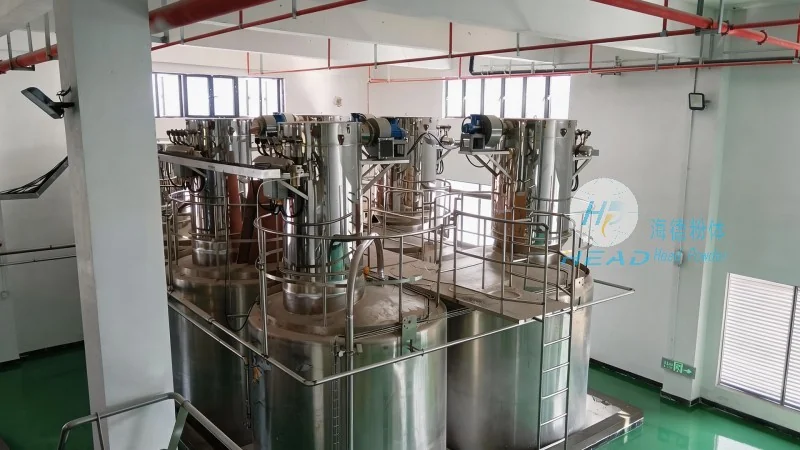
Core Technology: Rice Bran Dilute Phase Conveying System
The heart of this project is the dilute phase pneumatic conveying technology, which uses a high-velocity air stream to suspend and transport rice bran particles through a pipeline. Unlike dense phase systems that rely on pressure and low velocity, dilute phase conveying operates at air velocities typically between 15 and 30 meters per second, creating a dilute suspension of solids in the air. This method is particularly suitable for rice bran due to its low bulk density (approximately 200–400 kg/m³), fine particle size (often below 500 microns), and tendency to become sticky or cohesive when exposed to moisture or heat. The system designed by Headpowder incorporates a positive displacement blower, a rotary airlock feeder, a conveying pipeline with carefully selected bends and straight sections, and a cyclone separator or bag filter at the discharge point. The material is fed into the airstream through the rotary valve, which meters the bran evenly and prevents backflow of air. The air-solid mixture then travels through the pipe, where the turbulence keeps the particles suspended. At the destination, the cyclone separates the bulk of the bran from the air, and the remaining fines are captured by a pulse-jet dust collector, ensuring clean exhaust air. This arrangement not only achieves efficient transport but also minimizes dust emission and product degradation. The dilute phase conveying system is widely recognized as the optimal choice for conveying rice bran and other grain and oil by-products, such as rice husk, corn germ, soybean meal, and wheat bran, in the food and feed industry. Its ability to handle multiple pick-up points and deliver to multiple destinations makes it highly flexible for complex plant layouts.
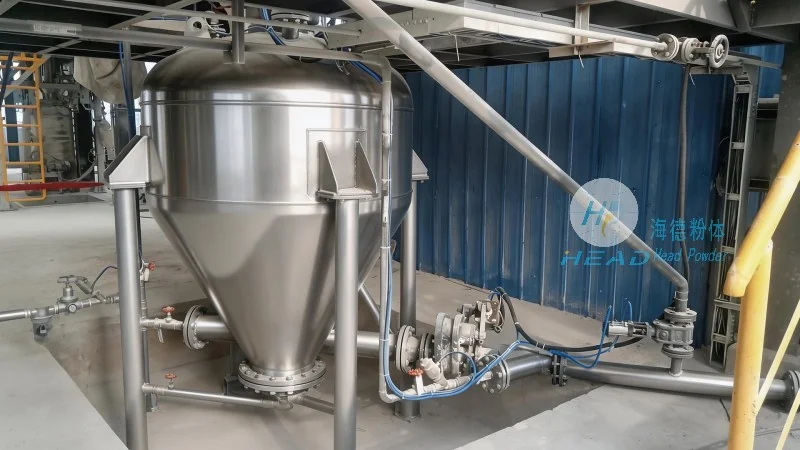
Application: Grain and Oil By-Product Conveying Solutions
Beyond rice bran, the dilute phase pneumatic conveying system is extensively applied in the conveying of various grain and oil by-products, including rice husk, corn germ, soybean meal, rapeseed meal, and cottonseed meal. These materials share common characteristics: they are lightweight, fibrous, or powdery, and they often contain dust and fines that can be hazardous if not handled properly. The system provided by Headpowder in this Jiamusi project also accommodates the future addition of other by-product streams, thanks to the modular design of the pipeline and the adjustable air flow control. The client now uses the same conveying line to transfer rice bran directly to the feed mill for pelleting, as well as to a separate storage area for further processing into rice bran oil extraction. This versatility reduces the need for multiple independent conveying systems, lowering both capital expenditure and operational complexity. The system's ability to handle sticky or slightly moist materials is enhanced by the use of special anti-clogging rotary valves and smooth internal pipe surfaces, which are standard in Headpowder's engineering. Furthermore, the low maintenance requirements of the dilute phase conveyor—compared to mechanical systems like belt conveyors or screw conveyors—make it a preferred choice for continuous 24/7 operations typical in large grain processing plants. The project also demonstrated that the dilute phase pneumatic conveying system can achieve transport distances of over 100 meters horizontally and 30 meters vertically, with a capacity ranging from 1 to 20 tons per hour, depending on the material and pipeline diameter. For the Jiamusi client, the designed capacity was 8 tons per hour for rice bran, which matched their production output perfectly.
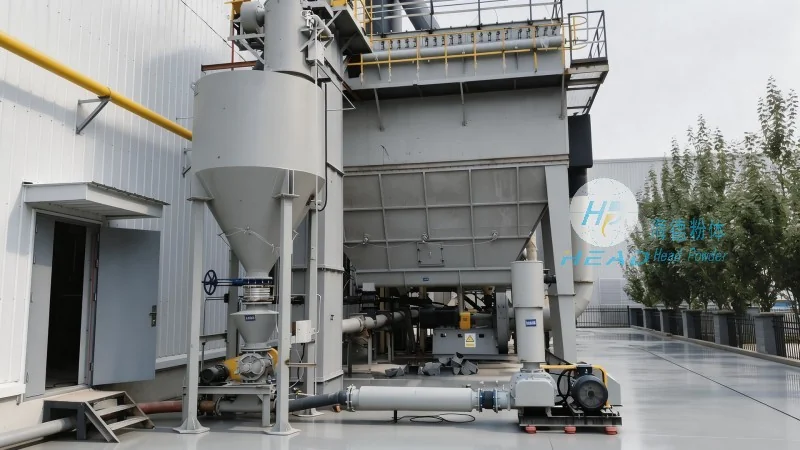
Engineering Excellence: Shandong Headpowder Engineering Co., Ltd.
Shandong Headpowder Engineering Co., Ltd., headquartered in Shandong, China, is a specialized engineering company with extensive experience in pneumatic conveying systems for bulk solids and powders. The company's team of engineers and project managers has successfully delivered hundreds of projects worldwide, covering industries such as food processing, feed manufacturing, chemical production, and building materials. For the Jiamusi rice bran project, Headpowder provided a complete turnkey solution, including process design, equipment selection, pipe routing, electrical control system integration, and on-site commissioning. The design phase involved detailed analysis of the rice bran's physical properties, such as particle size distribution, moisture content, angle of repose, and abrasiveness, to ensure the conveying velocity and pipe material were correctly specified. The pipeline was constructed from stainless steel to resist corrosion and wear, and the blower was equipped with a variable frequency drive to adjust air flow according to real-time load conditions, saving energy during low-throughput periods. The control system, based on a Programmable Logic Controller (PLC) with a touch-screen HMI, allows operators to monitor the conveying pressure, air velocity, material flow rate, and filter differential pressure, with automatic alarms for any abnormal conditions. The system also includes a nitrogen blanketing option for fire prevention, as rice bran dust can be combustible under certain conditions. Headpowder's commitment to quality and safety is reflected in the system's compliance with international standards, including CE and ISO certifications. The project was completed on schedule and within budget, and the client reported a 30% reduction in operating costs compared to their previous mechanical conveyor, along with a significant improvement in workplace cleanliness and worker safety. For inquiries about similar rice bran dilute phase conveying systems or other grain and oil by-product conveying solutions, please contact the project manager, Mr. Zhang, via WeChat: 15662777102. Mr. Zhang is the dedicated contact for all Headpowder pneumatic conveying projects and can provide detailed technical specifications, case studies, and a customized proposal for your specific application.
Project Highlights and Operational Benefits
The Heilongjiang Jiamusi grain enterprise project achieved several notable results that highlight the advantages of dilute phase pneumatic conveying for rice bran and other agricultural by-products. First, the system eliminated the frequent blockages that plagued the previous mechanical conveyor, which often required manual intervention and production downtime. The dilute phase design, with its self-cleaning air stream and smooth pipe bends, maintains a consistent flow even when the bran moisture content fluctuates between 8% and 14%. Second, the system reduced product loss by over 95% compared to the open or semi-open mechanical conveyors, which allowed dust and fine particles to escape into the environment. The enclosed pipeline and efficient dust collection system ensure that virtually all conveyed material reaches the destination, improving yield and reducing waste. Third, the energy consumption of the dilute phase system is optimized by the use of a cyclone separator instead of a bag filter for primary separation, lowering the pressure drop across the system. The blower power is only 30 kW for a 100-meter conveying line, translating to an energy cost of less than 0.5 kWh per ton of material conveyed. Fourth, the system's modular design allows for easy expansion: the client can add additional branches or extend the pipeline to new storage bins without major modifications. This scalability is crucial for growing grain enterprises. Finally, the reliability of the system has been demonstrated over two years of continuous operation, with only routine maintenance such as lubricating the rotary valve bearings and replacing the filter cartridges every six months. The project manager, Mr. Zhang, can be reached on WeChat at 15662777102 for any follow-up questions or to schedule a site visit to see the system in operation. Shandong Headpowder Engineering Co., Ltd. stands ready to deliver similar high-performance dilute phase pneumatic conveying solutions for rice bran, rice husk, soybean meal, and all other grain and oil by-products, tailored to the specific needs of your facility in China or abroad.
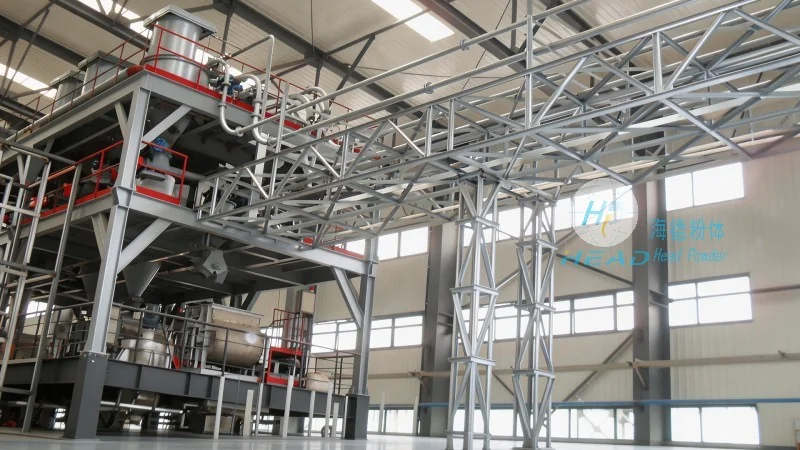
Technical Specifications and Customization Options
For the Jiamusi project, the dilute phase pneumatic conveying system was designed with the following key parameters: conveying capacity of 8 t/h for rice bran with a bulk density of 250 kg/m³, pipeline diameter of 150 mm, total conveying distance of 120 meters (including 15 meters vertical lift), and an air velocity of 22 m/s. The system uses a Roots-type blower rated at 30 kW, a rotary airlock feeder with a rotor speed of 20 rpm, and a cyclone separator with a collection efficiency of 99.5% for particles above 10 microns. The final polishing is done by a pulse-jet bag filter with 24 filter bags, achieving an emission level below 10 mg/Nm³. The entire system is controlled by a Siemens PLC with an Ethernet interface for remote monitoring. Headpowder offers a wide range of customization options, including different pipe materials (carbon steel, stainless steel, or aluminum), different feeder types (rotary valve, screw feeder, or venturi ejector), different dust collection methods (cyclone, bag filter, or cartridge filter), and different control systems (local manual, PLC, or DCS integration). The company also provides optional accessories such as diverter valves, flow control valves, air heaters, and moisture separators. For oil seed processing plants, the dilute phase system can be optimized to handle the higher oil content of materials like rice bran (which contains 15–20% oil) by using a slightly higher air velocity to prevent sticking and by incorporating a cooling section to reduce heat buildup. The engineering team at Headpowder is available to discuss your specific requirements and propose a solution that balances performance, cost, and reliability. For direct inquiries, please contact Mr. Zhang via WeChat: 15662777102. He is the primary point of contact for Shandong Headpowder Engineering Co., Ltd. and can provide prompt assistance with project scoping, quotation, and technical support.