

Principle and Working Scene Characteristics of Titanium Dioxide Powder Pneumatic Conveying Lines
Understanding the principles and characteristics of pneumatic conveying lines for titanium dioxide powder is crucial for optimizing industrial processes in the chemical and pigment manufacturing sectors. These systems are designed to efficiently transport fine powders like titanium dioxide, a key raw material in various industries including coatings, plastics, and paper.
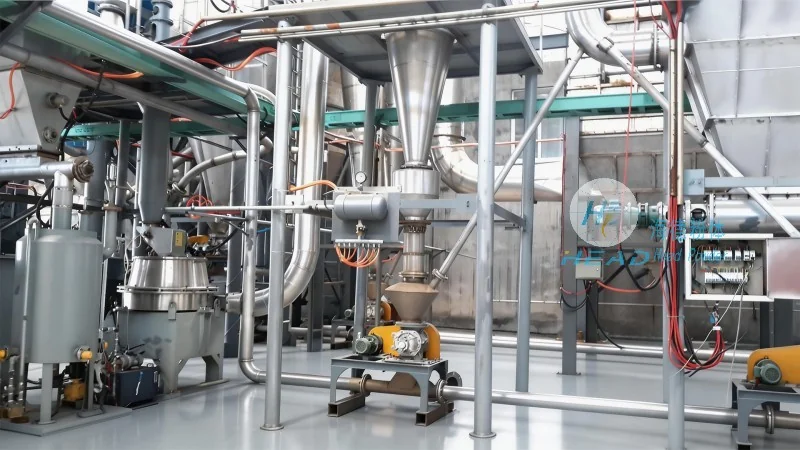
Introduction to Pneumatic Conveying Systems for Titanium Dioxide Powder
Pneumatic conveying, or powder pneumatic transport, is a method of moving bulk solid materials through a pipeline using a gas stream, typically air. In the context of titanium dioxide powder, which is known for its high purity and fine particle size, specialized conveying systems are required to maintain product quality and prevent contamination. The technology involves creating a flow of air or other gases that lifts and transports the powder particles through a network of pipes, often incorporating components such as blowers, cyclones, and control valves.
Working Principle of Titanium Dioxide Powder Pneumatic Conveying Lines
The core principle of pneumatic conveying for titanium dioxide powder revolves around the interaction between the gas and the solid particles. In a typical system, a blower or compressor generates the necessary air pressure to create a flow within the pipeline. The powder is introduced into the system, either by gravity or by a feeder, and is entrained by the moving air. The system can operate under either positive pressure (where the entire system is pressurized) or negative pressure (where the system is under vacuum relative to the environment). For titanium dioxide, which is often sensitive to moisture and contamination, positive pressure systems are commonly preferred as they minimize exposure to external air and reduce the risk of dust inhalation.
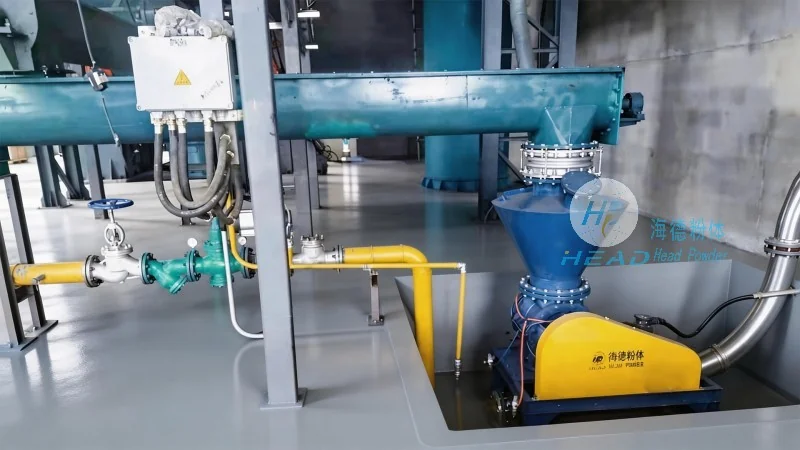
Key Working Scene Characteristics
The working scene characteristics of titanium dioxide powder pneumatic conveying lines are defined by several critical factors that influence system design and performance. These include the particle size distribution of the titanium dioxide, which can range from sub-micron to several microns, affecting the required air velocity and pipeline diameter. The density and flowability of the powder also play a role, as titanium dioxide is a relatively dense material (around 4.2 g/cm³) that may require higher air speeds to maintain suspension. Additionally, the distance and layout of the conveying route, such as vertical or horizontal segments, impact the system's pressure drop and energy consumption. In industrial settings, these lines are often integrated with other processing equipment, such as grinding mills, classifiers, and packaging machines, requiring seamless coordination to ensure continuous production flow.
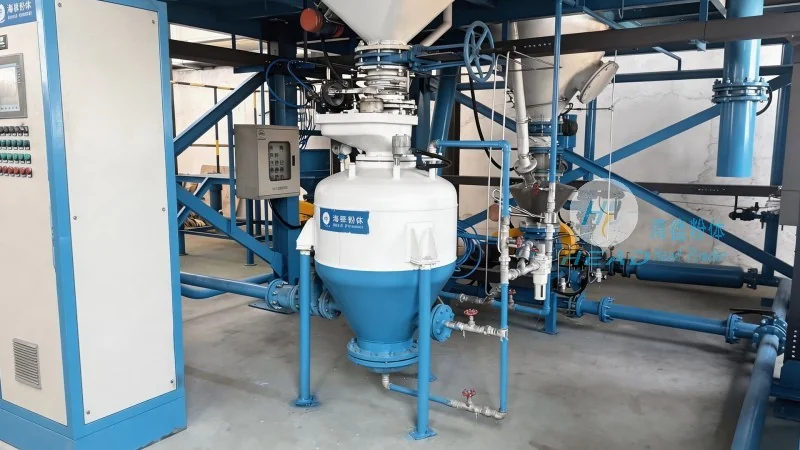
Company Profile: Shandong HeadPowder Engineering Co., Ltd.
Headpowder, formally known as Shandong HeadPowder Engineering Co., Ltd., is a leading provider of specialized engineering solutions for powder handling and material transport. With a focus on customizing pneumatic conveying systems for high-value powders like titanium dioxide, the company leverages decades of experience in the chemical and pigment industries. Headpowder's expertise lies in designing and manufacturing systems that meet stringent quality standards, ensuring that titanium dioxide powders are handled with minimal degradation and maximum efficiency. The company's facilities are located in Shandong, China, where it serves clients globally with tailored solutions that address specific operational challenges.
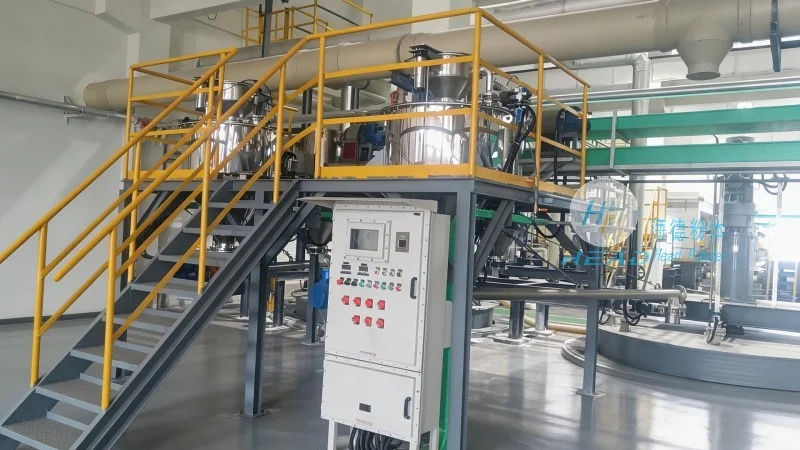
Technical Advantages in Pneumatic Conveying for Titanium Dioxide
Systems designed for titanium dioxide powder conveyance offer several technical advantages that enhance operational performance. One key benefit is the ability to maintain product purity and prevent cross-contamination, which is essential for titanium dioxide's use in food, pharmaceutical, and cosmetic applications. The enclosed pipeline design minimizes dust emissions and protects the powder from moisture and environmental factors. Additionally, pneumatic conveying systems can achieve high throughput rates while reducing labor costs associated with manual handling. Advanced control systems allow for precise regulation of air flow and pressure, ensuring consistent particle suspension and preventing blockages or system failures. These features make pneumatic conveying an ideal solution for large-scale production facilities requiring reliable and efficient powder transport.
Practical Application Scenarios
In real-world industrial applications, titanium dioxide powder pneumatic conveying lines are employed in various stages of the production process. For example, in a titanium dioxide manufacturing plant, the system may be used to transport raw titanium ore to grinding mills, then move the ground powder to classification units, and finally convey the finished product to storage silos or packaging lines. The flexibility of pneumatic conveying allows for both short-distance and long-distance transport, with some systems capable of moving powders over several hundred meters. Case studies from clients in the coatings and plastics industries have demonstrated significant improvements in production efficiency and product quality when implementing Headpowder's customized pneumatic conveying solutions. These applications highlight the system's adaptability to different production scales and operational requirements, making it a preferred choice for companies seeking to optimize their titanium dioxide handling processes.