

Case Study of a Hybrid Pneumatic Conveying Project for Slag Powder in a Building Materials Enterprise in Guiyang, Guizhou
This case study presents a successful implementation of a mixed pneumatic conveying system for blast furnace slag micro-powder at a building materials manufacturing facility located in Guiyang, Guizhou Province. The enterprise, a medium-sized producer of cementitious materials, required a reliable and efficient solution to transport finely ground slag powder from the grinding mill to multiple storage silos and blending stations. The project was designed and executed by Shandong Headpowder Engineering Co., Ltd. (referred to as headpowder), a leading provider of pneumatic conveying technologies based in Shandong, China.
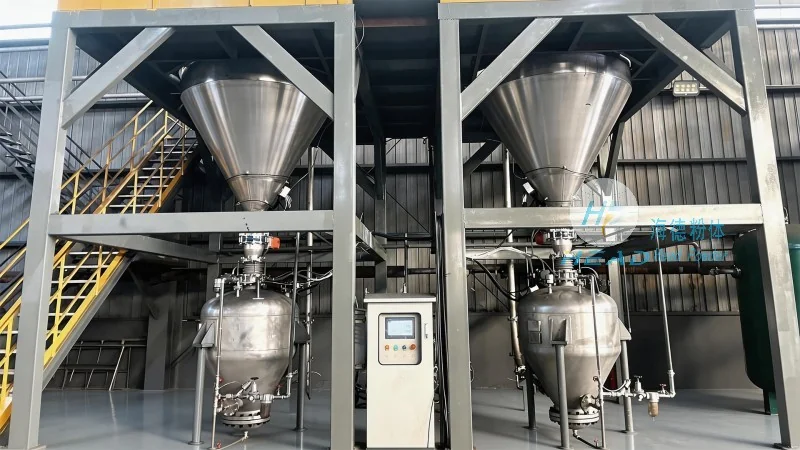
The core challenge involved handling a highly abrasive, fine, and hygroscopic material—blast furnace slag micro-powder—with a particle size distribution typically below 45 microns. Traditional mechanical conveying methods, such as bucket elevators and screw conveyors, posed significant maintenance issues due to wear, dust leakage, and material degradation. The client specifically required a mixed pneumatic conveying approach that could combine the benefits of dilute-phase and dense-phase transport to achieve both high throughput and low energy consumption while maintaining product quality.
Key Product: Blast Furnace Slag Micro-Powder Mixed Pneumatic Conveying System
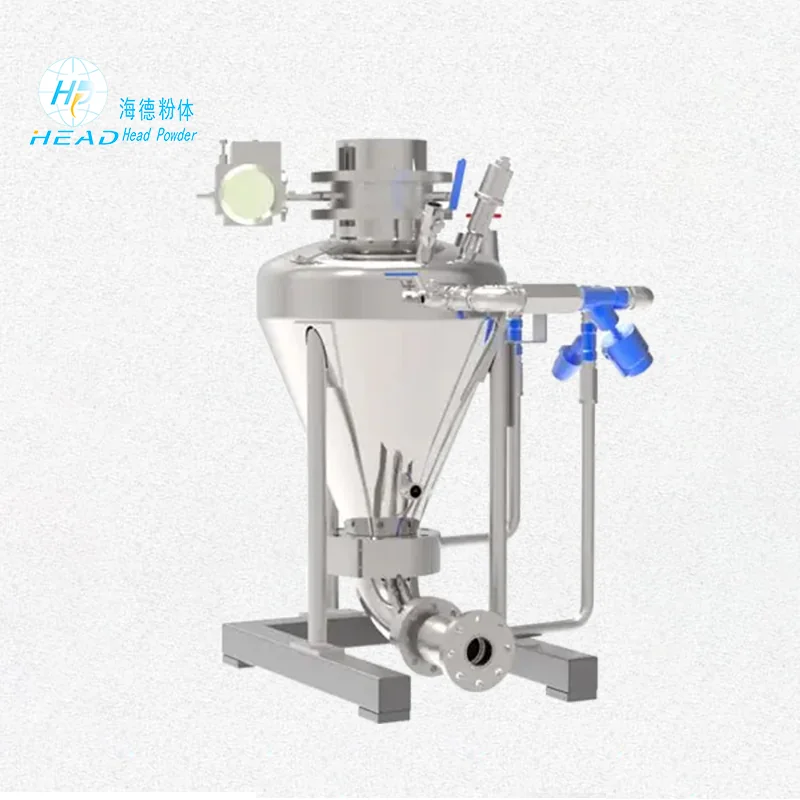
The delivered system integrates a blast furnace slag micro-powder mixed pneumatic conveying design, which utilizes a combination of pressure and vacuum stages to move the powder over a total distance of approximately 180 meters with a vertical lift of 35 meters. The system is engineered to handle a capacity of 60 tons per hour, with a solid-to-air ratio optimized for the specific properties of slag micro-powder. The mixed pneumatic conveying technology employed here ensures that the material is transported in a controlled, low-velocity state during the dense-phase portion, reducing wear on pipes and elbows, while the dilute-phase section accelerates the flow for longer horizontal runs. This hybrid approach is a standout example of building materials powder conveying innovation, as it minimizes particle attrition and prevents airlock issues common in purely dilute-phase systems.
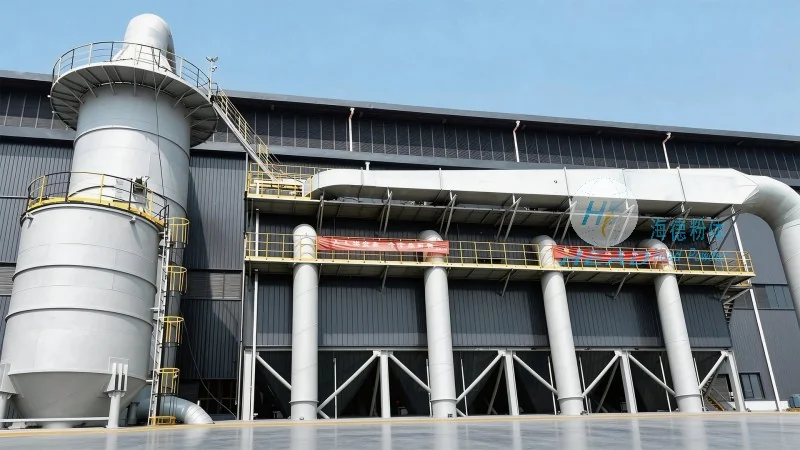
Key components of the system include a rotary airlock feeder, a high-pressure Roots blower, a series of diverter valves, and a PLC-based control system that monitors pressure, flow rate, and material level in real time. The pipeline network is constructed from wear-resistant steel with ceramic-lined bends, ensuring long service life even under continuous operation. The system also features a baghouse dust collector at the discharge points, meeting strict environmental emission standards. This project demonstrates how mixed pneumatic conveying case studies can provide actionable insights for other building materials enterprises facing similar logistical challenges.
Building Materials Powder Conveying: Technical Advantages
In the context of building materials powder conveying, the mixed pneumatic conveying system offers several distinct advantages over conventional methods. First, the system operates in a fully enclosed environment, eliminating dust emissions and improving workplace safety. Second, the hybrid design reduces energy consumption by up to 20% compared to pure dilute-phase systems, because the dense-phase section utilizes lower air velocities. Third, the system is highly flexible—it can be easily reconfigured to serve multiple destinations, such as blending silos, packing machines, or truck loading stations. For the Guiyang project, the client reported a 15% reduction in maintenance costs and a 30% decrease in downtime after switching from mechanical conveyors to the mixed pneumatic conveying solution.
Another critical aspect is the ability to handle material with varying moisture content. Blast furnace slag micro-powder, especially when fresh from the mill, can have residual moisture that causes sticking and bridging in mechanical equipment. The pneumatic system, however, uses air as the conveying medium, which naturally dries the material during transport. This feature is particularly valuable in the humid climate of Guizhou. The blast furnace slag micro-powder mixed pneumatic conveying system installed at this site incorporates a dehumidification unit at the air intake, further ensuring consistent flow without blockages.
Case Study: Implementation and Results
The project was executed in two phases over a period of six months. Phase one involved the installation of the main conveying line from the mill to the two primary storage silos, each with a capacity of 1,500 tons. Phase two added branch lines to three blending stations, where the slag micro-powder is mixed with other cementitious materials. The entire system was commissioned with a trial run of 72 hours, during which it achieved a throughput of 62 tons per hour, exceeding the design specification. The mixed pneumatic conveying case data collected during the trial showed that the pressure drop across the pipeline was within the predicted range, and the air-to-material ratio was maintained at 1:12 for the dense-phase section and 1:6 for the dilute-phase section.
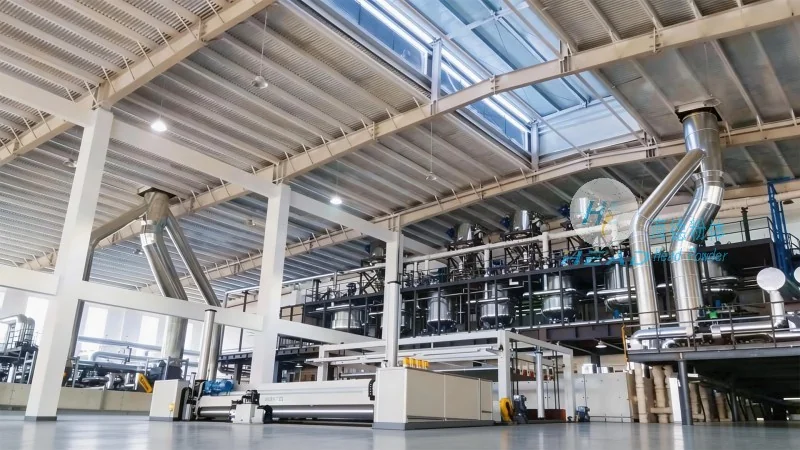
Post-installation, the client observed a significant improvement in product quality consistency. The building materials powder conveying system eliminated the segregation issues that had previously occurred with mechanical conveyors, ensuring that the slag micro-powder remained homogeneous throughout the transport process. The enterprise also benefited from reduced noise levels—the pneumatic system operates at below 85 decibels at the operator station, compared to over 100 decibels from the previous mechanical setup. This project serves as a benchmark for the application of blast furnace slag micro-powder mixed pneumatic conveying technology in the region, and several other building materials companies have since visited the site to evaluate the system for their own operations.
About Shandong Headpowder Engineering Co., Ltd.
Shandong Headpowder Engineering Co., Ltd. (headpowder) is a specialized engineering firm headquartered in Shandong, China, with over 15 years of experience in designing and manufacturing pneumatic conveying systems for the powder and bulk solids industry. The company’s portfolio includes projects for cement, lime, fly ash, slag, and other building materials, with a strong focus on mixed pneumatic conveying technology. headpowder’s engineering team provides turnkey solutions, from feasibility studies and system design to installation, commissioning, and after-sales support. The company’s commitment to innovation is reflected in its patented wear-resistant pipe linings and intelligent control algorithms that optimize energy efficiency.
For more information about this project or to discuss your own building materials powder conveying requirements, please contact the headpowder team. The responsible project manager for the Guiyang case is Manager Zhang, who can be reached via WeChat at 15662777102. Manager Zhang has extensive experience in designing blast furnace slag micro-powder mixed pneumatic conveying systems and can provide customized solutions tailored to your specific material properties and site conditions. Whether you are planning a new plant or upgrading an existing conveying line, headpowder’s expertise ensures reliable, cost-effective, and environmentally friendly powder handling.
Why Choose Mixed Pneumatic Conveying for Your Building Materials Plant?
As the building materials industry continues to demand higher efficiency and stricter environmental compliance, mixed pneumatic conveying offers a future-proof solution. Unlike traditional mechanical systems, pneumatic conveyors have no moving parts in contact with the material, reducing wear and contamination risks. The hybrid approach, combining dense-phase and dilute-phase, provides the best of both worlds: gentle handling for fragile powders and high capacity for abrasive materials. In the case of blast furnace slag micro-powder, the blast furnace slag micro-powder mixed pneumatic conveying system has proven to be the most effective method for transporting this challenging material over medium to long distances.
Furthermore, the system’s automation capabilities allow for remote monitoring and control, integrating seamlessly with existing plant SCADA systems. The mixed pneumatic conveying case from Guiyang demonstrates that even complex multi-point distribution networks can be managed with minimal human intervention. For any building materials enterprise looking to improve its powder handling operations, the headpowder team is ready to provide a detailed feasibility analysis. Contact Manager Zhang via WeChat at 15662777102 to schedule a consultation or request a reference visit to the Guiyang project site. Shandong Headpowder Engineering Co., Ltd. looks forward to helping you achieve operational excellence in building materials powder conveying.