News
聚焦海德风采动态,分享行业技术资讯In the industrial automation and material handling sector, PUR pneumatic conveying systems stand out for their efficiency and flexibility, making them a top choice for various industries. However, achieving optimal performance and long-term stable operation requires a systematic selection process. This article delves into the standard steps for choosing a PUR pneumatic conveying system, helping clients and professionals understand the decision-making logic and ensure the best fit for their needs.
The first step is a comprehensive analysis of the conveying requirements. Key factors include the physical properties of the material (such as particle size, moisture content, and abrasiveness), the required throughput, the distance of the conveying line, and the operating environment (e.g., temperature, dust concentration). For instance, when handling powders, the material's flowability is critical; for fragile materials, impact protection during transport becomes a priority.

Based on the demand analysis, the system layout is designed. This involves determining pipe diameter, length, the number of bends, and pressure levels. Using tools like CAD to simulate airflow and material flow, the pipeline path is optimized to minimize pressure loss. For example, long-distance conveying often requires a high-pressure system, while short-distance applications can use a low-pressure system, balancing cost and efficiency.
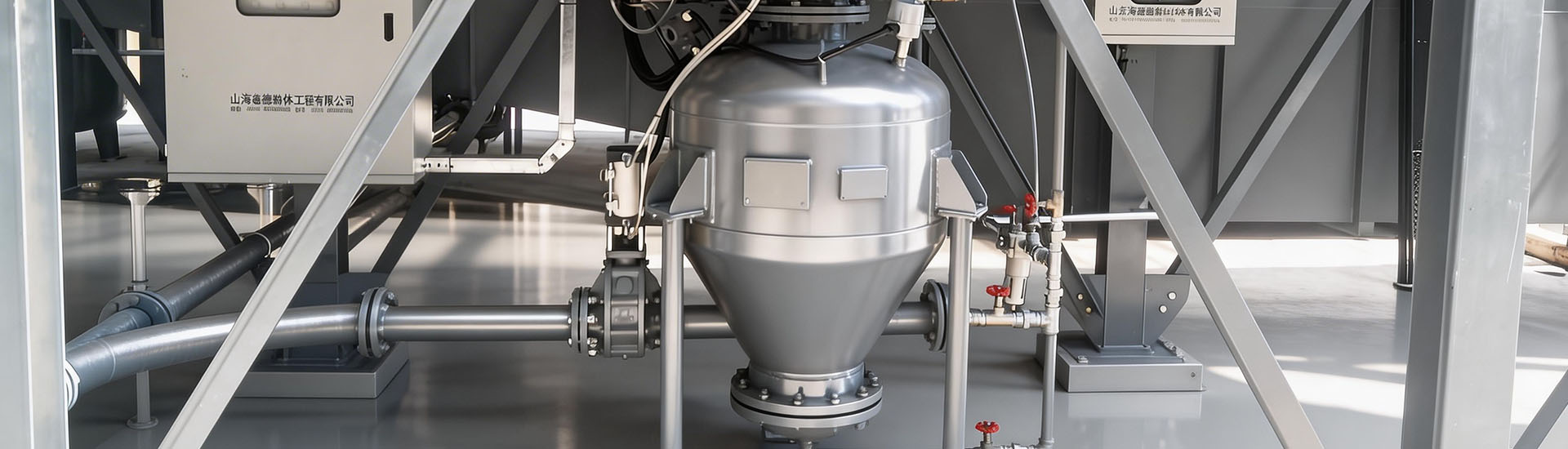
According to the system design, core equipment is selected. This includes feeders (such as screw feeders or star valves), conveying pipes (made of PUR material), separators (cyclone separators or bag filters), and air source equipment (air compressors). The flexibility and wear resistance of PUR material make it excellent for complex working conditions. For example, the screw feeder in Heide's PUR pneumatic conveying system can precisely control material flow, preventing blockages.

Professional installation teams follow the design drawings for pipeline laying and equipment connection. During the commissioning phase, pressure tests and flow monitoring ensure the system operates within the design parameters. For instance, Heide provides installation guidance and commissioning services to help clients achieve stable system operation quickly.
A regular maintenance plan is established to check for pipe wear, equipment component aging, and timely replacement. Through data monitoring, operating parameters are optimized to extend the system's service life. For example, Heide offers lifetime maintenance services, with clients receiving technical support and spare parts supply.

If you face challenges in selecting a PUR pneumatic conveying system, Heide, as an industry expert, provides a one-stop solution from demand analysis to long-term maintenance. Contact our professional team now to get a customized plan, enhance production efficiency, and reduce operating costs.

 Shandong Haide Powder Engineering Co., Ltd
 156-6277-7102(Manager Zhang)
  0531-83386006
  No. 1 Shanggao Industrial Park, Zhangqiu District, Jinan City, Shandong Province
 telephone
top