News
聚焦海德风采动态,分享行业技术资讯Barium carbonate, a critical industrial raw material widely used in chemical, glass, and ceramic industries, demands efficient and safe transport solutions. Pneumatic conveying technology, with its non-contact, hygienic advantages, has become the preferred method for handling barium carbonate. However, selecting the right pneumatic conveying system requires careful consideration of various factors, including material characteristics, transport distance, and operational requirements. This article provides a comprehensive guide to help clients choose the optimal barium carbonate pneumatic conveying system, enhancing production efficiency and operational safety.
The physical and chemical properties of barium carbonate directly influence the design of a pneumatic conveying system. For instance, barium carbonate has a density of approximately 4.5 g/cm³ and typically exists as fine powders or micropowders, sometimes with residual moisture. These characteristics dictate the required air volume, pressure, and equipment materials. High-density particles necessitate larger air volumes to maintain adequate conveying velocity, while fine powders may prone to blockages, requiring anti-clogging designs. Head powder, as a specialized manufacturer, offers customized solutions based on the specific properties of the barium carbonate being handled.

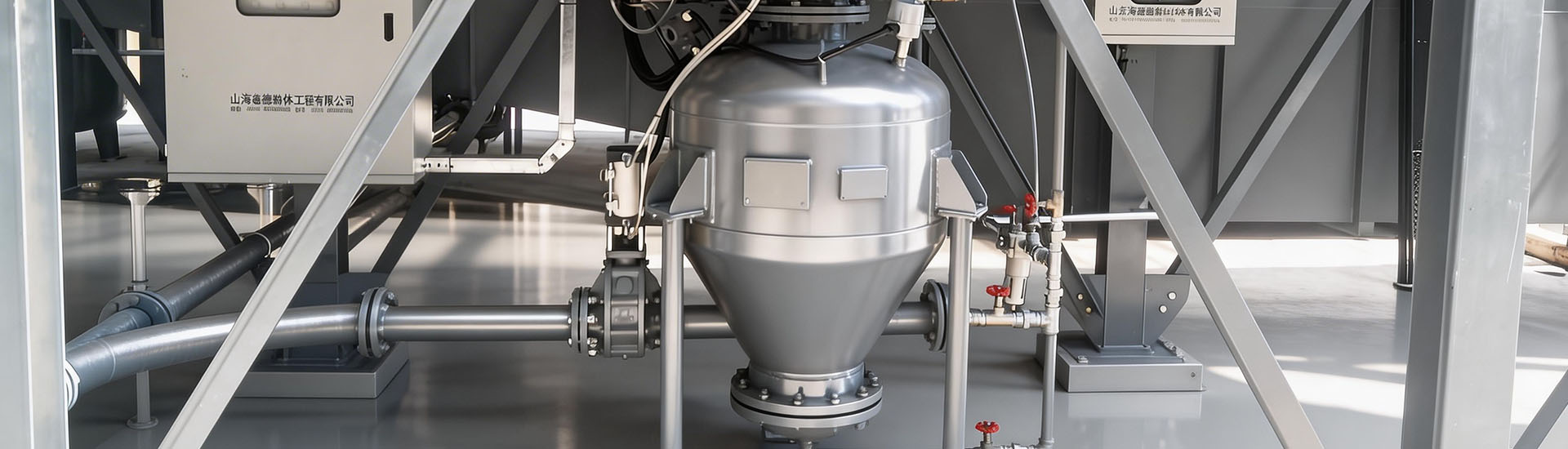
Pneumatic conveying systems are primarily categorized into suction and pressure types. Suction systems utilize negative pressure to draw material from a hopper into the transport pipeline, suitable for short-distance, low-head applications like intra-factory material transfer. Pressure systems, on the other hand, use positive pressure to push material from the hopper into the pipeline, ideal for long-distance, high-head transport across factories or regions. The choice between these systems depends on actual transport distance and topographical conditions. For example, if the transport distance exceeds 100 meters, a pressure system may be more economically and efficiently viable.
Transport distance, flow rate, and pressure are core parameters for selecting a pneumatic conveying system. Transport distance determines the system's air volume and pressure requirements, with longer distances typically requiring higher air pressure. Flow rate reflects the production line's processing capacity and must match the production output. Pressure considerations involve whether the system operates under negative (suction) or positive (pressure) conditions, based on equipment pressure resistance. Head powder's engineers perform calculations based on client-specific parameters to ensure optimal system performance.

Beyond system type, equipment material, sealing performance, and automation level are also critical. Barium carbonate may be corrosive or toxic, so conveying equipment must use corrosion-resistant materials (such as stainless steel) and feature robust sealing to prevent leaks. Head powder, with extensive industry experience, provides comprehensive services from design, manufacturing to installation, ensuring compliance with safety and environmental standards.

Selecting the right barium carbonate pneumatic conveying system is key to improving production efficiency and reducing operational costs. Head powder, as a professional barium carbonate pneumatic conveying manufacturer, offers advanced technology and customization capabilities to provide the best solutions tailored to client needs. If you are facing challenges with barium carbonate transport, contact Head powder. Our expert team will provide professional consultation and customized services to help your production process become more efficient and safe.

 Shandong Haide Powder Engineering Co., Ltd
 156-6277-7102(Manager Zhang)
  0531-83386006
  No. 1 Shanggao Industrial Park, Zhangqiu District, Jinan City, Shandong Province
 telephone
top