News
聚焦海德风采动态,分享行业技术资讯In the agricultural and food processing sectors, selecting the appropriate corn pneumatic conveying system is crucial for enhancing production efficiency and reducing operational costs. Whether in corn processing plants, feed mills, or grain storage facilities, the right system ensures stable and reliable material transport, preventing issues like blockages, efficiency losses, or increased maintenance expenses. Haidi, as a leading equipment manufacturer, understands the nuances of different scenarios, and this article systematically explores how to precisely choose a corn pneumatic conveying solution.
Choosing between suction and positive discharge systems is the first critical step. Suction systems operate on negative pressure, drawing materials into the pipeline, making them suitable for short distances (typically under 50 meters) and low-concentration transport. They offer simple structures and lower initial investments but have limitations in long-distance and high-concentration applications. Positive discharge systems, on the other hand, use positive pressure to push materials through the pipeline, ideal for long-distance (hundreds of meters or more) and high-concentration transport, including handling high-moisture corn. The selection depends on actual transport distance, production scale, and material characteristics: for short distances and low moisture corn, suction systems are more economical; for long-distance or high-moisture corn, positive discharge systems are preferable.

Transport distance is a core factor determining system type, with flow requirements also influencing equipment selection. For example, if corn needs to be moved from storage to processing areas over 100 meters, with daily processing volumes of hundreds of tons, positive discharge systems featuring positive pressure fans (such as roots or centrifugal fans) are ideal for stable transport. Short-distance (10-30 meters) small-scale operations can use suction systems with vacuum pumps. Additionally, flow must match production line capacity to avoid downtime from insufficient transport or energy waste from excess capacity.
Corn particle size directly impacts pipeline diameter and air velocity design. For corn with diameters of 5-20 mm, pipeline diameters of 50-100 mm and air velocities of 15-25 m/s are typically used, balancing efficiency and wear resistance. High-moisture corn (e.g., freshly harvested corn) is prone to blockages, requiring systems with anti-clogging designs like pulse-type pneumatic conveying or spiral-blade pipelines, often paired with drying equipment to reduce moisture to appropriate levels (usually below 15%). Haidi systems optimize pipeline layout and airflow control to effectively handle high-moisture corn transport.

System efficiency involves more than transport capacity—it also includes energy use and failure rates. Efficient Haidi corn pneumatic conveying systems employ variable frequency control, adjusting fan speed based on actual transport volume to reduce energy consumption (up to 20-30% less than traditional systems). Using wear-resistant materials (stainless steel or special plastics) minimizes pipeline wear and extends service life. Over the long term, high-efficiency, low-failure systems significantly lower maintenance costs and improve production line stability, boosting overall economic benefits.
When selecting a system, both initial investment and long-term maintenance costs must be considered. Haidi offers multiple configurations, from standard to customized high-end systems, meeting different budget and scale needs. Standard systems suit small to medium-sized enterprises with lower initial costs and simple maintenance; customized systems for large factories integrate automation control and remote monitoring for enhanced management efficiency. Through professional consultation, clients can choose the most suitable system based on current production scale, budget, and future expansion plans, maximizing cost-effectiveness.
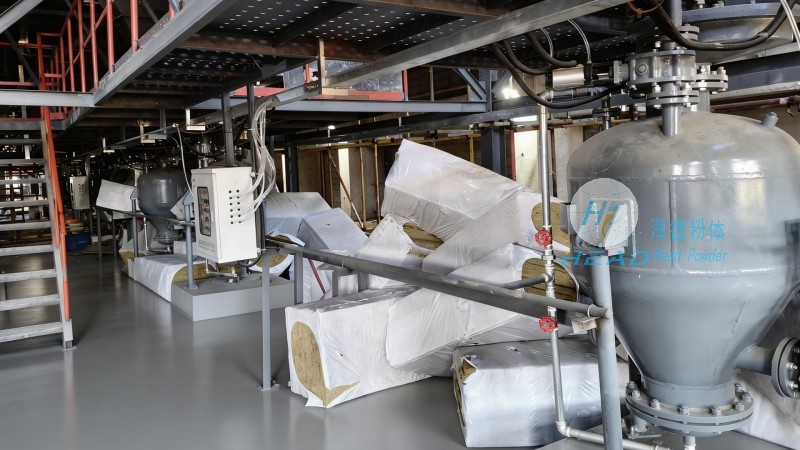
If you're facing challenges in selecting a corn pneumatic conveying system, Haidi's professional team provides customized solutions. From on-site inspections and system design to installation and commissioning, we leverage industry experience and technical expertise to ensure your system meets current production needs and adapts to future growth. Contact Haidi now to let our professional corn pneumatic conveying systems empower your production efficiency, reduce operational costs, and enhance market competitiveness.

 Shandong Haide Powder Engineering Co., Ltd
 156-6277-7102(Manager Zhang)
  0531-83386006
  No. 1 Shanggao Industrial Park, Zhangqiu District, Jinan City, Shandong Province
 telephone
top