News
聚焦海德风采动态,分享行业技术资讯PTA (para-xylene terephthalic acid) as a crucial chemical raw material, its material handling is a key link in the entire production process. Pneumatic conveying, as an efficient and flexible conveying method, has been widely applied in the PTA industry. However, for PTA pneumatic conveying manufacturers, selecting an appropriate system and considering multiple factors is crucial, directly related to conveying efficiency, system stability, and long-term costs. This article will systematically analyze the key factors that PTA pneumatic conveying manufacturers need to consider, providing professional references for the industry.
PTA material's physical and chemical properties are the foundation of pneumatic conveying system design. Firstly, PTA particles typically have crystallinity, with significant differences in particle size and density, possibly containing fine dust. These characteristics directly affect the stability of the conveying process and equipment wear. For example, fine particles are prone to pipeline blockage, increasing system pressure loss; while higher-density particles may require higher conveying pressure. Therefore, manufacturers need to analyze the material's particle distribution, moisture content, and fluidity in detail to provide a basis for system design. In addition, PTA may contain a small amount of impurities or additives, which affect the separation effect and equipment corrosion during the conveying process, and need to be considered in equipment selection for anti-corrosion measures.

System design is the key to the success of PTA pneumatic conveying. Firstly, the conveying distance and height are core parameters, directly determining the pipeline diameter and pressure grade. For long-distance or high-difference conveying, a segmented pressure or vacuum conveying method is required, with reasonable layout of pressure stations or vacuum pumps. Secondly, the pipeline layout needs to consider the minimum bend radius and the number of bends to reduce pressure loss. For example, using large-diameter pipes and arc bends can reduce airflow resistance and improve conveying efficiency. The gas source selection, such as compressed air, needs to consider pressure stability and energy consumption. For flammable materials, inert gases (such as nitrogen) can be used as the conveying medium to improve system safety.
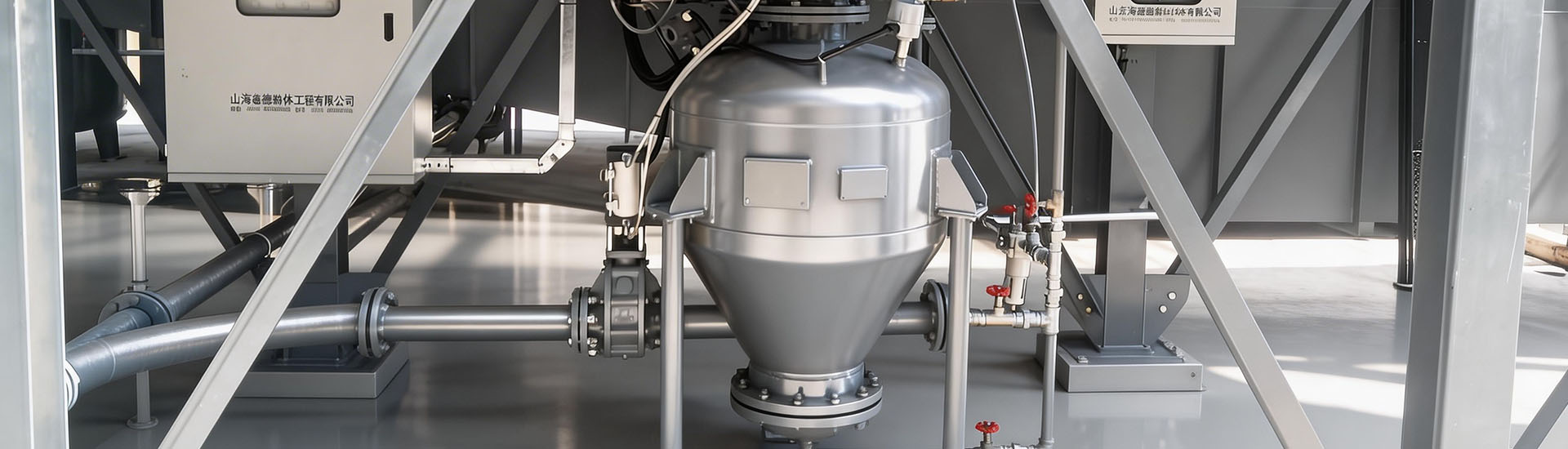
Key equipment selection directly affects system performance and service life. The feeder is the material inlet to the system, and its type needs to be selected according to the material's fluidity. The star valve is suitable for materials with good fluidity, but may cause vibration; the screw feeder is suitable for materials with poor fluidity, providing uniform feeding. The conveying pipeline needs to use corrosion-resistant materials, such as stainless steel or special-coated pipes, to cope with the chemical corrosion of PTA. The separator is used to separate the material from the air, usually using a cyclone separator or a bag-type dust collector. The cyclone separator has a simple structure but its separation efficiency is affected by the air flow velocity; the bag-type dust collector has high efficiency but requires regular filter bag cleaning. In addition, the design of the dust collection system needs to consider material recovery to reduce material loss.

PTA pneumatic conveying systems need to meet strict safety and environmental standards. Firstly, explosion-proof design is the key, especially for flammable materials, systems need to use explosion-proof motors, explosion-proof valves, and install fire valves and pressure relief devices. Secondly, dust control is the key to environmental protection, high-efficiency dust collectors can reduce air pollution and recover materials, reducing costs. For example, using a pulse bag-type dust collector, regular cleaning of the filter bags maintains high efficiency. In addition, the system needs to be equipped with pressure and temperature monitoring devices to monitor the operating status in real time and prevent abnormal situations.
Cost-effectiveness is an important basis for manufacturer decision-making. The initial investment includes equipment purchase, installation, and commissioning costs, which need to be selected according to the system scale and functions. Operating costs mainly include energy consumption (such as compressed air consumption), maintenance costs (such as filter bag replacement and equipment maintenance). An efficient system reduces pressure loss and energy consumption through optimized design, lowering long-term operating costs. For example, using a frequency-controlled compressed air system adjusts pressure according to the conveying volume, saving energy. At the same time, high system stability reduces downtime and improves production efficiency, enhancing overall investment returns.

Headed as a professional PTA pneumatic conveying solution provider, we have rich industry experience and customized service capabilities. We combine customer actual needs, from material properties, system design to equipment selection, providing comprehensive technical support. Whether for new projects or system upgrades, Headed can help manufacturers optimize the conveying system, improve production efficiency, and reduce operating costs. If you are considering a PTA pneumatic conveying solution, welcome to contact Headed to obtain professional consultation and customized solutions, and work together to improve production efficiency.

 Shandong Haide Powder Engineering Co., Ltd
 156-6277-7102(Manager Zhang)
  0531-83386006
  No. 1 Shanggao Industrial Park, Zhangqiu District, Jinan City, Shandong Province
 telephone
top