Plan
为客户提供完善的物料处理系统解决方案cottonseed mainly include: density is about 0.9-1.1g/cm3, oil content is between 15%-25%, protein content is about 30%-40%, and moisture content is between 8%-12%. Cottonseed has good plasticity and is easy to process, but its surface is smooth, the friction coefficient is small, and it is easy to generate static electricity. During storage, cottonseed is easy to absorb moisture, so attention should be paid to moisture and mildew. The common conveying methods of cottonseed mainly include the following types: belt conveying, bucket elevator, screw conveying, pneumatic conveying, etc. When choosing a cottonseed transportation method, we should take into account the characteristics of the material, the transportation needs, and whether there are other transportation needs. Belt conveying is suitable for long-distance and high-flow conveying; Bucket elevators are suitable for vertical conveying; Spiral conveying is suitable for occasions with short conveying distance and small conveying volume; Pneumatic conveying is suitable for occasions with long conveying distances and large conveying volumes.


common conveying methods of cottonseed are mainly divided into mechanical conveying and pneumatic conveying. Mechanical conveying relies on the movement of mechanical components and is a traditional conveying method, suitable for short distances, low heights, and small flow scenarios. Its types include screw conveyors, bucket elevators, belt conveyors, and scraper conveyors, each with its own unique principles and characteristics. Pneumatic conveying uses airflow energy to transport materials in closed pipelines, which is the core technology of material processing, warehousing and packaging, and can be adapted according to the characteristics of materials.

cottonseed is very suitable for pneumatic conveying because of its fine particles, small density, good fluidity and no obvious cohesion, which uses compressed air or vacuum as the power source to form an airflow belt material in a closed pipeline, and realizes gas-solid separation through a separator. Pneumatic conveying can be divided into negative pressure suction type, positive pressure pressure pressure and mixed type according to the conveying pressure and power form, while the gas-solid mixed concentration mostly adopts dilute phase conveying to ensure good quality of closed conveying.
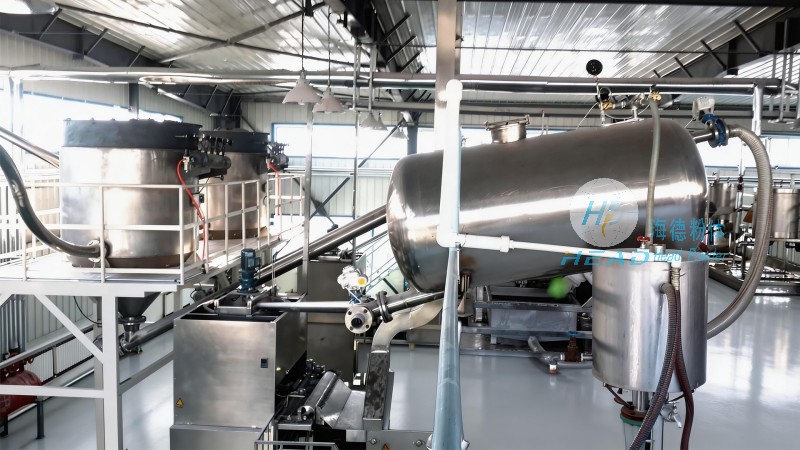
pneumatic conveying of cottonseed is an efficient and environmentally friendly material transportation method, which transports cottonseed from the source to the designated place through airflow, which has the advantages of long conveying distance, large conveying capacity, low energy consumption, and easy operation. The system is mainly composed of pneumatic conveying equipment, conveying pipelines, control systems, etc., using the principle of negative pressure conveying, by adjusting the air flow rate and the inclination angle of the conveying pipeline to achieve continuous and stable transportation of cottonseed. During the conveying process, the cottonseed is fully mixed with the air, which reduces friction, reduces wear and tear, and extends the service life of the equipment. In addition, pneumatic conveying systems also have the characteristics of energy saving, environmental protection, safety and reliability, and are widely used in cottonseed processing, warehousing, logistics and other fields.

pneumatic conveying of cottonseed has the advantages of high conveying efficiency, low energy consumption, long transportation distance, large conveying capacity, stable conveying process, strong adaptability, easy operation, safety and reliability, especially suitable for large-scale and long-distance transportation of cottonseed and other granular materials, and is an ideal material transportation method in modern agricultural production and industrial production.
When choosing a cottonseed pneumatic conveying system, it is necessary to pay attention to the characteristics of the conveyed materials, conveying distance, conveying height, pipeline diameter, wind speed requirements, system pressure loss, energy consumption, equipment corrosion resistance, sealing, wear resistance, and ease of operation and maintenance, while ensuring that the system meets relevant safety standards and environmental protection requirements.
Hyde cottonseed pneumatic conveying system can achieve continuous and stable transportation of cottonseed and other materials with its efficient conveying performance and low energy consumption, reduce production costs and improve production efficiency. The system adopts advanced sealing technology to ensure that the materials during the conveying process are clean and pollution-free, and at the same time have good adaptability, suitable for a variety of working conditions, making it an ideal material conveying solution for modern agriculture, grain processing and other industries.
pneumatic conveying method of cottonseed has the advantages of high conveying efficiency, good conveying quality, and fast conveying speed, but it also has shortcomings such as high energy consumption and complex system maintenance. With years of industry experience, Haide Powder tailors conveying solutions for thousands of materials, achieving efficient and high-quality material transportation and simplifying the material conveying process. Users are welcome to share their views and experiences in the comment area to discuss how to optimize material handling technology. Hyde Powder is committed to making material handling easier and providing you with one-stop solutions!

 Shandong Haide Powder Engineering Co., Ltd
 156-6277-7102(Manager Zhang)
  0531-83386006
  No. 1 Shanggao Industrial Park, Zhangqiu District, Jinan City, Shandong Province
 telephone
top