News
聚焦海德风采动态,分享行业技术资讯Pneumatic conveying of negative pressure powder has become a cornerstone technology in modern industrial material handling, offering a highly efficient and environmentally friendly solution for transporting powders and bulk materials. As industries increasingly prioritize safety, cleanliness, and operational efficiency, negative pressure systems have emerged as a preferred choice over traditional methods like manual handling or positive pressure systems. This article delves into the core principles, working mechanisms, and practical applications of negative pressure powder pneumatic conveying, providing a comprehensive overview for professionals and potential users seeking to understand this advanced technology.
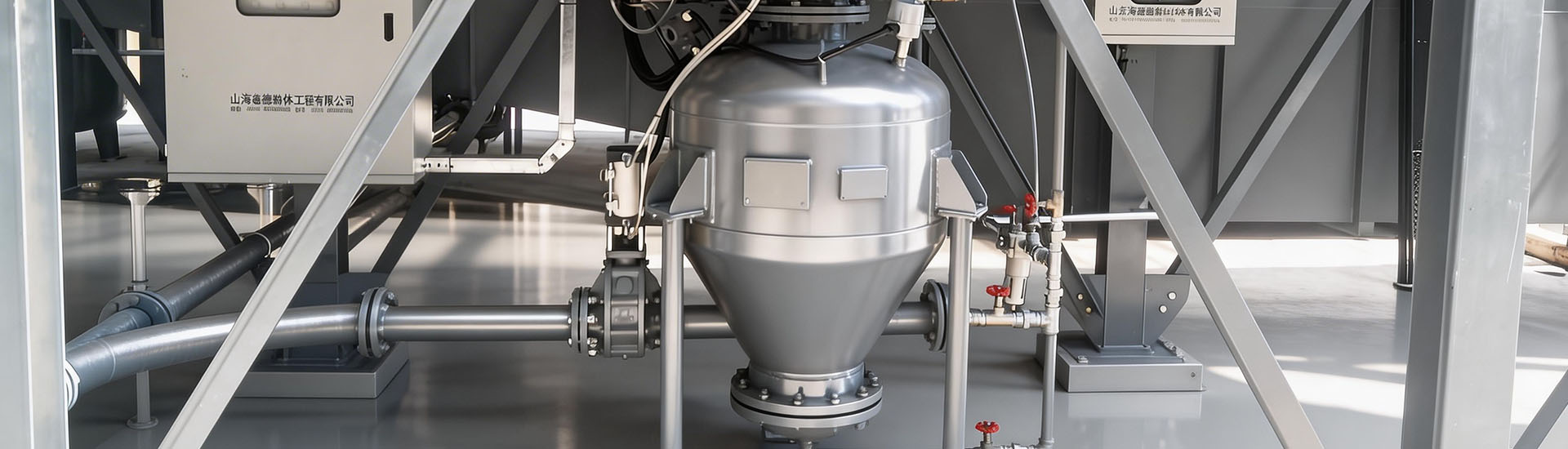
Negative pressure powder pneumatic conveying, often referred to as vacuum conveying, is a method of transporting dry powders and granular materials using air or gas as the conveying medium. Unlike positive pressure systems that blow material through a system, negative pressure systems create a vacuum in the pipeline, drawing material from the source into the conveying line. This approach is particularly effective for handling materials that are sensitive to pressure changes, moisture, or contamination, making it ideal for industries such as pharmaceuticals, food processing, and chemical manufacturing. The system typically consists of an inlet (suction point), a pipeline network, a separation unit, and a vacuum pump, all working in tandem to ensure reliable and consistent material transport.

The operation of a negative pressure powder pneumatic conveying system involves several critical steps. First, the vacuum pump generates a low-pressure environment within the pipeline, creating a pressure differential between the material source and the system. This pressure difference draws the powder from the hopper or storage container into the suction nozzle. As the material is drawn in, it travels through the pipeline, often mixed with a small amount of air or carrier gas to maintain flow. The mixture then reaches a separation unit, where the powder is separated from the air stream—usually through a cyclone or bag filter. The purified air is then discharged, while the powder is collected in a receiving container. This closed-loop system minimizes dust emissions and ensures that the material remains contained throughout the process.
One of the most significant advantages of negative pressure powder pneumatic conveying is its environmental friendliness. By operating under vacuum, the system prevents dust from escaping into the workplace or the environment, reducing the risk of respiratory issues and contamination. This makes it suitable for applications where hygiene and safety are paramount, such as in food and pharmaceutical industries. Additionally, negative pressure systems are highly efficient in terms of energy consumption and material handling speed. They can transport powders over long distances (up to several hundred meters) with minimal pressure loss, and the vacuum pump can be sized to handle varying material flow rates. Another key benefit is the ability to handle a wide range of materials, including fine powders, abrasive particles, and even materials that are sensitive to moisture or temperature changes. This versatility makes negative pressure conveying a flexible solution for diverse industrial needs.

Negative pressure powder pneumatic conveying is widely used across various sectors due to its adaptability and efficiency. In the chemical industry, it is commonly employed for transporting raw materials like powders and granules, ensuring that hazardous substances are handled safely and without exposure. The pharmaceutical industry relies on negative pressure systems to maintain sterile conditions, as the closed-loop design prevents cross-contamination and dust particles from entering the production environment. Food processing facilities also benefit from this technology, as it allows for the transport of ingredients like flour, sugar, and spices without compromising quality or hygiene. Furthermore, in the agricultural sector, negative pressure conveying is used to move bulk materials such as grains and seeds from storage to processing equipment. The system's ability to handle different particle sizes and flow rates makes it suitable for a broad range of applications, from small-scale operations to large-scale industrial plants.

At Head powder, we specialize in designing and manufacturing high-quality negative pressure powder pneumatic conveying systems tailored to meet the unique needs of our clients. Our expertise lies in creating customized solutions that enhance operational efficiency, reduce environmental impact, and ensure compliance with industry standards. Whether you are in the pharmaceutical, food, chemical, or agricultural sector, our team of engineers can help you select the right negative pressure system for your application. Contact us today to learn more about our products and services, and discover how negative pressure powder pneumatic conveying can transform your material handling processes.

 Shandong Haide Powder Engineering Co., Ltd
 156-6277-7102(Manager Zhang)
  0531-83386006
  No. 1 Shanggao Industrial Park, Zhangqiu District, Jinan City, Shandong Province
 telephone
top